
Flexographic Printing in 2026: Quality Gains Without Slower Throughput
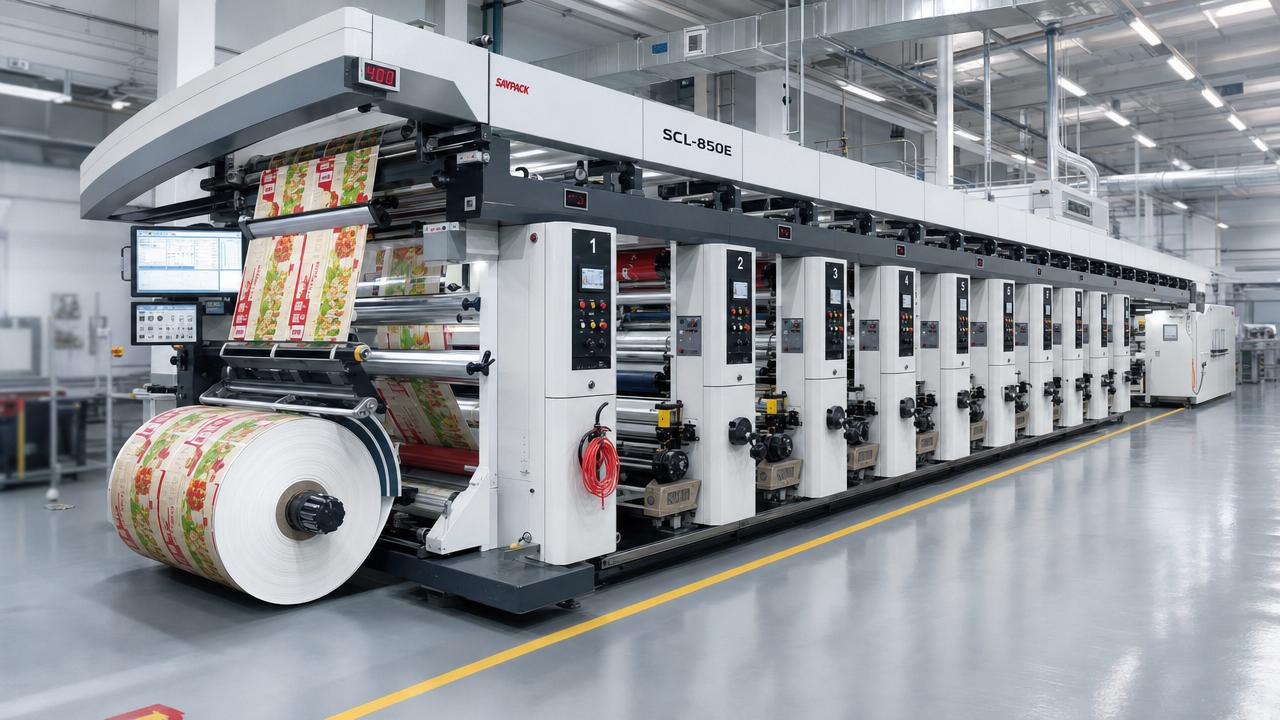
In 2026, flexographic printing is no longer constrained by the old assumption that higher quality must come at the expense of line speed. For technical evaluators, the more useful conclusion is this: quality gains are now increasingly achieved through control architecture, process stability, and data-driven correction rather than through slower operation.
That shift matters because modern flexo investments are being judged less by headline maximum speed and more by sustained sellable output. A press that runs fast but produces excess waste, color drift, registration instability, or frequent stoppages does not deliver real throughput.
For technical assessment teams, the central task is to separate marketing claims from measurable production performance. The right evaluation framework should connect print quality, substrate range, automation maturity, maintenance burden, and operator dependence to actual delivered capacity.
This article examines how flexographic printing is evolving in 2026, what technologies are driving quality improvements, which metrics matter most during evaluation, and where buyers should focus when comparing equipment, upgrades, inks, and workflow systems.
What Technical Evaluators Need to Know First: Quality Gains Now Come from Stability, Not Reduced Speed
The core search intent behind “flexographic printing” in this context is not to learn the basics of the process. It is to understand whether modern flexo can improve print consistency, detail, and repeatability without sacrificing throughput in real production conditions.
Technical evaluators usually care about a narrower and more practical set of questions. Can the press hold color across long runs? How quickly does it reach sellable output? How stable is registration at high speed? How much waste is generated during changeovers and corrections?
They also want to know whether quality gains are machine-dependent or system-dependent. In other words, are improvements coming from better press mechanics alone, or from an integrated stack that includes plates, inks, anilox rolls, drying, web handling, inspection, and closed-loop controls?
The short answer is that competitive flexographic printing in 2026 is a systems game. Press speed still matters, but it matters less than the ability to maintain quality at speed with minimal intervention and low variability from shift to shift.
This is why evaluators should emphasize sustained production performance over demonstration quality. A sample produced under ideal conditions says little about what happens over multiple SKUs, operators, substrates, and ambient changes during a full production week.
Why the Old Speed-versus-Quality Trade-Off Is Breaking Down
Historically, flexo quality limitations were tied to mechanical vibration, inconsistent impression, plate distortion, ink transfer variability, substrate instability, and limited visibility into defects before large amounts of waste had already been produced.
At higher speeds, those variables multiplied. Dot gain became harder to control, registration drift increased, drying margins tightened, and operators often compensated by slowing the line to protect acceptable quality. Throughput suffered even if the rated machine speed looked impressive.
In 2026, that model is weakening because several enabling technologies have matured at the same time. Servo-driven architectures improve repeatability, advanced web tension control reduces substrate-induced instability, and better doctor blade and chamber designs stabilize ink delivery.
Plate technology has also improved. Flat-top dots, refined screening strategies, better mounting accuracy, and more predictable plate behavior have expanded the quality window. These changes help presses achieve cleaner highlights, more consistent solids, and better fine text reproduction.
Meanwhile, automated inspection and closed-loop correction shorten the time between defect emergence and corrective action. Instead of discovering quality loss after a substantial volume is produced, systems can identify drift earlier and guide immediate adjustment or automatic compensation.
The result is not that flexographic printing has become effortless. Rather, the process has become more controllable. That distinction is important because technical teams should evaluate whether a supplier’s quality claims are based on broad process control or on isolated component improvements.
Which Technologies Are Actually Delivering Better Flexographic Printing Performance
For evaluation purposes, the most meaningful technology gains can be grouped into five areas: press control, ink transfer consistency, plate and anilox optimization, drying and curing efficiency, and automated quality assurance.
First, modern press control systems are significantly more capable than those of earlier generations. Servo synchronization, automatic register control, and recipe-based setup reduce dependence on manual correction. This improves repeatability between jobs and shortens startup instability.
Second, ink management has become smarter. Better viscosity control, temperature management, and circulation design reduce fluctuations that previously caused density variation, mottling, and inconsistent dot reproduction. In high-speed production, small ink variations quickly become visible quality problems.
Third, anilox selection and plate screening are being treated more scientifically. Instead of choosing components mainly from past preference, converters are increasingly using data-led matching between line screen, cell geometry, plate surface, ink chemistry, and target substrate performance.
Fourth, drying systems are being optimized for energy and uniformity, not only raw heat output. More stable drying improves print sharpness, limits smearing risk, and supports higher speeds without introducing thermal distortion or over-drying issues on sensitive materials.
Fifth, inspection systems have moved beyond simple defect detection. The best platforms combine 100 percent inspection, trend analysis, and links to upstream process variables. That allows teams to understand whether recurring defects originate in print mechanics, consumables, or substrate variation.
Together, these technologies improve the practical operating window of flexographic printing. They do not eliminate process discipline, but they make it easier to reach quality targets faster and sustain them longer across varying production demands.
How to Measure “Quality Without Slower Throughput” in Real Production
One of the biggest mistakes in equipment evaluation is relying on isolated speed numbers or showroom print samples. Technical evaluators need performance metrics that reflect actual operating economics and production reliability.
The first metric is time to sellable output. A press that reaches approved color and registration quickly can outperform a faster nominal press that requires a longer setup and stabilization period. This matters especially in mixed-SKU and shorter-run environments.
The second metric is sustained good output per hour, not maximum mechanical speed. This should exclude startup waste, rejected material, rework, and downtime. It is the most honest measure of whether quality improvements are truly preserving throughput.
The third metric is waste rate by job type. Evaluators should ask for data on makeready waste, defect-related waste during the run, and waste linked to changeovers. If quality improvements are real, waste intensity should decrease even when line speed remains high.
The fourth metric is variability. A press that performs well only with top operators or ideal substrates is less valuable than one that delivers predictable output under normal plant conditions. Shift-to-shift repeatability is often more important than peak sample quality.
The fifth metric is intervention frequency. How often must operators manually adjust ink density, registration, impression, or drying? Lower intervention usually indicates stronger process control and a better chance of maintaining speed without quality compromise.
Technical teams should also separate defect severity from defect frequency. A small number of critical defects may be more damaging than a larger number of minor visual deviations. Evaluation should therefore align quality metrics with end-use requirements, such as food packaging, e-commerce corrugated, or premium retail graphics.
Where Technical Evaluators Should Focus During Equipment Comparison
When comparing flexographic printing platforms or upgrade packages, evaluators should prioritize the conditions that most often weaken real-world performance. These usually include changeover complexity, substrate variability, operator workload, maintenance access, and control system transparency.
Changeover performance deserves close attention because many modern packaging environments no longer depend on ultra-long, stable runs. Ask how recipes are stored, how repeat jobs are recalled, how sleeve and plate change timing affects uptime, and how quickly color consistency is restored.
Substrate handling is another major differentiator. Lightweight papers, recycled liners, films, and coated board all behave differently under speed and tension. A press that handles only a narrow substrate window may underperform in diversified production environments.
Operator dependency should be tested directly. If achieving strong results requires a highly experienced crew making constant manual corrections, then the quality-throughput claim is fragile. Better systems reduce the skill burden for routine consistency while still allowing expert fine tuning.
Maintenance design also affects quality at speed. Components that are hard to clean, calibrate, or replace can create hidden instability over time. Evaluators should review maintenance intervals, access points, spare parts logic, and fault diagnostics as part of quality assessment.
Finally, examine data visibility. The best flexographic printing systems do not merely run well; they explain why they run well or poorly. Trend dashboards, alarm histories, defect mapping, and integration with plant MES or quality systems create a stronger basis for continuous improvement.
Common Risks Behind Overstated Flexo Performance Claims
Suppliers often present excellent samples, short trial runs, or peak operating conditions. These can be informative, but they should not be accepted as proof of plant-level performance. Technical evaluators need to identify where claimed gains may fail to scale.
A common risk is overreliance on ideal consumables. If quality claims depend on premium plates, tightly controlled inks, and highly stable substrates that differ from the buyer’s normal supply reality, the commercial case may weaken quickly after installation.
Another risk is narrow application testing. A press may perform exceptionally on one substrate and graphic profile but less reliably across the broader product mix. Evaluators should request trials that reflect actual SKUs, graphics density, and run-length diversity.
There is also the risk of hidden complexity. Some automation features improve setup and consistency, but others can introduce software dependence, troubleshooting difficulty, or vendor lock-in. Teams should examine whether the control architecture is understandable and maintainable in-house.
Energy and drying assumptions deserve scrutiny as well. Higher quality at speed can require stronger drying performance, but that may increase operating cost or constrain sensitive substrates. The best systems improve drying efficiency, not just drying intensity.
Finally, be cautious about judging results from short demonstrations. Many quality issues in flexographic printing emerge over longer runs: temperature drift, wear effects, contamination buildup, and cumulative tension variation. Endurance matters as much as startup excellence.
What a Strong 2026 Evaluation Framework Looks Like
For technical evaluators, the most effective approach is to use a structured comparison model built around production reality. The goal is not simply to ask whether a flexo solution prints well, but whether it improves profitable, repeatable output across target applications.
Start with the application mix. Define the dominant substrates, graphics requirements, run lengths, compliance needs, and acceptable defect thresholds. Without this baseline, it is impossible to judge whether a machine’s strengths align with business needs.
Next, request data for startup time, waste rates, sustained speed, defect classes, intervention frequency, and repeat-job consistency. Where possible, ask for results from comparable customer environments rather than only laboratory or demonstration data.
Then assess the process ecosystem. Review plates, anilox strategy, ink control, drying design, inspection capability, and software integration together. Quality gains without slower throughput usually come from how these pieces interact, not from one isolated innovation.
After that, evaluate resilience. How does the system respond to recycled substrate variation, ambient temperature changes, operator changes, or urgent job switches? A resilient process often creates more value than a theoretically superior but less forgiving one.
Finally, model lifecycle impact. Consider training requirements, maintenance workload, spare parts availability, support responsiveness, and future upgrade paths. The best flexographic printing investment is not merely the one that performs best on day one, but the one that remains stable and improvable over years of production.
Conclusion: Flexographic Printing Is Becoming a More Measurable, Defensible Choice
In 2026, the most important development in flexographic printing is not a single dramatic breakthrough. It is the steady convergence of better controls, more stable consumables, smarter inspection, and stronger process integration that allows quality to improve without automatically reducing throughput.
For technical evaluators, this means the decision process should move beyond headline speed, legacy assumptions, and isolated print samples. The real benchmark is sustained sellable output with predictable quality, low waste, and manageable operator intervention.
When assessed through that lens, modern flexo can be a highly competitive choice for packaging and paper-based production environments that demand both efficiency and consistency. But the strongest results come from disciplined evaluation of the full production system, not from machine specifications alone.
If your team is comparing presses, upgrades, or process changes, focus on stability, repeatability, and data transparency. Those are the factors most likely to determine whether promised quality gains in flexographic printing translate into real throughput and lasting operational value.
Industry Briefing
Get the top 5 industry headlines delivered to your inbox every morning.
Recommended News