
What the packaging machinery demand outlook means for capital spending
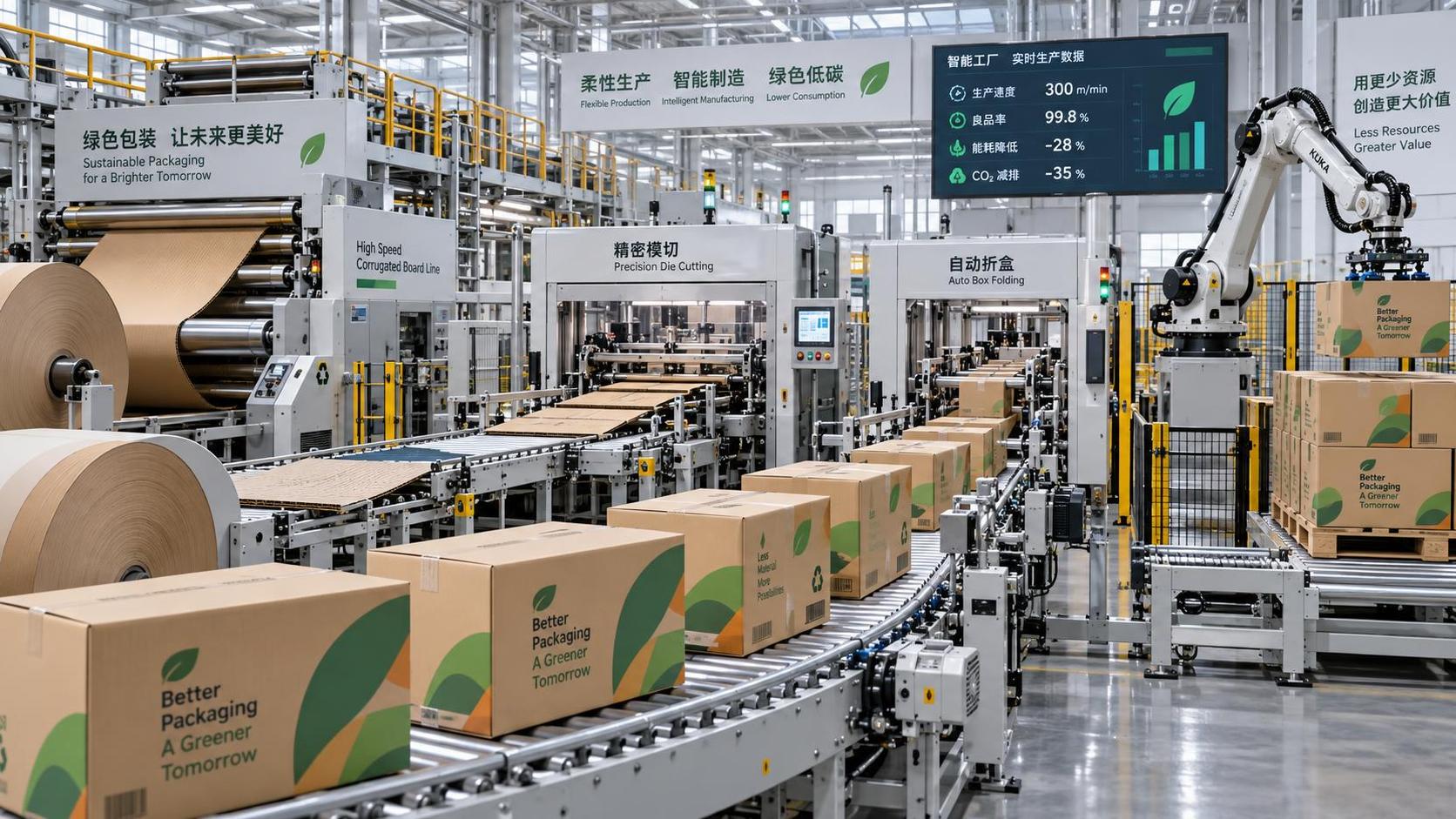
The packaging machinery demand outlook should change how companies approve capital projects. Demand is still supporting investment in packaging, but the strongest case is no longer simply “buy more capacity.” The better question is whether a new machine will remove a constraint that is becoming more expensive: short runs, labor dependency, material variability, changeover time, quality loss, energy use, or an inability to serve e-commerce and sustainability-driven formats.
For decision-makers, this distinction matters. A line can be busy and still be the wrong place to spend. If production is limited by artwork changes, a faster converting machine may not solve the problem. If a corrugated plant loses margin through board waste and unstable output, adding width or speed may amplify the loss. Capital spending needs to follow the demand pattern and the operating bottleneck together.
Demand is shifting from volume alone to responsiveness
Packaging demand remains tied to familiar end markets such as food, beverages, household products, healthcare, tissue, and transport packaging. What has changed is the production profile behind that demand. Brand owners are running more product variations, promotions, regional versions, seasonal packs, and channel-specific designs. E-commerce creates another layer of complexity: packs must protect goods through parcel networks, use material efficiently, and often carry more printed information.
This makes flexibility commercially valuable. A plant that can move reliably between jobs, substrates, and box formats may be better positioned than one designed only for long, uniform runs. That does not mean every converter should replace conventional production with digital equipment. It means that the volume, repeatability, and margin of each job family should determine the technology choice.
In practical terms, the packaging machinery demand outlook favors investment in systems that make capacity more usable. Automation around setup, inspection, material handling, job changeover, and data capture can create more sellable hours from an existing footprint. For some operations, that will be more valuable than a headline increase in rated machine speed.
Where capital demand is likely to concentrate
Capital demand is not uniform across the packaging equipment market. The most resilient investment themes are connected to structural operating pressures rather than a short-lived production spike.
Corrugation and e-commerce-ready board production
Corrugated packaging remains central to logistics because it combines protection, printability, and a paper-based material profile. The investment case for corrugator upgrades is strongest where order growth is sustained, board specifications are becoming more diverse, or quality variation is constraining downstream conversion.
For a corrugated board line, speed is only one part of the decision. Web tension stability, steam and heat control, flute consistency, waste during grade changes, and integration with converting all affect the economics of the finished box. A board maker that supplies high-volume transport cases may prioritize throughput and uptime. One serving retail-ready or short-run e-commerce packaging may place more value on fast order transitions and stable performance across a broader grade mix.
Digital print for shorter runs and faster artwork cycles
Industrial digital printing is becoming more relevant where the cost of conventional setup is hard to recover. It is particularly suited to variable graphics, frequent design changes, versioned packaging, prototyping, and work where lead-time reduction matters as much as unit cost.
The common mistake is to compare digital print and conventional print only by the cost of ink versus the cost of a traditional run. The full comparison should include plate or setup work, approval cycles, inventory risk from obsolete packaging, scheduling disruption, and the value of producing only what is needed. Digital systems are usually a poor substitute for stable, very long runs that already flow efficiently. They can be a strong complement when smaller jobs are consuming disproportionate planning and setup time.
Precision converting where waste and quality determine margin
Die-cutting, creasing, stamping, and folder-gluing are often treated as downstream support functions. In reality, these stages can decide whether a packaging plant captures the margin promised by its print and board operations. Poor registration, inconsistent creases, glue failures, or difficult changeovers turn finished-material value into scrap and rework.
Investment in precision post-press equipment should be assessed against the actual mix of carton complexity. Premium cartons, retail display packs, multi-point glued structures, and high-graphic consumer packaging create a stronger case for accuracy and controlled automation than simple, repeatable formats. The correct system is not necessarily the most elaborate model; it is the one whose feeding, alignment, tooling, gluing, and inspection capabilities match the jobs that create the most operational friction.
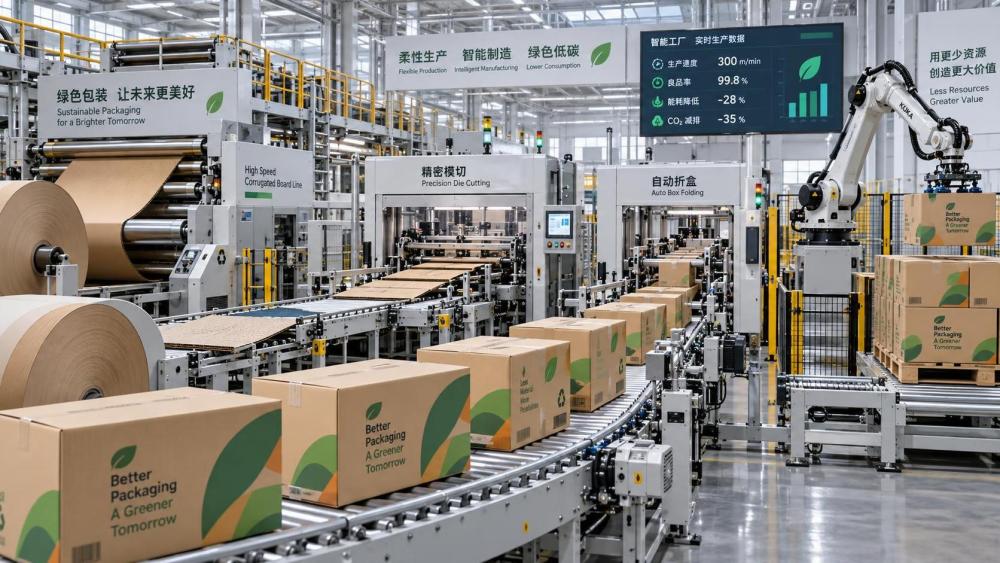
Labor-reducing automation around the machine
Labor shortages are frequently cited as a reason to automate, but the business case should be more specific. The priority is not to automate every manual task. It is to target jobs that create unstable output, safety exposure, repeated stoppages, or dependence on scarce specialized operators.
Automated loading, pallet handling, in-line inspection, rejection, job recall, and production reporting can reduce the operational variability around a press or converting line. These systems also make it easier to preserve process knowledge when experienced staff leave. Yet automation that cannot be supported by maintenance capability, spare-parts planning, or reliable material flow can create a different kind of downtime. The investment must include the operating model around the equipment, not only the equipment itself.
Do not use market demand as a substitute for a plant-level case
A favorable market outlook can justify investigating a project. It cannot, by itself, justify approving one. Packaging equipment is highly sensitive to local realities: customer concentration, order volatility, substrate availability, utility capacity, floor layout, existing tooling, operator skills, and service access all change the economics.
For example, a converter may see rising demand for sustainable paper-based formats. That does not automatically mean it should purchase a new line. First, it needs to establish whether demand is recurring, whether customers will accept the required specification and price, and whether the current operation can convert those materials consistently. Some lighter-weight or alternative substrates require different settings, handling discipline, adhesive behavior, or quality controls. The commercial opportunity and the production capability need to be tested together.
Likewise, a company facing delivery pressure may assume that a higher-speed machine is the answer. If the constraint is tooling availability, artwork approval, material staging, or a downstream folder-gluer, the new machine may sit idle between jobs. Capital projects fail when they optimize a single asset while leaving the end-to-end flow unchanged.
A more useful capital-screening sequence
Before comparing vendors, decision-makers should build a short operating case around the work they want the asset to perform. This makes technical discussions more productive and prevents supplier specifications from becoming the project definition.
- Separate demand by job family. Group work by run length, substrate, print complexity, box style, changeover frequency, service requirement, and contribution to margin. Average monthly volume hides the variation that determines equipment fit.
- Locate the limiting step. Measure where orders wait, where waste rises, and where production becomes dependent on a small number of people. The bottleneck may sit before or after the machine under consideration.
- Define the required operating range. Include the realistic material mix, not just the easiest product. A machine that performs well on one board grade but struggles with the expected mix is not flexible capacity.
- Model lifecycle effects. Consider installation disruption, utilities, consumables, maintenance access, tooling, training, software integration, quality controls, and working-capital effects alongside output.
- Test the downside case. Ask what happens if demand arrives later than expected, mix shifts toward smaller jobs, a key account changes specification, or operator availability remains constrained. A phased investment may be preferable when uncertainty is high.
What different investment choices are really buying
Sustainability changes the equipment conversation, but not in one direction
Paper-based packaging, lightweighting, recyclable designs, and reduced material use are influencing equipment demand. The effect is not simply a rush to replace existing machinery. Sustainable formats can introduce new technical requirements: different fiber behavior, thinner or stronger grades, altered barrier structures, revised adhesive needs, and tighter expectations around material usage.
That is why sustainability-related capital spending should be tied to process capability. A machine that reduces trim waste, stabilizes board formation, improves glue application, supports format optimization, or reduces energy losses can contribute directly to both cost control and environmental performance. A project justified only by a broad sustainability claim is harder to defend than one linked to measurable operational changes.
Intelligence sources focused on digital print, corrugation, and post-press technologies, such as IPPS, can be useful when teams need to connect market signals with process implications. The relevant question is not which trend has the strongest narrative. It is which material, format, and workflow change will reach the plant first, and whether the planned asset can handle it without creating a new constraint.
When waiting is the better capital decision
Investment should not be rushed merely because competitors are expanding or because a technology category is receiving attention. Waiting can be rational when demand is concentrated in one uncertain customer, when the production mix has not settled, when upstream material supply remains unstable, or when the company has not identified its actual bottleneck.
There is also a middle ground between doing nothing and commissioning a full new line. Retrofit controls, inspection upgrades, automation cells, tooling improvements, workflow software, and targeted maintenance work can expose the true capacity of existing assets. These measures are especially useful when a plant lacks dependable production data. They can establish whether the problem is physical capacity, avoidable downtime, quality variation, or scheduling discipline.
The packaging machinery market outlook supports selective investment, not indiscriminate expansion. The strongest capital plans begin with a clear view of future order patterns and end with an asset that improves the whole production flow. Companies that make that connection will be better prepared for demand growth, tighter margins, and the continuing shift toward more flexible paper-based packaging.
Industry Briefing
Get the top 5 industry headlines delivered to your inbox every morning.
Recommended News