
Sustainable Paper Packaging Cost Trade-Offs in 2026

In 2026, sustainable paper packaging is no longer judged by material price alone. For financial decision-making, the real trade-off sits across fiber costs, machine efficiency, compliance exposure, transport performance, and brand resilience. Short-term savings can disappear when board waste rises, conversion speeds fall, or recycled content reduces pack strength in demanding logistics channels.
Across the broader print and paper ecosystem, cost discipline now depends on how well materials, machinery, data, and regulation work together. This is especially visible in digital printing, corrugation, die-cutting, folder gluing, and tissue-related converting operations, where small technical losses quickly become commercial losses.
Why sustainable paper packaging cost models changed sharply in 2026
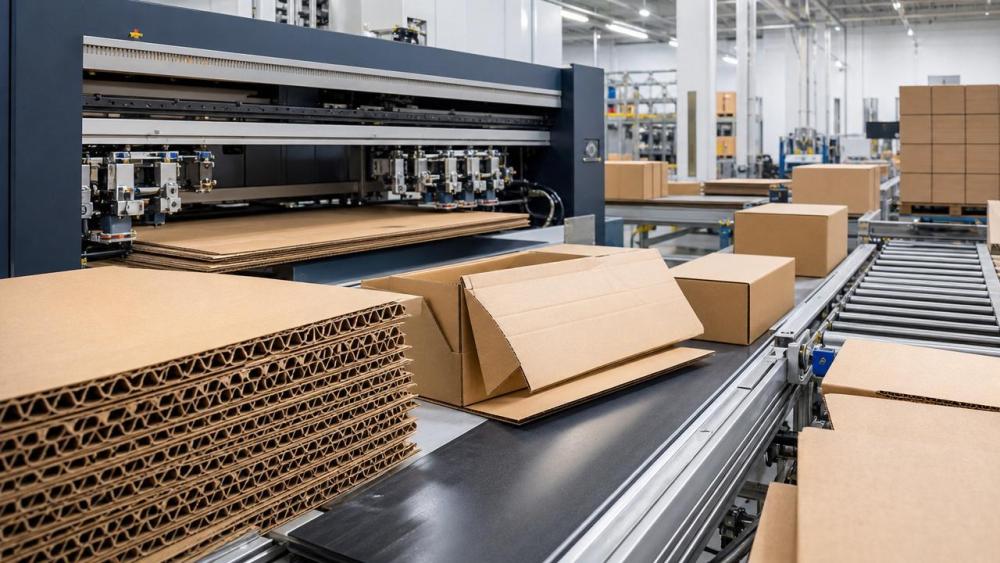
The 2026 market no longer rewards the cheapest paper input by default. It rewards total system balance. A lower-cost liner or medium may look attractive, yet it can increase warp, dust, crush losses, ink variability, and reject rates downstream.
At the same time, sustainability rules became more operational. Forest traceability, recycled content claims, emissions reporting, and retailer scorecards now affect tender outcomes, export access, and financing conditions. That makes sustainable paper packaging a margin question, not only a marketing claim.
E-commerce also keeps reshaping packaging economics. Parcels move through denser, faster, and more automated logistics networks. Packaging must stay light, printable, protective, and recyclable. The lowest board cost rarely wins if transport damage and return rates rise.
The strongest trend signals now come from the full paper packaging chain
Several market signals explain why sustainable paper packaging decisions became more complex:
- Recovered fiber quality remains uneven across regions and grades.
- Virgin fiber still carries price volatility and certification pressure.
- Ink, coating, and adhesive choices increasingly affect recyclability scores.
- High-speed converting lines penalize unstable substrates more than before.
- Retailers and brand owners demand measurable environmental data.
- Digital print customization raises SKU complexity and scheduling pressure.
For intelligence-focused platforms such as IPPS, this shift is important. Packaging economics now depend on machine-material compatibility. Web tension control, inkjet behavior on corrugated surfaces, die-cut precision, and folding-gluing stability all influence the real cost of sustainable paper packaging.
The biggest cost drivers are no longer hidden in paper price alone
A simple cost-per-ton view misses where losses actually accumulate. In 2026, the main trade-offs are easier to understand when broken into system-level drivers.
This is why sustainable paper packaging should be evaluated through total delivered cost. That means including conversion yield, machine uptime, transport outcomes, rework, and compliance-related risk.
Material performance is now tied to machine behavior
On corrugated lines, lower-grade paper can alter flute formation and bonding stability. On digital printers, absorbency variation changes dot gain and color repeatability. On folder gluers, surface changes can affect glue setting windows and high-speed folding accuracy.
These issues matter because modern packaging lines run fast. Small substrate instability can multiply waste across thousands of sheets or meters. For sustainable paper packaging, technical fit often determines the real financial result.
Why regulation and proof now shape sustainable paper packaging economics
2026 buyers increasingly ask for evidence, not claims. Certification pathways, chain-of-custody data, carbon disclosures, and recycling compatibility statements are becoming standard commercial requirements.
For cross-border business, policy developments such as FSC expectations, EUDR-related traceability pressure, and packaging reporting frameworks can change market access. A cheaper pack format can become expensive if documentation gaps delay shipment or disqualify a bid.
- Traceable fiber sourcing reduces legal and reputational risk.
- Verified recycled content supports retailer compliance programs.
- Recyclability-friendly inks and glues strengthen end-of-life claims.
- Reliable reporting improves tender competitiveness and financing credibility.
As a result, sustainable paper packaging budgets now need room for data capture, certification management, and process validation. Those costs are often smaller than the cost of failing an audit or losing preferred-supplier status.
The impact reaches design, production, logistics, and commercial performance
The trade-offs affect multiple business links at once. Cost pressure rarely stays in one department or one machine stage.
Design and specification
Packaging teams are under pressure to reduce basis weight, simplify structures, and improve recyclability. Yet over-lightweighting can harm box integrity, display quality, and automation performance.
Production and converting
Printers and converters face tighter tolerances. Variable substrates can reduce digital print efficiency, increase die-cut waste, and create gluing failures. Stable throughput matters as much as raw material price.
Transport and fulfillment
Lighter sustainable paper packaging can cut freight costs. However, if damage rates rise in e-commerce distribution, the savings disappear through replacement, reverse logistics, and customer dissatisfaction.
Brand and market access
Well-engineered sustainable paper packaging can support premium positioning and retailer preference. Poorly substantiated claims can create scrutiny, weaken trust, and reduce long-term value.
What deserves the closest attention over the next planning cycle
The most useful questions in 2026 are practical and measurable. Focus should move from “What is the cheapest material?” to “What combination protects margin across the full chain?”
- Track yield loss by paper grade, flute profile, and print method.
- Compare delivered cost, not only purchase cost per ton.
- Measure compression strength and transit damage together.
- Validate glue and ink compatibility with recycling goals.
- Audit certification and traceability readiness before tenders.
- Use machine data to identify waste linked to substrate instability.
- Model whether digital customization offsets higher setup complexity.
For sectors tied to corrugation, post-press precision, and automated packaging, this approach is especially valuable. The more automated the line becomes, the more costly unstable sustainable paper packaging specifications become.
A smarter response starts with scenario-based evaluation
The best response is not a single material switch. It is a structured comparison of trade-offs under real operating conditions.
This scenario-based method gives a clearer view of sustainable paper packaging economics. It also matches the direction of modern industrial intelligence, where machine data and material behavior are interpreted together.
The next move is to build a margin map, not just a packaging brief
In 2026, the winners in sustainable paper packaging will be those who understand cost trade-offs across sourcing, converting, compliance, and logistics at the same time. Fiber price still matters, but it is now only one variable in a more technical equation.
A practical next step is to review one packaging format across the full chain. Measure input cost, runnability, waste, transport outcomes, sustainability proof, and commercial impact together. That creates a margin map strong enough to support better decisions in a volatile market.
For organizations following industrial print and paper systems closely, this is where better intelligence delivers value. Smarter choices in sustainable paper packaging come from connecting materials science, machine capability, and market requirements before cost pressure turns into profit erosion.
Industry Briefing
Get the top 5 industry headlines delivered to your inbox every morning.
Recommended News