
Corrugated Packaging Solutions for E-commerce Damage
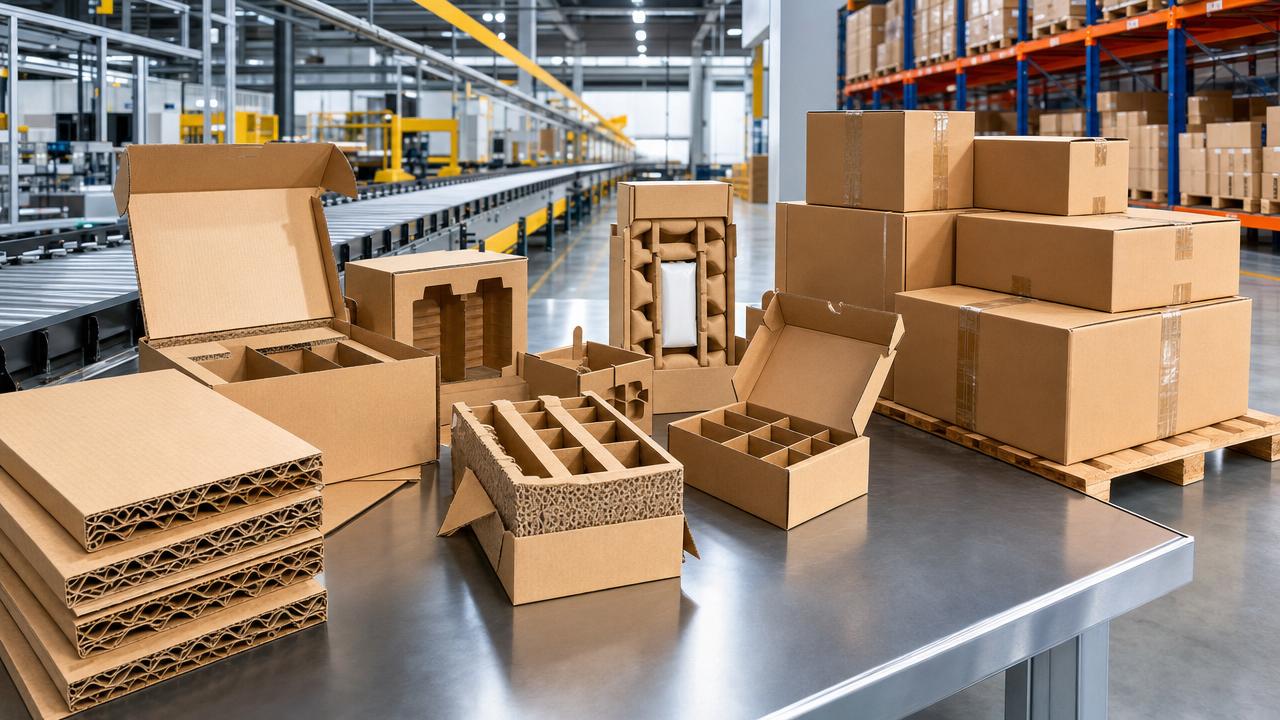
In fast-growing e-commerce operations, product damage can quickly erode margins, customer trust, and delivery performance. Effective corrugated packaging solutions help project managers and engineering leaders balance protection, automation compatibility, material efficiency, and sustainability. This article explores how smarter board structures, converting precision, and data-driven packaging design can reduce transit losses while supporting scalable, cost-controlled fulfillment.
For most project managers, the real question is not whether corrugated packaging matters, but which packaging changes will reduce damage without creating new cost or throughput problems. The best answer is usually not “more material.” It is better package engineering.
Search intent behind corrugated packaging solutions for e-commerce damage is highly practical. Readers want to know how to lower breakage rates, choose the right board and box design, improve pack-out consistency, and justify packaging investments with measurable operational results.
That makes this topic especially relevant for engineering leads, packaging development teams, and fulfillment project owners. They need ways to connect board performance, line compatibility, dimensional efficiency, and customer outcomes into one decision framework rather than treating packaging as an isolated material purchase.
What Project Managers Need to Solve First When E-commerce Damage Increases
When damage claims rise, many teams immediately look at corrugated grade upgrades. Sometimes that helps, but the root cause is often more complex. Damage can come from underperforming box geometry, weak stacking performance, poor fit, sealing failure, or rough handling across parcel networks.
For project managers, the first step is to separate product fragility from packaging system weakness. A strong board will not fix excess void space, bad weight distribution, or a box style that collapses under compression during sortation and last-mile delivery.
The most useful starting questions are straightforward. Where in the logistics chain does damage happen? Which SKUs have the highest claim rate? Are failures linked to drops, side compression, vibration, puncture, or moisture? Without this diagnosis, packaging upgrades often miss the target.
Strong corrugated packaging solutions are built around hazard matching. That means selecting flute profile, board combination, box design, and converting quality according to actual shipping stress rather than broad assumptions or legacy packaging standards.
Why Standard Boxes Often Fail in E-commerce Environments
E-commerce distribution is harsher than many traditional retail channels. Parcel shipments are touched more often, stacked less predictably, and exposed to automated handling, conveyor impacts, mixed loads, and doorstep weather. Packages rarely move in the stable palletized conditions they were originally designed for.
That is why a box that works for B2B distribution may fail in direct-to-consumer shipping. Retail-ready packaging often assumes outer-case protection, denser pallet stability, and limited drop exposure. In e-commerce, the shipper frequently becomes the primary protective structure.
Another common problem is dimensional mismatch. Oversized cartons reduce cube efficiency, increase movement inside the box, and push up dunnage use and freight cost. Undersized designs create panel bulging, sealing stress, and edge failure. Both conditions raise the probability of damage.
Project leaders should also watch for inconsistency in converting and pack-out. If creasing is inaccurate, slots drift, adhesive application varies, or operators pack products differently by shift, even a good packaging specification can deliver unstable field performance.
How to Choose the Right Corrugated Packaging Solutions for Damage Reduction
The most effective corrugated packaging solutions combine material selection with structural design. Board strength matters, but it should be chosen based on product weight, distribution hazards, and the expected dwell time under load, not simply by requesting a heavier specification.
Flute profile is one of the first technical choices. Larger flutes such as C or B often provide stronger cushioning and compression for heavier or more fragile goods. Smaller flutes such as E can support better print quality and tighter folds while still performing well for lighter items.
Double-wall structures become useful when products are heavy, edges are vulnerable, or shipping distances are long. Yet double-wall is not automatically the best option. It can increase cost, reduce packing speed, and create unnecessary material use if the hazard profile does not justify it.
Box style is equally important. Regular slotted containers remain common because they are economical, but die-cut mailers, wraparound formats, and reinforced self-locking designs can improve fit, presentation, and resistance to movement. The right structure depends on the product and fulfillment flow.
For high-value or fragile items, inserts and internal partitions often deliver better return than a board upgrade alone. A properly designed corrugated insert can immobilize the item, distribute impact energy, and reduce the need for mixed-material protective packaging.
Board Performance Is Only Part of the Story: Converting Precision Matters
Packaging performance depends not just on the corrugated sheet, but on how accurately it is converted into a usable box. Weak creases, poor slot alignment, crushed flute structures, or inconsistent die-cutting can significantly reduce real-world strength even when the board grade looks correct on paper.
For engineering teams, this is where supplier capability deserves close review. The same board specification can produce different field outcomes depending on die-cutting control, folder-gluer accuracy, moisture management, and process stability on the corrugator and post-press line.
Compression failure often starts with small manufacturing defects. Over-crushed scores reduce panel stiffness. Uneven glue application weakens seams. Inaccurate folding changes load distribution. These issues can turn a theoretically compliant carton into a poor performer once it enters parcel handling systems.
This is why pilot validation should include both material tests and finished-pack tests. Project managers should review not only edge crush or burst values, but also erected box consistency, seam strength, stack retention, and dimensional repeatability across production batches.
How to Evaluate Packaging Changes Using Data Instead of Assumptions
Damage reduction projects succeed faster when teams use measurable packaging data. That means combining claims analysis, warehouse observations, transit testing, and cost modeling. Without this discipline, packaging decisions become subjective, and stakeholders struggle to agree on the right specification.
A practical method is to segment SKUs by value, fragility, dimensions, and damage mode. Then identify where packaging redesign can create the largest benefit. Not every product needs a custom solution. In many operations, a focused redesign of the worst-performing 20 percent of SKUs delivers most of the gain.
Laboratory and simulated distribution testing should reflect actual e-commerce conditions. Drop testing, vibration, compression, and environmental conditioning are all relevant. However, the most useful test plan is one that mirrors the shipment profile, handling intensity, and packaging orientation seen in the field.
Project managers should track a few decision-grade metrics: damage rate by SKU, cost per shipped unit, cube utilization, fulfillment line speed, return rate, and packaging material intensity. These indicators help teams compare alternatives without overemphasizing any single factor.
Balancing Protection, Automation Compatibility, and Cost Control
In fulfillment environments, packaging cannot be evaluated only by protective performance. A box that reduces damage but slows packing, jams automation, or increases DIM weight may hurt total operating results. The best corrugated packaging solutions work across the full system.
For automated or semi-automated lines, dimensional consistency is critical. Cartons must feed, open, load, seal, and label reliably. If a package design creates frequent line stops or manual intervention, the hidden labor and throughput cost can outweigh the reduction in damage claims.
Material efficiency also matters. Upgrading from single-wall to double-wall across an entire catalog may appear safe, but it often adds unnecessary cost and weight. Smart standardization usually beats blanket overengineering. The goal is to match protection level to risk, not to maximize board consumption.
That is where total cost of ownership becomes the right lens. A stronger package may still be cheaper overall if it lowers returns, reshipments, customer service time, and brand loss. Conversely, an expensive redesign may disappoint if it improves test results but adds friction to operations.
What Sustainable Packaging Looks Like in a Damage-Reduction Strategy
Sustainability and damage reduction should not be treated as opposing goals. In practice, the most sustainable package is often the one that prevents product loss while using no more material than necessary. A damaged shipment creates replacement emissions, reverse logistics, and waste far beyond the carton itself.
Well-designed corrugated packaging solutions can reduce dependence on plastic void fill by using structural fit, inserts, and optimized flute combinations. Right-sizing also lowers freight inefficiency and can improve pallet density in upstream logistics before the parcel stage begins.
For project leaders, sustainable packaging decisions should include recyclability, fiber sourcing, pack simplicity, and machine compatibility. Designs that are technically recyclable but difficult to produce consistently or too slow to pack may struggle to scale in real operations.
Supplier collaboration is especially valuable here. Corrugated producers with strong process control and board development expertise can often suggest lighter combinations, improved flute geometry, or more efficient box styles that preserve protection while reducing material intensity.
A Practical Implementation Roadmap for Packaging Improvement Projects
To move from analysis to execution, start with a packaging damage map. Identify top-loss SKUs, damage types, shipping lanes, and current packaging configurations. This creates a shortlist of high-impact opportunities and avoids wasting effort on low-risk items.
Next, build cross-functional alignment. Packaging engineering, procurement, operations, quality, and customer service should agree on target outcomes. Typical goals include lower damage claims, no reduction in packing speed, acceptable material cost change, and maintained or improved customer unboxing experience.
Then run structured design trials. Compare a limited number of packaging concepts, not dozens. Test board grade, flute profile, box geometry, and internal fit elements in combinations that reflect actual production capability. It is better to validate three viable options well than to overexplore weak concepts.
After pilot testing, measure field performance in a controlled rollout. Monitor damage rate, pack station behavior, line uptime, and customer feedback. If results hold, standardize specifications, train operators, and document pack instructions so gains are not lost during scale-up.
Finally, treat corrugated packaging as a living system. Product mixes change, carrier networks shift, automation evolves, and material markets fluctuate. The most resilient organizations review packaging performance regularly and adjust specifications before damage trends become expensive.
Conclusion: Better Corrugated Packaging Solutions Are an Engineering Decision, Not Just a Material Upgrade
For e-commerce operations, reducing transit damage requires more than buying stronger boxes. It requires matching package design to product risk, parcel handling reality, automation needs, and cost objectives. That is why the best corrugated packaging solutions are systematic, not reactive.
For project managers and engineering leaders, the clearest path forward is to diagnose failure modes, validate structure and converting quality, and measure outcomes across protection, throughput, and total cost. When done well, packaging becomes a performance lever rather than a recurring operational problem.
In a market where delivery experience directly affects retention and profitability, corrugated packaging should be managed as a strategic asset. Smarter board choices, better box design, and disciplined testing can reduce damage, support sustainability goals, and create a more scalable fulfillment operation.
Industry Briefing
Get the top 5 industry headlines delivered to your inbox every morning.
Recommended News