
Tissue Rewinding Quality Checks That Prevent Waste
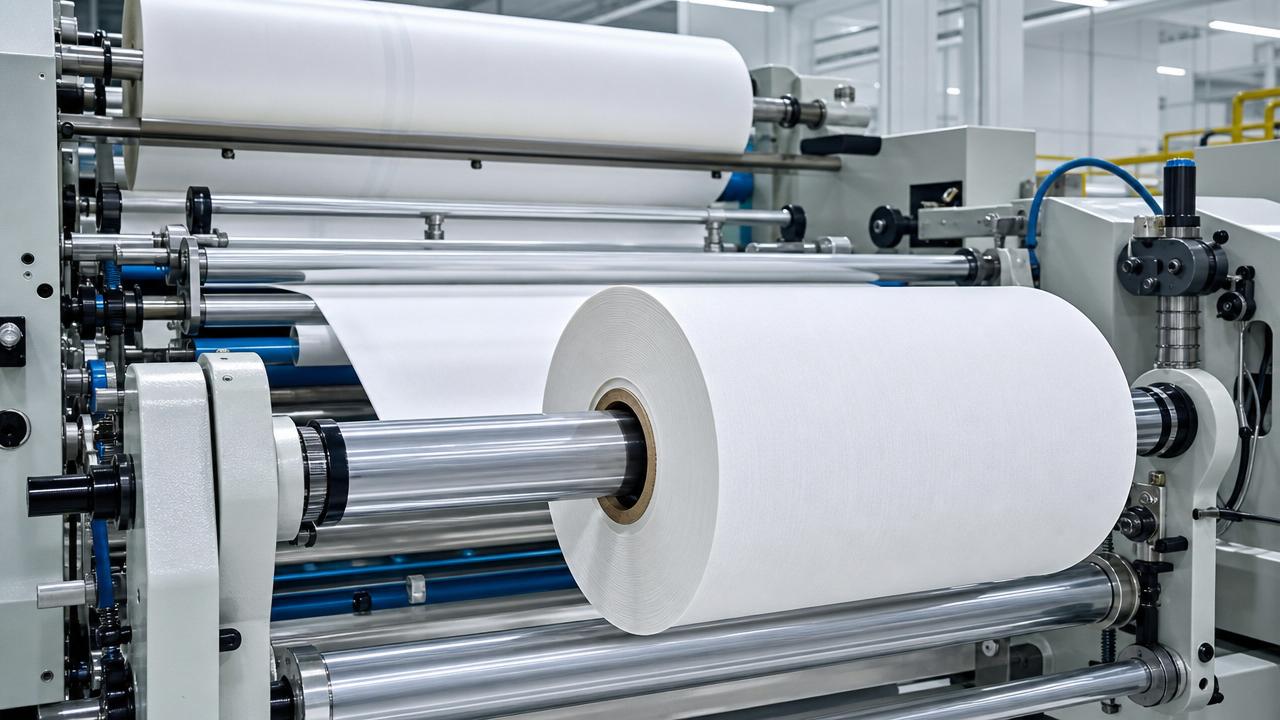
In tissue rewinding, small quality deviations can quickly turn into scrap, downtime, and safety risks. For quality control and safety managers, effective checks on roll tightness, edge alignment, core stability, tension consistency, and defect detection are essential to reducing waste before it escalates. This article outlines the key inspection points that help tissue converting lines protect yield, maintain product standards, and support safer, more efficient production.
Why do tissue rewinding quality checks matter so much on modern converting lines?
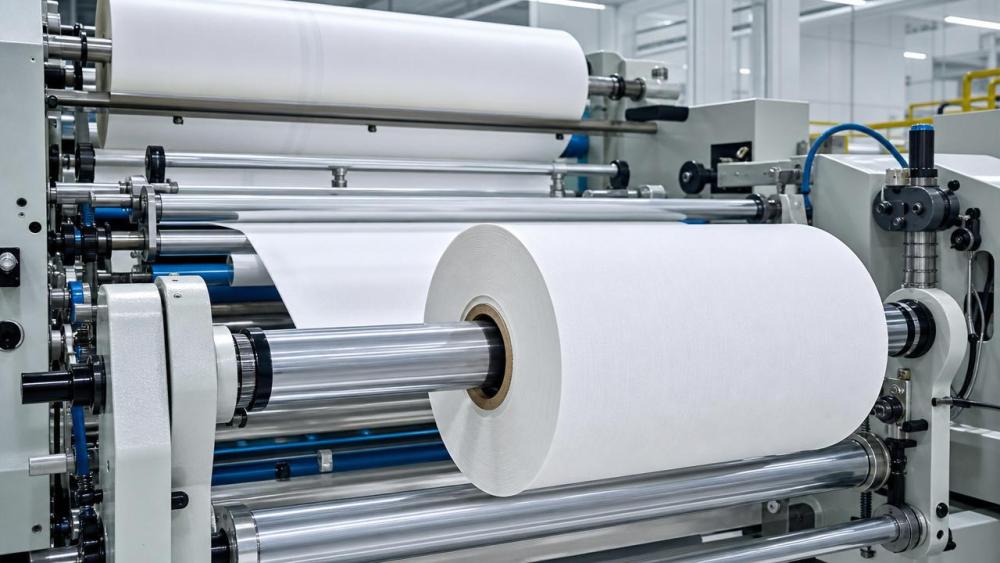
In high-speed tissue converting, waste rarely starts as a dramatic machine fault. It usually begins with a subtle tension drift, a slightly crushed core, a wandering web edge, or a rewind density profile that changes across the shift. If these issues are not caught early, they spread downstream into wrapping rejects, customer complaints, operator intervention, and avoidable safety exposure.
For quality and safety teams, tissue rewinding is not only a production step. It is a control point where process capability, product conformity, and machine stability meet. A poorly rewound log can look acceptable at first glance but still fail in storage, transfer, cutting, packaging, or end use.
This is especially important in today’s paper-based manufacturing environment, where pressure on fiber costs, sustainability targets, labor efficiency, and line uptime continues to increase. As IPPS tracks automated tissue machinery and tension decoupling behavior across converting systems, one conclusion remains consistent: better tissue rewinding checks reduce both visible scrap and hidden losses.
- They prevent waste at the source by identifying unstable roll build before logs move to sawing or packaging.
- They protect operator safety by reducing jams, manual rework, and unstable roll handling.
- They improve consistency across SKUs, shifts, and raw material lots, which is critical for plants running mixed production schedules.
- They support better purchasing and maintenance decisions because recurring defect patterns often point to mechanical or control-system weaknesses.
Which tissue rewinding checkpoints prevent the most waste?
Quality teams often inspect finished rolls, but the most effective tissue rewinding control plan starts earlier and uses repeatable checkpoints. The goal is not to inspect everything. It is to focus on the variables that most strongly predict waste, converting efficiency, and safety performance.
1. Roll tightness and density profile
A roll that is too loose may telescope, deform, or collapse during transport to the log saw. A roll that is too tight may crush the core, mark the sheet, or create release problems for the end user. Good tissue rewinding control checks whether density is stable from core to outer layers and whether the profile stays consistent from side to side.
2. Edge alignment and roll geometry
Poor edge build often signals web guiding variation, slitter condition issues, or tension imbalance. Misaligned edges generate trim loss, packaging instability, and poor pallet appearance. In premium retail tissue, visible edge quality also affects perceived product value.
3. Core placement and stability
Core defects are a common but underappreciated source of waste. If the core is out of round, poorly bonded, crushed, or not centered correctly, rewind quality degrades immediately. Core instability also increases the chance of vibration, log rejection, and unsafe manual handling during cleanup.
4. Tension consistency
Tension is the hidden driver behind many tissue rewinding problems. Even when embossing, perforation, and sheet count are correct, unstable unwind or rewind tension can create wrinkles, burst webs, soft shoulders, and variable diameter. Plants that monitor tension trends rather than only final defects respond faster and lose less material.
5. Defect detection before downstream conversion
Holes, wrinkles, ply breaks, contamination, emboss mismatch, and splice-related disturbances should be identified before the log reaches later operations. The later a defect is found, the more value has already been added to scrap.
The table below summarizes practical tissue rewinding checks that quality and safety managers can standardize across shifts.
These checks work best when they are tied to clear reaction rules. A checkpoint without a response plan becomes documentation, not control. Teams should define who stops the line, who adjusts settings, and what evidence is recorded for root-cause review.
How should QC and safety teams inspect tissue rewinding in daily production?
A useful inspection routine combines operator observation, instrument data, and periodic sample verification. Plants that rely only on one method often miss either subtle process drift or practical floor-level warning signs.
Build a layered inspection routine
- Start-up approval: Confirm core quality, parent roll condition, knife condition, and baseline tension settings before releasing saleable output.
- In-process checks: At defined intervals, verify roll firmness, edge build, diameter accuracy, and visible defects using the same method each shift.
- Alarm review: Analyze web break frequency, splice upset events, and tension deviations from machine logs.
- Post-shift review: Compare reject causes by SKU, operator team, raw material lot, and line speed to detect patterns that are otherwise hidden.
In tissue rewinding, this layered approach matters because defects may come from materials, machine settings, maintenance condition, or handling practices. A single-point inspection cannot separate those causes well enough.
What should trigger immediate escalation?
- A sudden increase in edge wander or repeated telescoping within the same batch.
- Two or more web breaks linked to the same material roll or speed zone.
- Core crush incidents that suggest excessive nip pressure or poor incoming core quality.
- Frequent manual clearing near rotating sections, because quality instability often becomes a safety event before it becomes a formal defect report.
Which parameters deserve the closest monitoring?
Not every data point has the same value. For tissue rewinding, the most useful parameters are the ones that explain roll build behavior and downstream acceptability. Quality managers should align these checks with product grade, emboss pattern, ply structure, and customer expectations.
The following table helps teams prioritize parameter monitoring and selection discussions with equipment suppliers or line integrators.
When these parameters are reviewed together, tissue rewinding issues become easier to diagnose. A diameter problem alone may suggest counting error, but combined with tension instability and edge drift, it points toward a control interaction problem inside the rewinder.
What problems are often misread, and how can plants avoid wrong corrective actions?
One common mistake is treating every bad roll as an operator issue. In reality, many recurring tissue rewinding defects are system problems involving parent roll variability, sensor lag, worn rollers, poor core supply, or mismatched setpoints between embossing, perforation, and rewinding sections.
Frequent misinterpretations
- Loose rolls are blamed on low tension alone, when the real cause may be speed transition instability or poor core strength.
- Edge defects are blamed on slitting only, while web guide response and parent roll profile are ignored.
- Web breaks are treated as unavoidable tissue weakness, though many are linked to abrupt tension spikes or splice quality variation.
- Packaging rejects are reviewed separately from tissue rewinding, even though unstable roll geometry often causes both problems.
A stronger approach is cross-functional review. Quality, maintenance, safety, and production should look at the same defect trend with shared timestamps. IPPS regularly sees this integrated analysis make the difference between repeated adjustment cycles and durable process correction.
How can tissue rewinding checks support safer operations as well as lower scrap?
Safety managers sometimes inherit rewind-related risks only after a jam or cleanup incident. But tissue rewinding quality checks can act as early safety controls because unstable product often forces manual intervention near moving equipment. The best waste-prevention strategy is also a safety-prevention strategy.
Quality indicators with safety value
- Repeated telescoping indicates a handling hazard during transfer and stacking.
- Core crush can lead to unstable rotation and sudden disruption during downstream cutting.
- Frequent web breaks often increase manual threading tasks and exposure around rotating components.
- Loose debris from damaged edges can raise housekeeping risks and obscure machine condition.
This is why audit routines for tissue rewinding should include both reject-rate indicators and intervention-rate indicators. If a line needs repeated manual correction to stay within quality limits, the process is not under control, even if final scrap appears moderate.
What should buyers and plant managers evaluate when improving tissue rewinding control?
Whether you are upgrading an existing rewinder or assessing a new converting line, selection criteria should go beyond headline speed. Quality and safety teams should ask how the machine manages tension, detects defects, handles variable tissue grades, and supports traceable decision-making.
The table below supports procurement and technical review by comparing common evaluation dimensions for tissue rewinding improvement projects.
Buyers should also ask for realistic acceptance criteria, not just speed claims. In tissue rewinding, stable quality at production conditions is more valuable than peak speed achieved under limited test circumstances.
FAQ: common questions from quality and safety managers
How often should tissue rewinding quality checks be performed?
Frequency should match risk. Start-up checks, scheduled in-process verification, and event-based checks after breaks, splices, or grade changes are usually more effective than fixed hourly checks alone. Faster lines or premium SKUs often need tighter intervals.
Which defect usually creates the most hidden waste?
Tension instability often creates the most hidden waste because it causes several downstream symptoms at once: wrinkles, web breaks, poor roll firmness, geometry variation, and extra operator handling. It also tends to be misdiagnosed if teams focus only on visible finished-roll defects.
Are manual inspections still useful on automated tissue rewinding lines?
Yes. Automation improves consistency, but manual checks remain valuable for tactile roll assessment, visible edge quality, unusual noise or vibration, and housekeeping clues that sensors may not classify well. The strongest systems combine human judgment with machine data.
What should be reviewed before approving a rewinder upgrade or new supplier?
Review control logic for tension transitions, defect visibility, integration with upstream and downstream equipment, maintainability, spare-parts support, and the supplier’s ability to discuss real tissue rewinding scenarios rather than generic machine output figures.
Why choose us for tissue rewinding intelligence and project support?
IPPS supports decision-makers across digital print, corrugated, post-press, and tissue processing machinery, with particular value in areas where process control and material behavior intersect. For tissue rewinding, that means helping teams connect tension management, roll quality, production efficiency, and safety outcomes in a practical way.
If you are evaluating a rewinder, troubleshooting recurring defects, or planning a line upgrade, you can consult us on parameter confirmation, equipment selection logic, delivery lead-time considerations, custom process requirements, likely certification questions, sample evaluation priorities, and quotation communication points that matter to QC and safety teams.
We are especially useful when your project involves cross-functional judgment: comparing suppliers, clarifying technical terms, identifying process-risk gaps, or aligning tissue rewinding quality expectations with broader packaging and paper-converting strategy. That is where informed intelligence prevents expensive assumptions.
Industry Briefing
Get the top 5 industry headlines delivered to your inbox every morning.
Recommended News