
Industrial Printing Systems: Hidden Downtime Costs to Check First
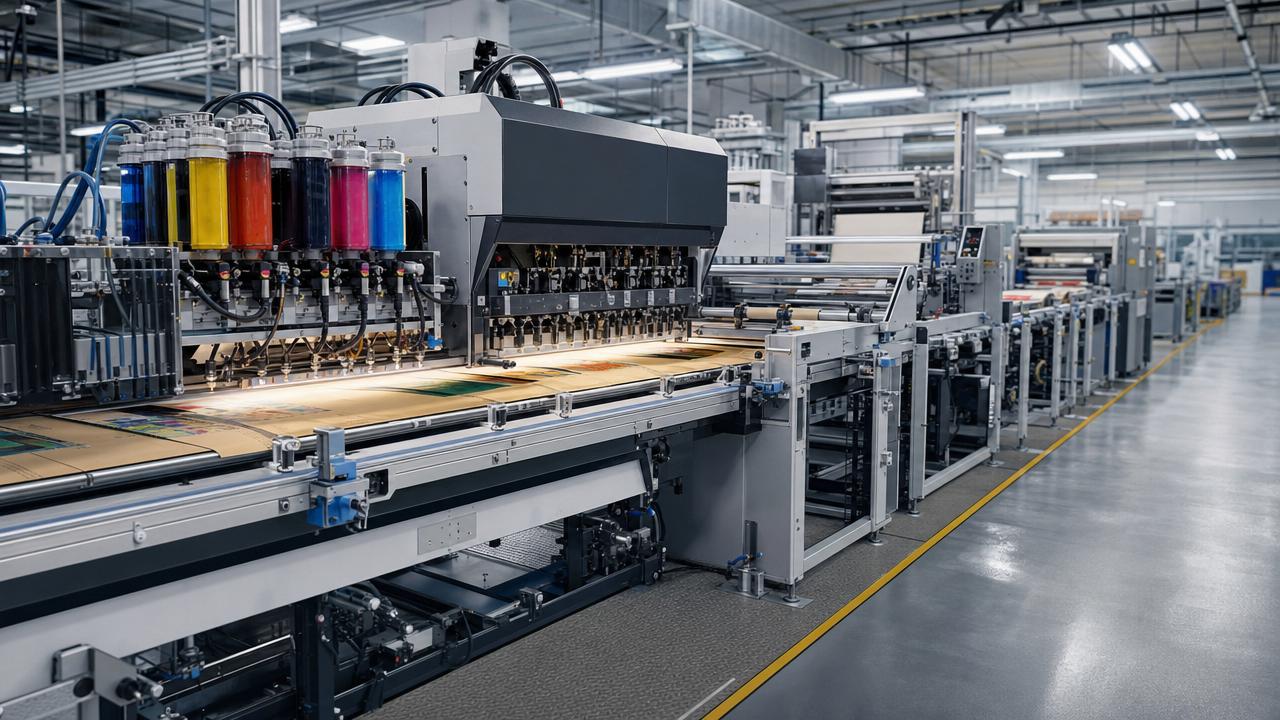
Unplanned stoppages in industrial printing systems rarely start with a major breakdown—they often begin with overlooked tension drift, ink delivery instability, worn post-press components, or inconsistent corrugator settings. For procurement teams, checking these hidden downtime drivers first can reduce lifecycle costs, protect output quality, and improve supplier decisions across digital printing, converting, and paper packaging operations.
For buyers, the key question is not simply which machine has the highest rated speed. It is which system can maintain stable output, predictable maintenance, and lower downtime costs over years of real production.
The hidden cost of downtime in industrial printing systems usually appears in three places: lost throughput, waste and rework, and emergency service dependence. These losses compound quickly across printing, converting, and packaging lines.
That is why procurement teams should evaluate downtime risk before comparing headline specifications. A faster machine with unstable ink delivery or weak spare-parts support often becomes more expensive than a slightly slower but better-controlled system.
What procurement teams should check first in industrial printing systems
The core search intent behind this topic is practical evaluation. Buyers want to know where hidden downtime begins, how to spot it early, and how to use that insight in supplier selection.
They are usually less interested in generic machine descriptions. What matters more is understanding which subsystems most often create avoidable stoppages, recurring quality loss, and rising maintenance spend in daily production.
For most industrial printing systems, the first checks should focus on stability rather than advertised peak performance. Stability determines whether a machine delivers acceptable output every shift, not just during ideal demonstrations.
In real factories, downtime often starts at interfaces. Print engines depend on substrate handling, upstream board consistency, finishing synchronization, software communication, and operator-friendly maintenance access. Procurement should therefore assess the entire production chain.
Tension control problems often cause downtime before anyone notices
Web handling and sheet transport instability are common hidden causes of stoppages. Slight tension drift may not trigger alarms immediately, but it can create registration issues, wrinkling, skew, or substrate damage over time.
In corrugated and paper-based production, tension inconsistency can spread downstream fast. A small upstream deviation may later appear as print defects, die-cutting misalignment, folding difficulty, or glue failure in converting stages.
Procurement teams should ask suppliers how the system detects, corrects, and records tension variation. Closed-loop control, sensor quality, response speed, and recipe repeatability matter more than broad claims of “high automation.”
It is also important to check performance across different substrates, widths, moisture conditions, and operating speeds. Many industrial printing systems look stable on standard jobs but become unreliable under mixed-product production schedules.
Buyers should request evidence from live runs, not only factory acceptance documents. Trend data showing tension deviations across extended production windows is more useful than a short, well-prepared demonstration.
Ink delivery and printhead stability can quietly drain productivity
In digital printing environments, ink delivery instability is one of the most expensive hidden downtime sources. It causes nozzle dropouts, color variation, banding, cleaning interruptions, and repeat calibration that slowly erode available production hours.
Many procurement decisions still focus too heavily on print resolution or top-line speed. However, real ownership cost is strongly shaped by purge frequency, recirculation design, ink conditioning, environmental tolerance, and maintenance labor.
For industrial printing systems using piezo inkjet technology, buyers should examine how the supplier manages viscosity control, temperature stability, filtration, degassing, and printhead protection during starts, stops, and shift changes.
Another important point is recovery behavior after interruption. Some systems return to acceptable quality quickly after pauses, while others need extended recalibration, substrate waste, and operator intervention before output becomes saleable again.
Ask suppliers for data on mean time between cleaning events, average startup waste, head replacement intervals, and image consistency during long runs. Those figures often reveal more about downtime exposure than nominal machine speed.
Post-press wear is a major hidden downtime multiplier
In packaging operations, downtime is not created by the printer alone. Worn die-cutting tools, folding rails, belts, gluing modules, sensors, and stamping components can stop the whole line even when print quality remains acceptable.
This is especially relevant for buyers sourcing complete industrial printing systems or connected converting lines. The financial damage of stoppages often increases after print, because printed material already contains ink, board, labor, and scheduling value.
Procurement should review wear-part lifecycles, replacement time, adjustment complexity, and local service availability. A low purchase price can become misleading if common consumables fail frequently or require long technician visits.
Tooling changeover is another hidden downtime factor. If a supplier cannot demonstrate fast, repeatable setup for different box formats or decorative finishes, production flexibility will suffer and idle time will rise.
It also helps to ask how the machine handles cumulative tolerance variation. Robust post-press equipment should maintain consistent creasing, folding, gluing, and registration even when upstream material is not perfectly uniform.
Corrugator consistency has a direct impact on printing uptime
For corrugated packaging plants, many print-related stoppages actually begin in board formation. Inconsistent flute profile, moisture imbalance, bonding variation, and warp can destabilize feeding, print registration, and downstream finishing.
That means procurement teams should not assess digital print modules in isolation. If the business depends on corrugated output, the reliability of the corrugator and board quality control is a first-level downtime issue.
Ask suppliers how their systems cope with board thickness variation, surface roughness, and dimensional instability. Some industrial printing systems are far more tolerant of corrugated substrate variability than others.
At the same time, corrugator buyers should evaluate steam control, tension management, adhesive application consistency, and changeover behavior. A “good enough” board line often creates hidden losses that later appear as print or conversion downtime.
For procurement, the lesson is simple: the more sensitive the downstream process, the more valuable upstream consistency becomes. Downtime prevention starts with material stability, not only machine robustness.
Software, diagnostics, and service response often decide true lifecycle cost
Mechanical quality matters, but hidden downtime is increasingly shaped by software visibility and support capability. A system that helps operators diagnose faults quickly can reduce minor stoppages that otherwise consume hours each week.
Buyers should look for meaningful dashboards, alarm histories, remote diagnostics, trend logging, and clear root-cause reporting. If every issue still depends on trial-and-error troubleshooting, downtime costs will remain structurally high.
Integration quality is equally important. Industrial printing systems must communicate reliably with workflow software, prepress systems, inspection tools, and downstream packaging equipment. Poor integration often causes repeated interruptions without obvious hardware failure.
Procurement should also compare service models carefully. Spare-parts stock, local engineering coverage, response-time commitments, and remote support effectiveness all influence how long a stoppage lasts once it occurs.
A useful question for suppliers is not “Do you offer service?” but “What percentage of faults are resolved remotely, how fast are critical parts delivered, and what is your average time to restore production?”
How buyers can assess hidden downtime risk before signing a contract
To make better decisions, procurement teams should turn downtime risk into a structured evaluation framework. This helps compare suppliers beyond headline price, speed, and promotional performance claims.
Start with a failure-point checklist covering substrate handling, print stability, environmental sensitivity, post-press wear, changeover complexity, software visibility, spare-parts dependency, and operator training requirements.
Then ask each supplier for evidence in comparable production conditions. The most useful proof includes long-run performance data, customer references in similar applications, maintenance intervals, and examples of recovery after real stoppages.
It is also wise to involve operations, maintenance, and quality teams in the purchase process. Procurement sees commercial terms, but daily users often identify hidden downtime risks that are easy to miss during formal quotation review.
Where possible, calculate total cost of downtime by hour and use it in supplier scoring. Once the business assigns a realistic value to lost production, weak reliability becomes much easier to quantify.
Questions procurement teams should ask suppliers of industrial printing systems
Strong questions often expose weak systems faster than brochures do. Buyers should ask which failure modes occur most often in the field and what design changes were made to reduce them.
Ask how machine performance changes at high speed, with short runs, during product changes, and under variable substrate conditions. Hidden downtime usually appears in those non-ideal but common operating scenarios.
Request maintenance schedules by component, expected annual consumable cost, recommended critical spare-parts list, and the average skill level needed for routine service. These details directly affect operating continuity.
It is also helpful to ask for examples of customer uptime improvement after installation upgrades, software revisions, or process optimization support. A capable supplier should be able to show measurable operational impact.
Finally, ask what data the machine records automatically and how that data can be used for predictive maintenance. Better visibility turns downtime reduction from a reactive expense into a manageable performance strategy.
Conclusion: the best buying decision is the one that prevents silent production loss
For procurement teams, hidden downtime costs in industrial printing systems deserve early attention because they shape total ownership cost more than many visible specifications do. Small instabilities often become large operational losses.
The first checkpoints should include tension control, ink delivery stability, post-press wear exposure, corrugator consistency, software diagnostics, and service responsiveness. These areas have a direct effect on uptime, quality, and waste.
When buyers evaluate industrial printing systems through a lifecycle lens, they make stronger supplier decisions. They also reduce the risk of purchasing machines that look efficient in presentations but struggle under real production demands.
The most valuable question is not which equipment is fastest on paper. It is which system can sustain reliable output, recover quickly from disruption, and protect profit across years of changing jobs and production pressure.
Industry Briefing
Get the top 5 industry headlines delivered to your inbox every morning.
Recommended News