
Automated Packaging Systems: 2026 ROI Benchmarks and Payback Risks
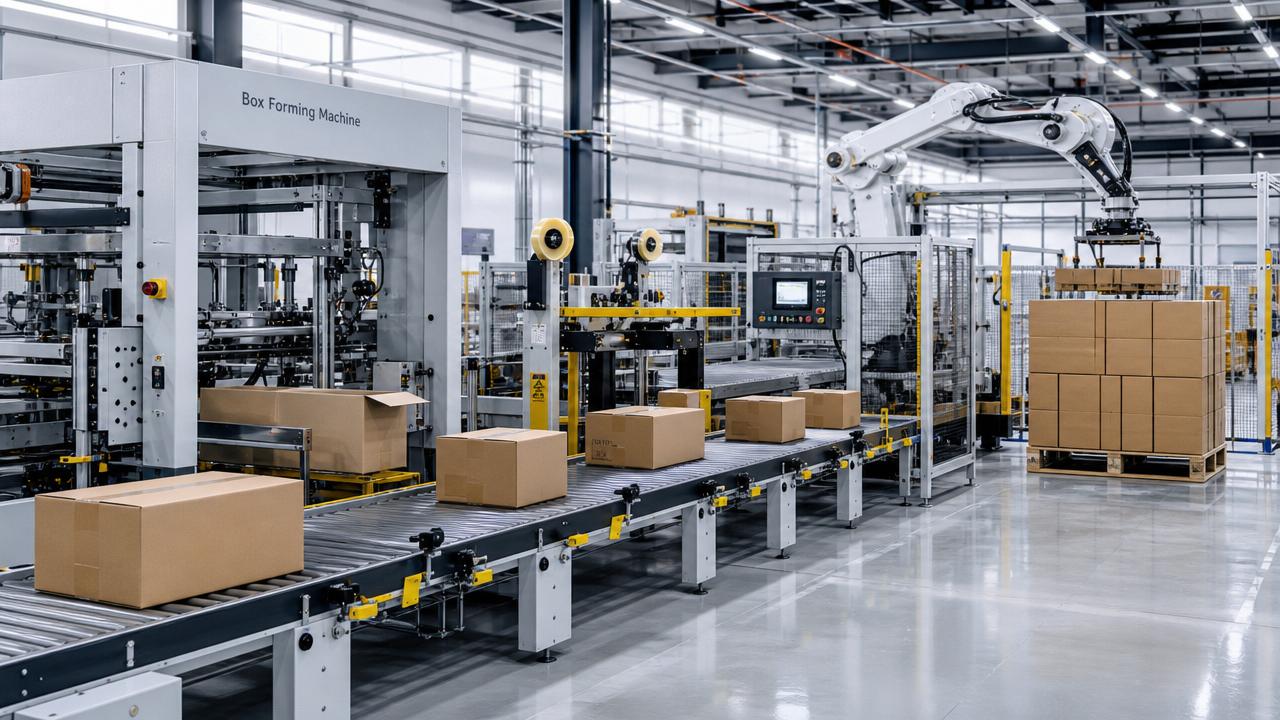
As capital budgets tighten and throughput targets rise, automated packaging systems are under sharper scrutiny than ever. In 2026, decision-makers need more than vendor promises—they need clear ROI benchmarks, realistic payback timelines, and a sober view of implementation risks. This article outlines the metrics, cost drivers, and hidden variables that determine whether automation strengthens margins, resilience, and long-term competitiveness.
For most enterprise buyers, the core search intent behind “automated packaging systems” is not simply to understand the technology. It is to judge whether an investment will pay back fast enough, reduce labor exposure, support growth, and avoid expensive integration mistakes.
That means the most useful discussion is practical rather than theoretical. Decision-makers want benchmark ranges, cost assumptions, deployment risks, plant-fit criteria, and a framework for separating high-return automation projects from attractive but underperforming capital purchases.
What executive buyers really need to know about automated packaging systems in 2026
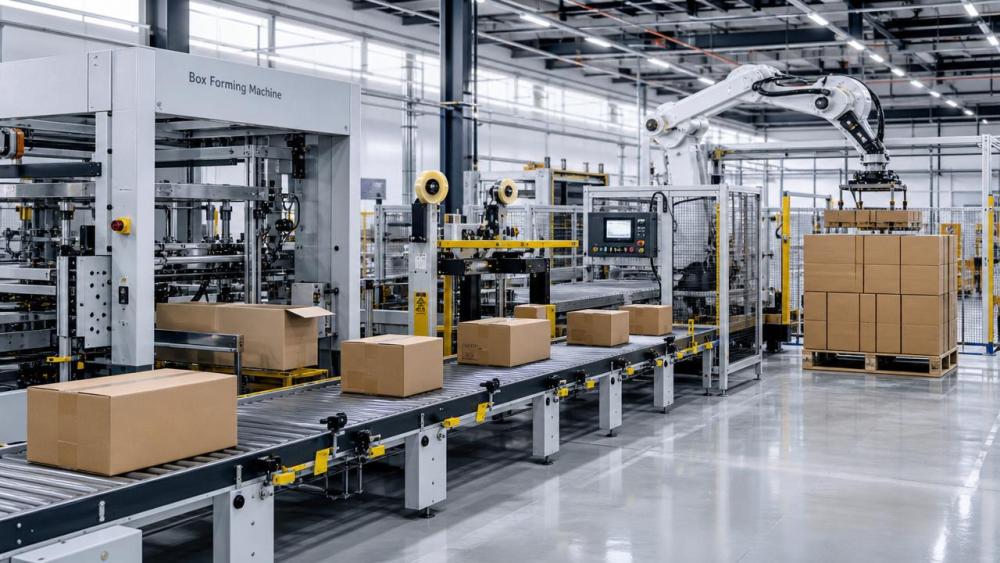
The short answer is this: in 2026, strong automated packaging systems can still deliver attractive returns, but the spread between winning and disappointing projects is widening. Labor savings alone rarely tell the full story.
Across packaging, paper converting, corrugated, tissue, and fulfillment-linked operations, most successful projects are justified through a mix of throughput improvement, scrap reduction, labor redeployment, uptime stability, and better order responsiveness.
For many mid-to-large operations, a realistic payback target sits between 18 and 36 months. Best-in-class, high-volume lines may return faster, while complex, multi-SKU environments often take longer than early business cases suggest.
If a supplier promises universal 12-month payback without detailing baseline labor, changeover losses, integration cost, and maintenance ramp-up, executives should treat that forecast as a marketing narrative rather than an investment-grade estimate.
Core search intent: buyers want ROI clarity, not generic automation benefits
When executives search this topic, they are usually trying to answer five questions. First, what level of return is normal today? Second, what risks delay payback? Third, which KPIs matter most?
Fourth, they want to know whether their own operating profile supports automation economics. Fifth, they need a defensible investment story for boards, finance leaders, or ownership groups that are increasingly cautious on capital deployment.
That is why generic lists of automation benefits are not enough. Leaders already understand the broad case for speed and labor efficiency. What they need is a sharper model for capital prioritization under real-world operating constraints.
2026 ROI benchmarks: what “good” looks like for automated packaging systems
ROI benchmarks vary by application, substrate, SKU complexity, plant maturity, and labor market intensity. Still, decision-makers can use several directional ranges to pressure-test vendor claims before beginning detailed engineering and procurement work.
In labor-constrained facilities with repetitive, high-volume runs, labor cost reduction or labor redeployment often accounts for 25% to 45% of the value case. Throughput gains can represent another 20% to 40% when bottlenecks are real.
Waste reduction typically contributes 5% to 15%, though this can be higher in corrugated converting, print-to-pack workflows, or premium packaging where setup loss, registration errors, and damaged output materially affect margin.
Inventory and service gains are harder to model but increasingly important. Faster, more stable packaging operations can reduce finished-goods buffering, shorten order cycle times, improve OTIF performance, and support e-commerce responsiveness.
For broad benchmarking, under 18 months is exceptional and usually linked to large labor exposure or severe throughput constraints. Eighteen to 24 months is strong. Twenty-four to 36 months is acceptable. Beyond 36 months requires strategic justification.
Strategic justification may still be valid. A project may strengthen customer retention, improve compliance, enable new package formats, or create a platform for lights-out operations. But those benefits must be stated clearly, not hidden inside inflated savings estimates.
The metrics that matter more than headline payback
Payback period is useful, but it is not enough on its own. Executive teams should review automated packaging systems using a broader capital lens that captures resilience, utilization, and the durability of expected savings.
Start with OEE-related indicators: availability, performance, and quality. A packaging line that runs faster on paper but adds stoppages or quality escapes can damage returns more than a modestly slower line with stable uptime.
Next, quantify labor impact correctly. The right question is not “How many heads can we remove?” but “How many hours can we eliminate, redeploy, or avoid hiring at current and future demand levels?”
Then review changeover performance. In mixed-SKU operations, reduced setup time can matter as much as nominal speed. Automated packaging systems that handle frequent recipe changes well often outperform faster but less flexible alternatives.
Maintenance economics also matter. Mean time between failure, spare parts availability, remote diagnostics, technician training, and software support all affect realized ROI. A lower purchase price can quickly lose its advantage if serviceability is weak.
Finally, evaluate capacity quality, not just capacity volume. If automation creates output that downstream palletizing, warehousing, or shipping cannot absorb, the bottleneck simply moves and projected returns erode.
Where payback models usually go wrong
Most underperforming projects do not fail because automation itself lacks value. They fail because the business case was built on overly simple assumptions that ignored line interaction, product mix volatility, and implementation friction.
A common mistake is counting gross labor savings instead of net savings. If operators are reassigned rather than removed, savings may still exist, but they appear through avoided overtime, reduced temp dependence, and better staffing elasticity.
Another mistake is using peak-speed data as the baseline economic driver. Executives should ask for sustained run-rate performance under normal product conditions, including changeovers, operator learning curves, and quality verification steps.
Many business cases also underestimate total cost of ownership. Tooling, conveyors, guarding, controls integration, air and power upgrades, consumables, software licensing, spare parts, and annual service contracts can significantly alter the return profile.
Downtime during commissioning is another frequent blind spot. If installation disrupts revenue-critical periods, the temporary output loss can materially extend the payback timeline, especially in seasonally sensitive packaging operations.
The hidden variables that separate high-return projects from disappointing ones
Three hidden variables deserve more attention in 2026: SKU complexity, upstream consistency, and management discipline. These factors often determine whether automated packaging systems outperform expectations or miss them by a wide margin.
SKU complexity matters because highly varied box sizes, pack patterns, label requirements, and promotional formats reduce the practical efficiency of automation. Flexibility is not free, and every additional mode adds engineering and operating complexity.
Upstream consistency is equally important. If printing, corrugation, die-cutting, folding, gluing, or product infeed quality is unstable, downstream packaging automation inherits those problems and magnifies stoppage frequency.
Management discipline may be the biggest differentiator. Plants that treat automation as a capability system—covering standard work, preventive maintenance, data governance, and operator ownership—capture far more value than plants chasing equipment alone.
Which operations are most likely to see strong returns
Automated packaging systems tend to generate the clearest returns in environments with one or more of the following conditions: high labor intensity, chronic hiring difficulty, sustained volume growth, repetitive packaging formats, or quality-sensitive output.
Corrugated and paper-based packaging operations are especially strong candidates when demand is tied to e-commerce, FMCG replenishment, or regionalized production. Here, throughput reliability and damage reduction can have direct commercial impact.
Post-press and converting plants may also benefit when automation reduces handling steps between die-cutting, folding-gluing, bundling, inspection, and end-of-line packing. The more touches eliminated, the stronger the case tends to become.
Tissue and hygiene-related production can support attractive returns as well, particularly where sanitation, high run continuity, and fast packaging cadence are core to profitability. In these settings, uptime and consistency carry outsized economic value.
What risks should decision-makers actively underwrite before approval?
Before approving a project, enterprise buyers should explicitly underwrite at least six risks: integration risk, utilization risk, change-management risk, service risk, demand risk, and financial assumption risk.
Integration risk covers mechanical fit, controls compatibility, MES or ERP connectivity, and line balance. Even strong standalone equipment can underperform if data flows, sensors, and handoffs are not engineered to plant reality.
Utilization risk asks whether the line will actually run enough hours at enough volume to justify the investment. If demand assumptions are optimistic, payback can stretch rapidly, especially on highly specified systems.
Change-management risk is often underestimated. Operators, supervisors, maintenance teams, planners, and quality staff all need new routines. Without structured onboarding, plants often experience a prolonged dip before performance stabilizes.
Service risk includes response time, parts lead time, software support maturity, and local technical coverage. In international operations, service capability can matter as much as machine specification when calculating long-term economic confidence.
Demand risk matters because packaging formats change faster than many capital cycles. If the system is too rigid for future carton sizes, paper grades, sustainability requirements, or retail configurations, the asset can age prematurely.
A practical framework for evaluating automated packaging systems
Executives should insist on a staged investment framework. First, define the operational constraint to be solved: labor instability, throughput bottleneck, scrap, service failure, compliance pressure, or format flexibility.
Second, build a baseline using verified plant data rather than estimates. Include run rates, downtime categories, shift coverage, overtime, temp labor, scrap, rework, changeover minutes, order mix, and service-level penalties.
Third, compare scenarios. A full automation purchase should compete not only against the status quo, but also against lower-cost alternatives such as line balancing, selective retrofit, software optimization, or semi-automated deployment.
Fourth, model downside cases. Reduce expected uptime, delay the ramp, increase maintenance cost, and lower utilization. If the project only works in a best-case scenario, it is not yet ready for capital approval.
Fifth, demand accountability from suppliers. Ask for application references with similar substrates, SKU counts, shift patterns, and labor conditions. Performance proof from a different operating model is only partially relevant.
How 2026 market conditions are changing the investment case
Several 2026 dynamics are pushing automated packaging systems higher on strategic agendas. Persistent labor scarcity remains one driver, but not the only one. Cost volatility, sustainability targets, and service expectations are also reshaping ROI logic.
Paper-based packaging demand continues to benefit from e-commerce logistics and plastic substitution in many markets. That expands the strategic value of reliable converting and end-of-line automation, especially for plants serving variable order patterns.
At the same time, buyers are becoming less tolerant of black-box equipment. Data visibility, remote diagnostics, predictive maintenance, and digital integration now influence the investment case because they improve operational control after startup.
For multinational groups, automation is also a resilience decision. Standardized systems can reduce cross-site variability, support transferable operating practices, and improve governance across distributed production footprints.
Final judgment: when automated packaging systems are worth it
Automated packaging systems are worth the investment when they solve a specific operating constraint, fit the product mix, and are supported by disciplined implementation. They are not automatically high-ROI simply because labor is expensive.
In 2026, the most credible projects usually share four traits: a verified baseline, realistic ramp assumptions, multi-factor value creation, and explicit risk underwriting. These projects tend to earn internal support and deliver more predictable payback.
For executive buyers, the right question is not whether automation is the future. It is whether this system, in this plant, under this demand profile, will create durable economic advantage within an acceptable risk envelope.
If the answer is supported by data rather than vendor optimism, automated packaging systems can strengthen margin, protect service performance, and create a stronger platform for growth in a packaging market that rewards speed, flexibility, and resilience.
Industry Briefing
Get the top 5 industry headlines delivered to your inbox every morning.
Recommended News