
Automated Packaging Systems: Payback Factors Before Investing
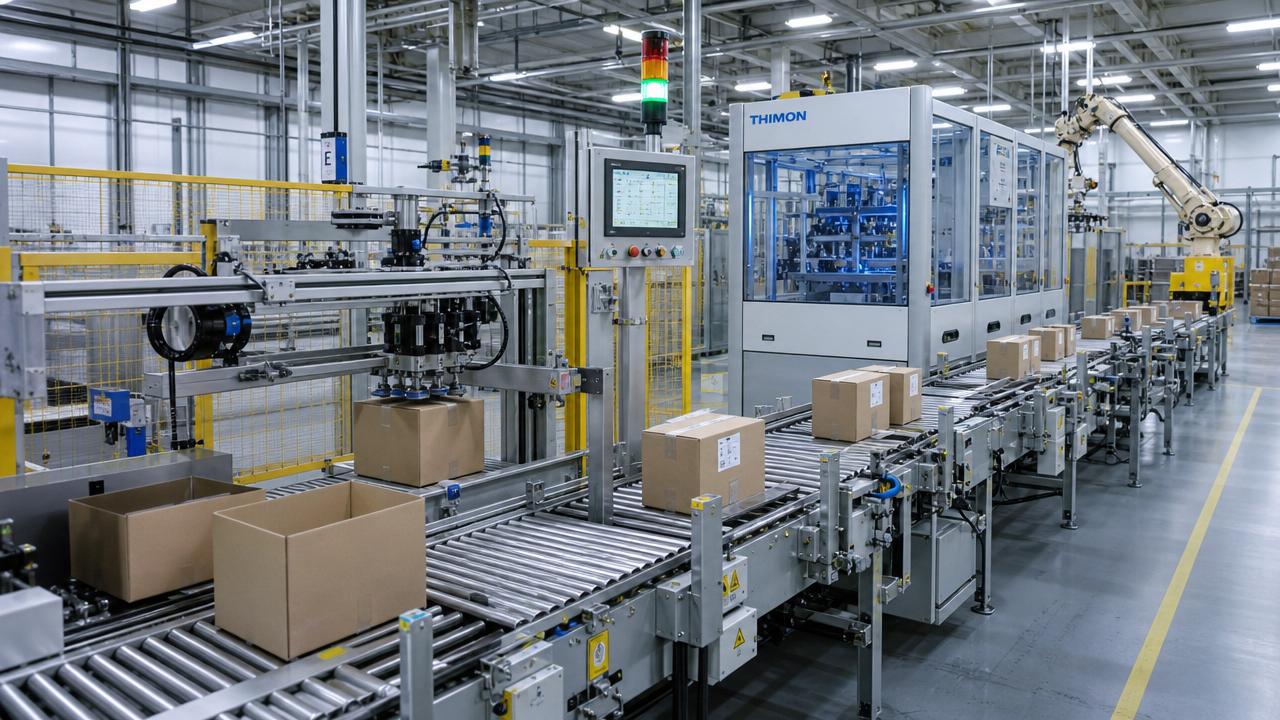
Investing in automated packaging systems can unlock faster throughput, lower labor dependency, and stronger packaging consistency—but the real question for business decision-makers is how quickly the investment pays back. Before committing capital, companies must assess production volume, maintenance demands, integration complexity, and long-term efficiency gains to ensure the system aligns with both operational goals and market competitiveness.
For companies operating in print, corrugated converting, folding-gluing, tissue processing, and broader paper-based packaging supply chains, the payback period is rarely defined by equipment price alone. It is shaped by labor economics, uptime, line balancing, waste rates, order variability, and the ability to support e-commerce speed and sustainable packaging targets.
In practical terms, an automated packaging system may include case erecting, carton feeding, robotic loading, in-line inspection, weighing, coding, sealing, bundling, palletizing, and data connectivity. In paper and board applications, it often also needs to work with digital printing, die-cutting, corrugated board lines, and automatic folder gluers without creating bottlenecks upstream or downstream.
What Drives Payback in Automated Packaging Systems
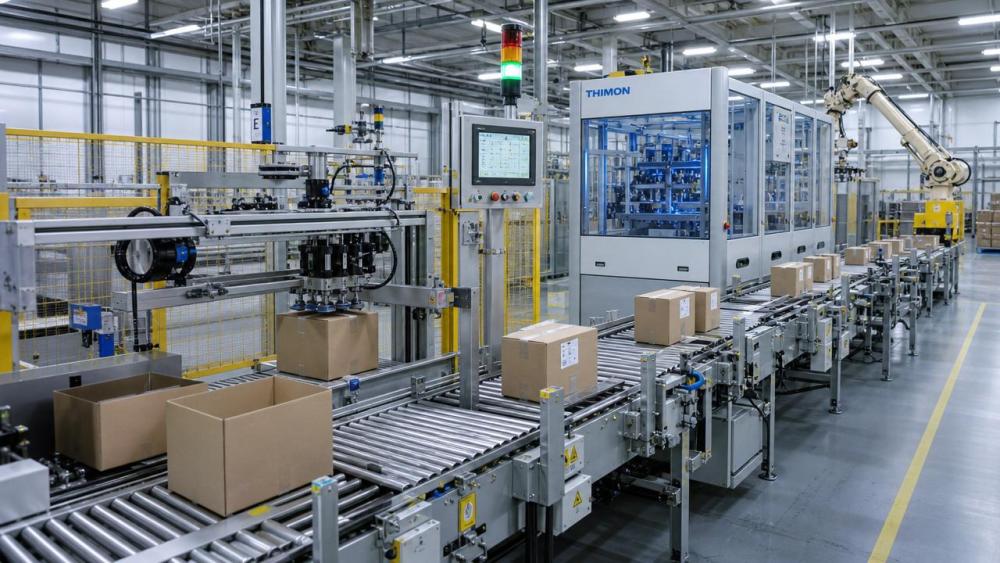
For decision-makers, the most useful way to evaluate automated packaging systems is to break payback into 5 operational drivers: labor replacement, throughput gain, scrap reduction, consistency improvement, and service continuity. In many packaging plants, even a 10% to 20% throughput increase can change the investment case if order backlogs, overtime, or customer lead times are already under pressure.
In corrugated and folding-carton environments, labor is often the most visible cost, but not always the largest hidden loss. Manual packing lines may require 4 to 12 operators per shift, while semi-automated or fully automated packaging systems can reduce direct handling by 30% to 70%, depending on product mix, pack format, and inspection requirements.
1. Production Volume and Shift Structure
Automation pays back faster when production is stable enough to keep the line utilized. A plant running 2 or 3 shifts, 5 to 6 days per week, usually gains more from automation than a site producing short, irregular batches only 2 days weekly. Utilization below 45% often stretches payback, while utilization above 65% tends to improve capital efficiency.
This matters especially for high-speed paper packaging operations. If a folder gluer outputs 18,000 to 30,000 cartons per hour but end-of-line packing remains manual, the benefit of upstream productivity is diluted. Automated packaging systems protect the value already created by digital printers, die-cutting machines, and board converting assets.
2. Labor Availability, Turnover, and Training Cost
Plants in regions with labor shortages, high turnover, or rising wage inflation often see faster payback than plants with a stable manual workforce. If turnover exceeds 15% to 20% annually, training, quality drift, and absenteeism can become recurring cost centers that do not appear clearly in standard machine ROI spreadsheets.
For tissue packaging and fast-moving consumer goods, repetitive end-of-line tasks also create ergonomic risk. Automated packaging systems can reduce manual lifting, repetitive wrist motion, and rework caused by inconsistent counting or sealing, adding operational value beyond payroll reduction.
3. Waste, Damage, and Rework
In paper-based packaging, a 1% to 3% reduction in waste can materially improve margins, especially when board, kraft paper, specialty substrates, or adhesive costs are volatile. Poor stacking, misaligned cartons, inaccurate counts, or weak seals may not stop the line, but they slowly erode profitability.
Automated packaging systems with vision inspection, rejection gates, and controlled sealing parameters can tighten output consistency. That is particularly valuable when converting premium boxes, retail-ready packaging, or export cartons where dimensional accuracy, barcode readability, and shipment integrity affect customer acceptance.
The table below helps frame the most common payback factors before investing in automated packaging systems across print and paper packaging operations.
The key takeaway is that payback should be modeled as an operational system, not a standalone machine purchase. When output, labor, material loss, and service reliability are measured together, the financial picture becomes much clearer.
Critical Cost Areas That Are Often Underestimated
Many capital projects look attractive in the first proposal stage because the visible machine price is easy to compare. Yet automated packaging systems can disappoint when supporting costs are ignored. Integration, utilities, floor layout changes, spare parts, software commissioning, and operator training can add 10% to 35% to the total project budget.
Integration with Upstream and Downstream Equipment
In paper packaging, automated packaging systems rarely operate in isolation. They must receive product from digital print finishing, corrugated converting, die-cutting, tissue rewinding, or folder gluer lines at a stable pace. A mismatch of only 5% to 10% in line speed can cause accumulation, jams, or idle time across the cell.
Decision-makers should verify interface logic, conveyor height, product orientation, barcode communication, reject handling, and buffer capacity. In plants handling multiple SKUs, the changeover sequence must also be checked. A line with 3-minute mechanical changeover but 20-minute software reset is not truly flexible.
Maintenance Readiness and Spare Parts Strategy
Maintenance planning has direct impact on payback. If a high-speed packaging cell depends on one servo drive, one vision sensor family, or one specialized gluing module with a 4- to 8-week replacement lead time, a minor failure can destroy capacity gains for an entire month.
A practical target is to define 3 spare parts categories before purchase: critical same-day parts, 7-day standard parts, and planned maintenance items for 3- to 6-month stocking. This approach is especially relevant where paper dust, adhesive contamination, or humidity swings increase wear rates.
Typical Hidden Cost Checks
- Compressed air, power load, and extraction capacity
- Conveyor extensions, guarding, and floor reinforcement
- MES, ERP, or print data connection requirements
- Glue system cleaning time and consumable usage
- Night-shift troubleshooting support availability
A reliable investment decision requires estimating these support costs over 12, 24, and 36 months. Short-term labor savings can look strong, but repeated downtime or poorly planned service contracts may delay break-even beyond the expected window.
How to Evaluate System Fit Before You Invest
The best automated packaging systems are not necessarily the fastest. They are the systems that match pack styles, order profiles, substrate behavior, and available technical resources. A plant running high-volume standard cartons has a very different automation profile from a converter handling short-run customized boxes printed digitally in frequent SKU changes.
Match the Automation Level to Order Complexity
Fully automated packaging systems deliver strong returns in repetitive, stable production. Semi-automated systems may be smarter where pack sizes vary widely, product geometry changes often, or seasonal spikes occur. For many converters, the real choice is not automation versus manual work, but the right level of automation for the first 24 months.
A useful planning method is to segment orders into 3 bands: high-repeat SKUs, medium-variation SKUs, and low-volume custom jobs. If 60% to 70% of output comes from repeat orders, a higher degree of automation is usually easier to justify. If custom jobs dominate, fast changeover becomes the priority metric.
Audit Data Before Vendor Comparison
Before comparing suppliers, companies should gather at least 8 weeks of operating data. That includes average order size, peak hourly output, planned and unplanned downtime, reject rates, labor per shift, and packaging material consumption. Without this baseline, automated packaging systems are often evaluated on assumptions rather than actual loss points.
The following matrix can support a more disciplined pre-investment review.
This type of review helps prevent overbuying and under-specifying at the same time. It also gives procurement, operations, and finance teams a shared framework for evaluating automated packaging systems beyond brochure claims.
Check Floor Space and Material Flow Early
A system that fits on paper may fail in the plant because of forklift routes, roll storage, board stacks, glue kitchens, or pallet discharge zones. Even a 15- to 25-meter packaging cell can create traffic conflicts if product enters from one direction and pallets exit through another congested aisle.
In facilities with corrugated board lines or large post-press equipment, layout planning should include maintenance access envelopes, electrical cabinets, and operator safety zones. These details affect installation speed, commissioning time, and future service convenience.
Implementation Risks and How to Reduce Them
Even well-selected automated packaging systems can underperform when implementation discipline is weak. The first 90 to 180 days after installation are critical. During this stage, the goal is not only to run the equipment, but to stabilize cycle time, reject handling, operator response, and data accuracy.
Common Commissioning Risks
- SKU changeovers are tested on too few pack formats
- Operators are trained only for normal production, not faults
- Glue, board stiffness, or tissue compression behavior is not validated at full speed
- OEE targets are defined before stable baseline conditions are reached
These issues are common in paper-based manufacturing because substrate variability matters. Corrugated board caliper, moisture, print surface friction, and scoring quality can all influence how reliably products feed, fold, stack, or seal inside automated packaging systems.
A Practical 4-Step Rollout Approach
- Define the baseline: capture current labor, output, reject, and downtime data for 6 to 8 weeks.
- Run factory acceptance and site acceptance tests on representative SKUs, not only easy formats.
- Train operators, maintenance teams, and shift leaders separately over 2 to 3 phases.
- Track weekly KPIs for the first 12 weeks and adjust recipes, speeds, and maintenance intervals.
This phased model reduces the risk of declaring success too early. It also makes the actual payback of automated packaging systems easier to verify against the original business case.
KPIs Worth Monitoring After Startup
Useful metrics include packs per minute, first-pass yield, unplanned stops per shift, mean time to repair, labor hours per 1,000 units, and material loss per order. In many plants, one month of KPI discipline reveals whether the line is under-trained, over-speeded, or constrained by upstream equipment.
When Automated Packaging Systems Make the Most Strategic Sense
The strongest investment cases usually appear where demand is rising, customization is increasing, and labor predictability is weakening. That combination is common across e-commerce corrugated packaging, digitally printed short-run cartons, premium retail packaging, and tissue products requiring fast, hygienic end-of-line handling.
Automated packaging systems also become more strategic when customers demand shorter lead times, barcode accuracy, retail-ready presentation, and traceable production data. In these environments, automation is not only about cost reduction. It becomes a platform for delivery reliability and account retention.
Best-Fit Scenarios
- Converters shipping high daily volumes of repeat carton formats
- Corrugated plants serving e-commerce or FMCG with tight dispatch windows
- Tissue processors requiring hygienic, high-speed bundling and wrapping
- Packaging groups standardizing operations across multiple plants
For leadership teams, the decision should connect operational results with broader strategy. If the business is moving toward digitalization, unmanned night shifts, sustainability reporting, or standardized multi-site performance, automated packaging systems can support those goals far beyond the packaging cell itself.
Final Decision Questions for Executives
Before approving capital, ask 4 direct questions. Where is the current packaging bottleneck? How many months of reliable demand justify the capacity? What support structure will protect uptime? And how will success be measured at 3, 6, and 12 months after startup? Clear answers to these questions usually separate high-return investments from expensive experiments.
For organizations tracking the future of digital printing, corrugation, post-press precision, folder-gluer productivity, and tissue automation, investment discipline matters as much as machine capability. Automated packaging systems deliver the best payback when they are selected as part of a connected production strategy rather than a stand-alone equipment upgrade.
If you are evaluating automated packaging systems for paper-based manufacturing, corrugated conversion, or post-press packaging lines, now is the time to benchmark your current losses, define your realistic payback window, and compare system architectures against actual production data. Contact us to explore tailored solutions, discuss integration priorities, or learn more about smarter packaging automation decisions.
Industry Briefing
Get the top 5 industry headlines delivered to your inbox every morning.
Recommended News