
Tissue Machinery Buyer Guide: Rewinder Features That Matter
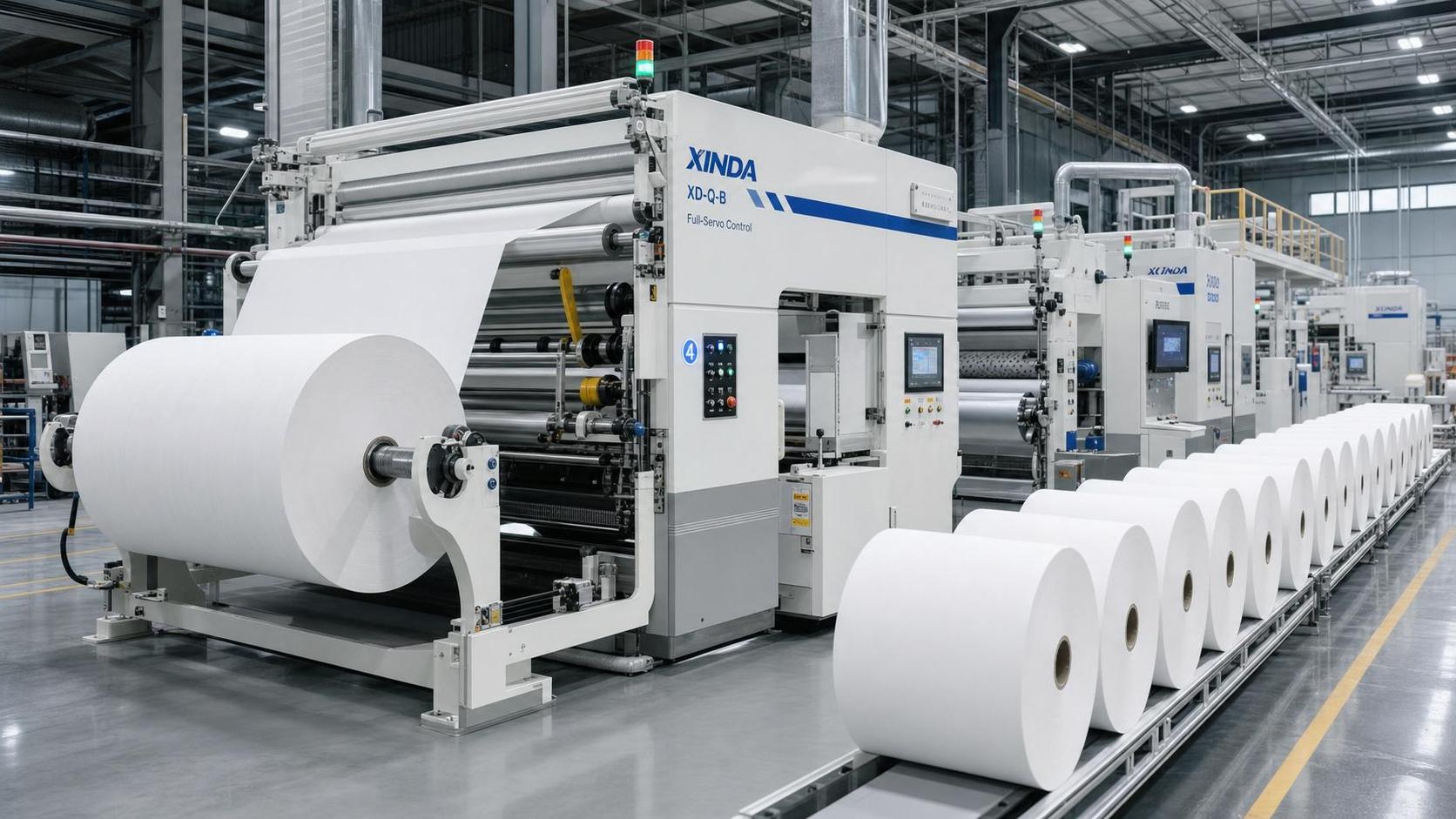
Selecting a rewinder is rarely a narrow equipment decision. In tissue converting, it shapes roll quality, uptime, energy use, labor structure, and the credibility of supply commitments. That is why any serious tissue machinery buyer guide rewinder review has to look beyond headline speed and ask how the machine behaves under real production pressure.
For IPPS, which tracks automated tissue machinery alongside broader print and paper systems, the rewinder sits at a strategic point. It turns parent rolls into saleable products while translating web tension control, automation logic, and downstream packaging requirements into measurable business performance.
Why the rewinder deserves closer attention
In many lines, the rewinder is judged by output speed first. That is understandable, but incomplete. A fast machine with unstable tension, inconsistent log density, or long changeovers can quietly erode margin.
The issue is more visible now because tissue demand is changing. Product variety is wider, retailers expect steadier quality, and sustainability targets put pressure on trim waste, energy consumption, and material utilization.
A practical tissue machinery buyer guide rewinder discussion therefore starts with one principle: the best machine is not the one with the highest advertised speed, but the one that protects stable throughput across different grades and product formats.
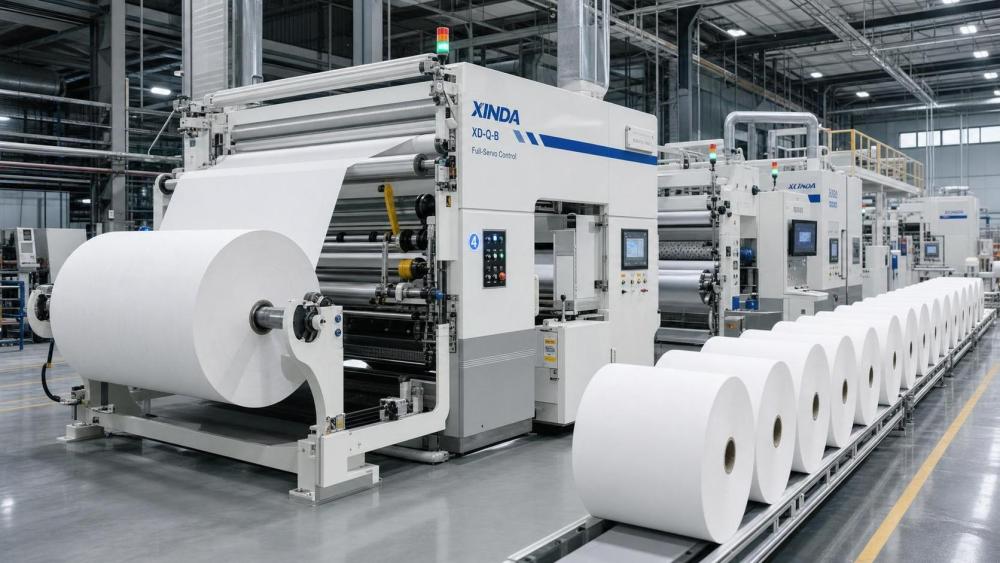
That perspective also fits the wider IPPS view of paper-based manufacturing. Across digital printing, corrugated production, and post-press automation, the strongest assets are the ones that maintain precision when conditions shift.
What a rewinder really needs to do well
At its core, a tissue rewinder unwinds the parent roll, controls web tension, perforates, rewinds, and often integrates embossing or lamination interfaces. That sounds straightforward. In practice, each stage affects saleable quality.
A good tissue machinery buyer guide rewinder framework should examine how consistently the machine handles three things at once: web stability, finished roll integrity, and operational repeatability.
- Web stability affects wrinkles, breaks, perforation registration, and embossing alignment.
- Finished roll integrity affects softness perception, diameter accuracy, tail sealing, and packaging fit.
- Operational repeatability affects staffing efficiency, maintenance planning, and forecast reliability.
When one of these fails, the cost does not stay inside the rewinder. It moves into packaging rejects, customer complaints, missed delivery windows, and excess parent roll waste.
The features that matter most in comparison
Tension control and decoupling accuracy
This is usually the most important technical feature. Stable tension from unwind to final log formation determines whether the machine can run different basis weights and ply structures without quality drift.
Advanced systems use closed-loop control, load cells, servo coordination, and tension decoupling logic. Those tools matter because tissue webs are sensitive, especially at higher speeds or with premium embossed products.
Speed stability, not only maximum speed
Advertised top speed is useful only when the line can sustain it with acceptable waste rates. A machine that runs slightly slower but holds quality through long production campaigns is often the stronger investment.
In a tissue machinery buyer guide rewinder benchmark, it is worth asking for data on average running speed, break frequency, and startup scrap rather than relying on brochure peaks.
Embossing and converting compatibility
Not every rewinder behaves equally with embossed, laminated, scented, or glue-bonded structures. Product mix should shape machine selection from the beginning.
Compatibility matters for premium household tissue, away-from-home products, and private-label programs where appearance consistency is tightly specified.
Automation depth and operator dependence
Automation affects more than labor savings. Recipe management, automatic core feeding, log transfer synchronization, and fault diagnostics reduce variability between shifts and shorten training cycles.
This aligns with the wider IPPS focus on digitalization and unmanned operation. In tissue converting, repeatable automation is often the bridge between theoretical capacity and delivered capacity.
Maintenance access and serviceability
A rewinder may look efficient on paper while hiding difficult blade access, frequent wear points, or spare parts dependence. Those issues typically emerge after commissioning, when correcting them is expensive.
Simple access, modular assemblies, clear HMI diagnostics, and predictable preventive maintenance intervals all deserve weight in the evaluation.
How these features connect to business results
The value of a rewinder is best understood through production consequences, not isolated specifications. Better tension control supports cleaner perforation, tighter diameter tolerance, and fewer web breaks.
Better automation improves line balancing with upstream parent roll handling and downstream bundling or case packing. Maintenance-friendly design reduces recovery time when the line stops.
In short, a strong tissue machinery buyer guide rewinder assessment should connect machine features to four business outcomes:
Typical scenarios where rewinder differences become visible
Machine differences are often hidden during factory demonstrations. They become clearer in everyday production scenarios, especially when the line is asked to do more than one thing well.
High-volume commodity tissue
This environment rewards uptime, simple maintenance, and stable running over long shifts. Minor quality drift can create large losses because volumes are high and tolerances in packaging are tight.
Premium embossed or laminated products
Here, web handling precision matters more. Decorative patterns, softness perception, and visual uniformity raise the performance burden on tension control and roll formation.
Mixed-SKU and private-label production
Frequent format changes increase the value of fast setup, digital recipes, and consistent repeatability. The rewinder must shift without turning each product change into a fresh tuning exercise.
Sustainability-driven operations
As paper sourcing rules such as FSC and EUDR gain weight, waste reduction becomes more than a cost topic. Better material utilization and lower break rates strengthen both compliance narratives and operating discipline.
Questions worth asking before shortlisting
A useful tissue machinery buyer guide rewinder process depends on the right questions. Vendor comparisons improve when evaluation criteria are tied to real production risks.
- What grades, ply structures, and embossing configurations has the machine already proven in commercial use?
- What is the average speed under stable production, not the peak demonstration speed?
- How much waste is typically generated during startup, splice events, and SKU changes?
- Which wear components require the most frequent replacement, and what are the expected intervals?
- How easily does the rewinder connect with upstream logs, downstream packaging, and plant-level data systems?
- What local service coverage, remote diagnostics, and spare parts response times are available?
These questions help shift the conversation from claims to evidence. They also make it easier to compare machines that look similar in specification sheets but perform differently over time.
A practical way to move forward
The most effective buying process starts with a production map. List product mix, target speed bands, acceptable waste levels, maintenance capacity, and downstream packaging constraints before reviewing equipment proposals.
From there, use a tissue machinery buyer guide rewinder matrix that balances technical control, operating evidence, and lifecycle support. Weight the machine on actual line behavior, not only on nominal output.
IPPS follows this issue through the lens of smart paper-based manufacturing: precision where the web is fragile, automation where variability is expensive, and data where decisions need proof. For any rewinder shortlist, that remains the most reliable basis for the next step.
Industry Briefing
Get the top 5 industry headlines delivered to your inbox every morning.
Recommended News