
Tissue Machinery Trends Shaping 2026 Production
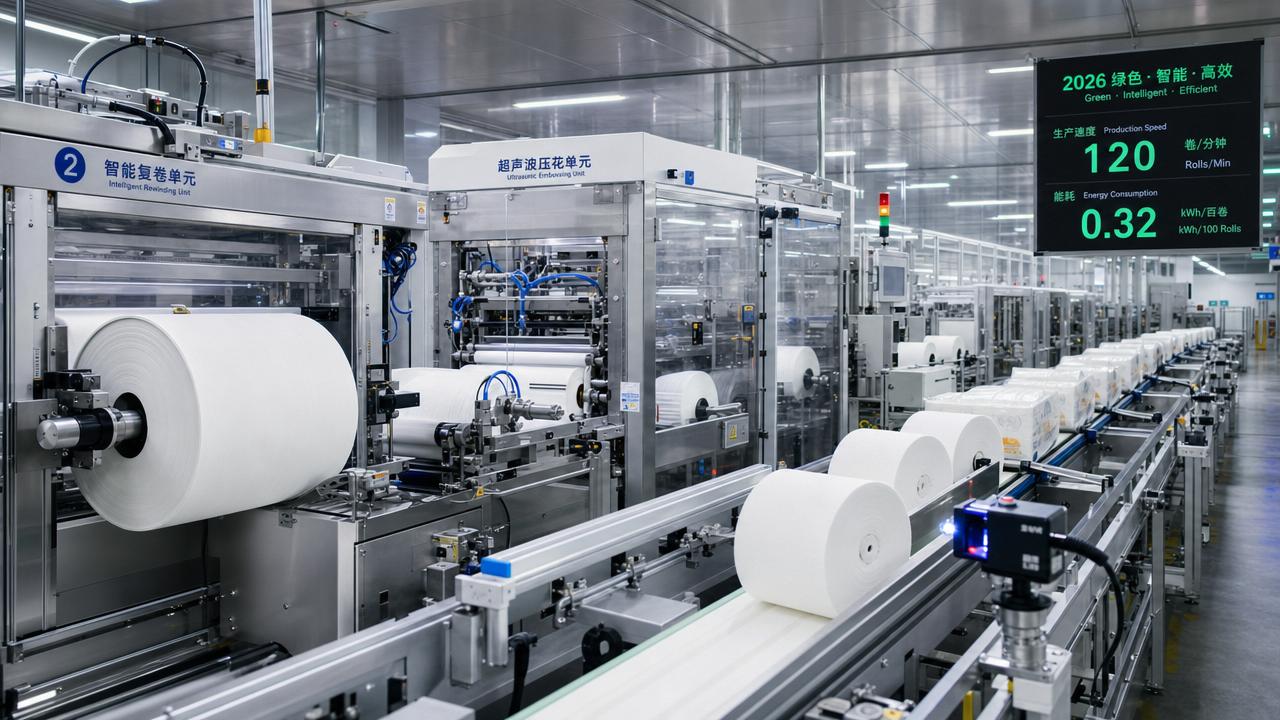
As hygiene demand, sustainability rules, and labor constraints converge, tissue machinery is entering a decisive phase for 2026 production planning.
The next edge will come from smarter rewinding, ultrasonic embossing, automated packaging, energy-efficient drying, and data-driven quality control.
This guide explains the questions shaping tissue converting lines, helping enterprises reduce waste, stabilize output, and build greener paper-based capacity.
What Makes Tissue Machinery a Strategic Production Priority for 2026?
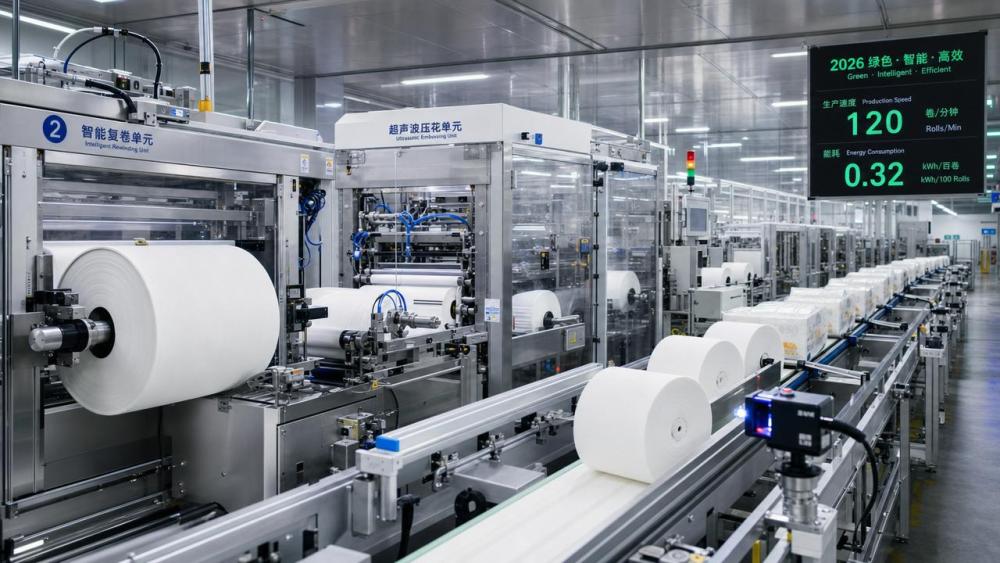
Tissue machinery is no longer only a set of rewinders, embossers, cutters, and wrappers.
It is becoming an integrated productivity platform for hygiene goods, retail packs, away-from-home products, and private-label paper lines.
The 2026 production environment will reward systems that combine speed, softness control, lower energy use, and stable web handling.
Modern tissue machinery must process lighter basesheets without tearing, wrinkling, telescoping, or losing roll geometry.
This requirement is linked to fiber cost, recycled pulp availability, and the need to improve yield per tonne.
For tissue converting, small losses matter.
One unstable splice, poor embossing pressure, or inaccurate log saw cut can create visible quality problems downstream.
That is why tissue machinery trends now focus on closed-loop control instead of isolated mechanical upgrades.
Sensors, drives, cameras, and recipes work together to keep tension, diameter, perforation, and packaging accuracy within defined limits.
In 2026, competitive capacity will depend on three capabilities.
- Running diverse tissue grades with fast changeovers and fewer manual adjustments.
- Reducing energy, film, glue, trim, and rejected product across the complete line.
- Using production data to predict faults before downtime becomes expensive.
This shift makes tissue machinery a strategic asset within the broader paper-based smart manufacturing ecosystem.
Which Tissue Machinery Technologies Will Shape Converting Lines?
The most important technologies are not always the most visible machines on the floor.
Many decisive improvements come from control architecture, servo coordination, and measurement systems embedded inside tissue machinery.
Smarter Rewinding and Web Tension Control
Rewinding remains the heart of tissue machinery because it determines roll density, firmness, diameter, and downstream cutting stability.
New rewinders use servo-driven winding, automatic core feeding, and tension decoupling algorithms to handle thin, soft, and recycled tissue.
The goal is not only higher speed.
The goal is repeatable roll formation under changing humidity, basis weight, parent reel diameter, and embossing patterns.
Ultrasonic Embossing and Bonding
Ultrasonic technology is becoming a preferred option for premium softness, ply bonding, and visual pattern definition.
Compared with thermal or glue-heavy processes, ultrasonic embossing can reduce consumables and improve hygiene performance.
For tissue machinery, this means cleaner operation, fewer bonding defects, and better support for sustainability claims.
Automated Packaging and Case Handling
Packaging is often the bottleneck after high-speed converting upgrades.
Automated wrappers, bundlers, baggers, and case packers are now essential parts of tissue machinery planning.
They support retail-ready formats, e-commerce packs, mixed SKU schedules, and reduced manual handling.
Accurate pack compression also reduces shipping volume without damaging product softness.
Vision Inspection and Data-Driven Quality
Camera systems increasingly inspect embossing clarity, sheet count, perforation spacing, roll diameter, label position, and packaging seals.
This turns tissue machinery into a source of continuous quality evidence, not just production output.
When connected with dashboards, quality data helps identify recurring root causes across shifts, reels, recipes, and suppliers.
How Will Sustainability Rules Influence Tissue Machinery Choices?
Sustainability pressure will shape tissue machinery investments through energy, fiber, packaging materials, and traceability requirements.
Regulations and customer audits increasingly require evidence, not broad environmental statements.
Efficient tissue machinery helps document reductions in waste, energy intensity, and non-recyclable packaging inputs.
Lower basis weights create immediate savings but demand stronger process control.
Thin tissue is more sensitive to tension spikes, knife condition, embossing depth, and vacuum transfer settings.
This makes advanced tissue machinery important for balancing sustainability with product performance.
Energy-efficient drying and air systems also deserve attention.
Although converting consumes less drying energy than papermaking, compressed air, vacuum, motors, and heat sealing still affect operating cost.
Variable frequency drives, optimized vacuum zones, and standby modes can reduce unnecessary energy use.
Packaging sustainability is another major driver.
Tissue machinery must increasingly support recyclable films, paper-based wraps, reduced-gauge materials, and precise sealing windows.
The risk is simple.
A sustainable film that fails at speed can increase scrap and damage the total environmental result.
Who Benefits Most from Advanced Tissue Machinery Applications?
Advanced tissue machinery is useful across consumer hygiene, healthcare, hospitality, workplace sanitation, and logistics-adjacent paper supply chains.
The value differs by product format and operating model.
Consumer Toilet Tissue and Kitchen Towels
High-volume tissue machinery supports stable roll quality, attractive embossing, reliable perforation, and flexible pack counts.
These lines often prioritize speed, roll uniformity, and rapid transitions between retail formats.
Facial Tissue, Napkins, and Premium Products
Premium categories require delicate handling because softness, ply bonding, appearance, and box presentation influence perceived value.
Tissue machinery for these products often emphasizes embossing precision, folding accuracy, low dust, and hygienic transfer paths.
Away-From-Home and Institutional Supplies
Dispensers, jumbo rolls, hand towels, and center-pull products require durability and format consistency.
Tissue machinery must produce products compatible with dispenser systems while limiting roll deformation during transport.
Private Label and Fast SKU Environments
Private-label growth increases demand for recipe control, barcode validation, and short changeover cycles.
Here, tissue machinery must manage variety without sacrificing uptime or packaging accuracy.
How Should Tissue Machinery Be Evaluated Before Investment?
A strong evaluation should go beyond nominal speed and catalog specifications.
The best tissue machinery decision considers product range, material behavior, automation depth, service access, and data usability.
Start with the real production mix.
A line optimized only for one flagship roll may struggle when pack counts, grades, cores, or embossing patterns change.
Then review mechanical stability under normal disturbances.
Parent reel splices, humidity swings, knife wear, and recycled furnish variation must not create constant stoppages.
Automation should reduce variation, not introduce hidden complexity.
Human-machine interfaces need clear alarms, guided recipes, maintenance prompts, and useful historical data.
Connectivity also matters.
Tissue machinery should export meaningful data for OEE, quality reports, energy tracking, and preventive maintenance planning.
What Risks and Misunderstandings Should Be Avoided?
The first mistake is buying tissue machinery based only on top speed.
Peak speed is valuable only when quality, maintenance, packaging, and raw material conditions support it consistently.
The second mistake is underestimating upstream and downstream balance.
A fast rewinder cannot create value if log saws, wrappers, palletizing, or material handling become bottlenecks.
The third mistake is treating sustainability as a material substitution project only.
Sustainable tissue production also depends on line stability, low rejects, energy visibility, and compatible packaging windows.
Another risk is poor data discipline.
Tissue machinery may collect many signals, yet data becomes useful only when alarms, causes, and corrective actions are standardized.
Cybersecurity should not be ignored when remote service and cloud dashboards are used.
Connected tissue machinery needs secure access control, update policies, and separation between production and business networks.
- Do not compare equipment without the same product, material, and packaging assumptions.
- Do not ignore dust extraction, hygiene design, and cleaning accessibility.
- Do not postpone operator training until commissioning is complete.
- Do not assume recyclable packaging will run like conventional film.
What Implementation Plan Supports a Resilient 2026 Tissue Line?
A practical roadmap begins with baseline measurement.
Record current OEE, waste rate, changeover time, energy use, defect categories, and maintenance downtime.
Next, define the target product matrix for the next three to five years.
Include roll sizes, ply counts, embossing styles, packaging materials, pallet patterns, and private-label variations.
Then match tissue machinery capabilities with the most likely demand scenarios.
This prevents overinvestment in unused features or underinvestment in critical flexibility.
Pilot testing is especially useful for new films, paper wraps, recycled fibers, and lower basis weights.
Real trials reveal tension limits, sealing behavior, dust generation, embossing response, and pack compression risks.
A phased digital plan is also recommended.
Begin with essential dashboards, then expand toward predictive maintenance, energy benchmarking, and automated quality reporting.
Conclusion: Turning Tissue Machinery Trends into Measurable Advantage
The 2026 direction is clear.
Tissue machinery must deliver speed, flexibility, sustainability, and proof-based quality at the same time.
The strongest projects will not chase isolated specifications.
They will connect rewinding, embossing, cutting, packaging, inspection, energy data, and maintenance into one controlled system.
The next step is to audit current line losses and compare them with future product requirements.
From there, tissue machinery investment can move from equipment replacement to measurable production transformation.
IPPS continues tracking the intelligence behind this transition, linking paper-based manufacturing, automation, and greener hygiene production.
Industry Briefing
Get the top 5 industry headlines delivered to your inbox every morning.
Recommended News