
Industrial Flow Control Upgrades That Reduce Energy Loss in 2026
In 2026, Industrial Flow Control is becoming a decisive lever for reducing energy loss across print, paper, packaging, and other high-throughput manufacturing lines.
For technical evaluators, the challenge is no longer simply selecting valves, pumps, or actuators, but identifying intelligent control architectures that stabilize pressure and reduce waste.
This article examines the upgrades that matter most, helping teams compare efficiency gains, lifecycle costs, and automation readiness before committing to modernization.
Where Energy Loss Really Hides in Flow Control Systems
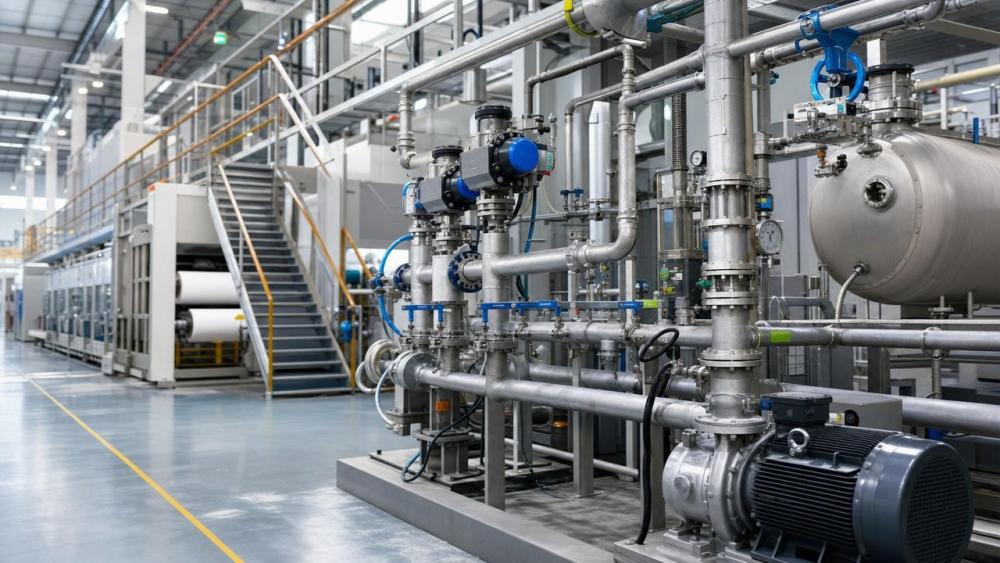
Most energy loss in industrial lines is not caused by one failing component, but by accumulated inefficiencies across pressure, leakage, throttling, and control delay.
In print and paper operations, these losses often appear in steam delivery, vacuum systems, compressed air networks, cooling loops, coating circuits, and adhesive supply lines.
A corrugator may waste energy through unstable steam pressure, while a folder gluer may lose efficiency through compressed-air leakage and oversized pneumatic actuation.
Digital printing lines also depend on stable ink, cleaning fluid, and temperature control loops, where small flow variations can affect quality and rework rates.
For technical evaluators, the first principle is simple: do not treat Industrial Flow Control as a component purchase alone.
It should be evaluated as a system-level energy management layer connecting valves, drives, pumps, sensors, controls, and production data.
The 2026 Upgrade Priority: Replace Fixed Flow with Demand-Based Control
The strongest energy savings usually come from replacing fixed-speed operation and manual throttling with demand-based flow and pressure control.
Many legacy plants still run pumps, fans, and compressors at constant output, then dissipate excess energy through bypasses or throttling valves.
Variable frequency drives, intelligent pressure regulators, and closed-loop valve control allow output to follow actual process demand more closely.
In paper converting, this can reduce unnecessary vacuum load during low-speed operation, short runs, or temporary web tension adjustments.
In corrugated board production, demand-based steam and condensate control can improve heat transfer while preventing overpressure and flash steam losses.
The evaluation question is not only whether a drive or valve saves energy, but whether the control loop responds fast enough for production dynamics.
Technical teams should review ramp rates, minimum stable flow, pressure recovery behavior, and compatibility with existing PLC or SCADA environments.
Smart Valves and Actuators: Precision Matters More Than Specification Sheets
Smart valves are often promoted as digital upgrades, but their real value depends on repeatability, diagnostics, and controllability under real plant conditions.
For steam, coating, ink, adhesive, and air systems, poor valve authority causes hunting, pressure fluctuation, heat loss, and inconsistent product quality.
Upgrading to positioners with feedback, condition monitoring, and adaptive control can reduce overshoot and improve process stability.
In high-throughput packaging lines, stable adhesive flow helps prevent over-application, nozzle clogging, weak bonding, and unnecessary pump cycling.
For digital printing systems, precise fluid regulation supports ink stability, cleaning efficiency, and thermal balance at higher operating speeds.
Evaluators should compare response time, leakage class, turndown ratio, maintenance accessibility, and communication protocols before selecting smart valves.
The best option is not always the most advanced valve, but the one that maintains control accuracy across realistic operating ranges.
Leakage Reduction: The Fastest Payback in Compressed Air and Steam
Compressed air and steam remain two of the most expensive utilities in industrial paper, packaging, and print facilities.
Leakage reduction often delivers faster payback than complex automation projects because losses are continuous, measurable, and frequently neglected.
In compressed-air systems, leaks at fittings, cylinders, valves, and hoses can create permanent load on compressors during every shift.
Modern Industrial Flow Control upgrades include ultrasonic leak detection, zoned air monitoring, smart shutoff valves, and pressure optimization by production area.
In steam systems, worn traps, poor condensate return, and uncontrolled venting convert valuable thermal energy into invisible operating cost.
Technical evaluators should prioritize steam trap monitoring, condensate recovery, automated blowdown control, and insulation verification during modernization planning.
These upgrades may appear basic, but they often improve reliability, safety, and energy intensity without disrupting core machine architecture.
Pressure Stabilization Improves Energy Use and Product Quality Together
Energy efficiency should not be separated from quality performance, especially in high-speed printing, corrugating, converting, and tissue production.
Unstable pressure forces machines to compensate through higher setpoints, broader safety margins, slower speeds, or increased rework allowance.
In corrugated board lines, steam pressure fluctuation can affect moisture balance, bonding strength, warp control, and heat distribution across the web.
In tissue processing, vacuum and air control influence sheet handling, embossing consistency, rewinding tension, and break frequency.
Pressure stabilization also supports post-press operations, where pneumatic folding, gluing, and feeding must remain synchronized at high line speeds.
For evaluators, the relevant metric is not only kilowatt-hour reduction, but energy saved per sellable unit produced.
A flow control upgrade that reduces defects, downtime, and manual adjustments can outperform one with a slightly higher direct energy saving.
Sensor Density and Data Quality Determine Automation Readiness
In 2026, effective Industrial Flow Control depends increasingly on sensor density, data quality, and how clearly operators can interpret process behavior.
Pressure, temperature, flow, vibration, valve position, and energy consumption data should be mapped to production states, not reviewed separately.
Without this context, teams may misread normal recipe changes as faults or miss inefficient patterns hidden during partial-load operation.
For printing and packaging plants, useful dashboards should show utility consumption by machine, shift, product type, speed, and operating mode.
This allows engineering teams to distinguish between baseline waste, quality-driven adjustments, maintenance degradation, and operator intervention patterns.
Evaluators should ask vendors how data is collected, validated, timestamped, stored, exported, and integrated with existing industrial networks.
Open communication standards, cybersecurity provisions, and clear alarm logic are as important as the sensors themselves.
When Pump and Motor Upgrades Create Real Savings
Pump and motor upgrades can be highly effective, but only when sizing, duty cycle, and system resistance are correctly understood.
Replacing a motor with a higher-efficiency model may deliver limited benefit if the pump remains oversized or operates far from its best efficiency point.
In coating, water circulation, cooling, and chemical dosing systems, throttled pumps are strong candidates for variable-speed control.
Technical evaluators should request pump curves, operating point data, measured flow demand, and evidence of expected savings under partial-load conditions.
They should also examine minimum flow requirements, cavitation risk, seal compatibility, maintenance practices, and contamination sensitivity.
For paper and packaging facilities, uptime is critical, so energy savings must be balanced against reliability, cleaning access, and spare-part availability.
The best projects often combine right-sizing, VFDs, improved instrumentation, and control logic changes rather than replacing equipment alone.
Control Architecture: Centralized, Local, or Hybrid?
Modern flow control projects must decide how much intelligence belongs at the device, machine, line, or plant level.
Local control can provide fast response for pressure, dosing, and safety-critical loops without depending on higher-level networks.
Centralized platforms improve visibility, optimization, benchmarking, and cross-line energy coordination, especially for multi-machine production environments.
Hybrid architecture is often best for print and paper operations, where high-speed local control must coexist with plant-wide energy analytics.
For example, a rewinder tension loop may require fast local actuation, while vacuum demand optimization can be coordinated across operating zones.
Evaluators should identify which loops are quality-critical, which are energy-critical, and which require both speed and supervisory optimization.
This classification prevents overengineering simple utilities while ensuring critical processes receive the control performance they need.
Lifecycle Cost Is More Important Than Purchase Price
Technical evaluators should avoid comparing Industrial Flow Control upgrades only through initial equipment cost and headline efficiency claims.
Lifecycle cost includes installation downtime, commissioning effort, calibration, spare parts, training, cybersecurity maintenance, software licensing, and future integration work.
A lower-cost valve package may become expensive if diagnostics are weak, documentation is limited, or maintenance requires frequent manual intervention.
Likewise, advanced platforms may be hard to justify if the plant lacks staff capacity to maintain models, alarms, and analytics.
A practical evaluation should include baseline measurement, expected savings, downtime impact, maintenance burden, process risk, and upgrade scalability.
For high-volume packaging and tissue plants, even small downtime increases can cancel energy savings if implementation planning is poor.
Vendors should be asked for reference cases, measured payback data, commissioning procedures, and clear responsibility boundaries during integration.
How to Build a Practical Evaluation Checklist
A strong upgrade program starts with measurement before specification, because unverified assumptions often lead to misplaced investment.
Begin by identifying the largest energy users, unstable loops, high-leakage zones, and processes requiring excessive safety margins.
Then collect baseline data during different operating speeds, product formats, shift patterns, startup phases, and cleaning or maintenance cycles.
Next, separate opportunities into quick wins, control upgrades, equipment replacement, and long-term digital optimization projects.
Quick wins may include leak repair, setpoint review, trap maintenance, pressure zoning, and operator training on energy-aware operation.
Control upgrades may include smart valves, VFDs, pressure sensors, flow meters, automated shutoff, and supervisory energy dashboards.
Equipment replacement should be justified only when measured data confirms poor efficiency, inadequate control range, or excessive maintenance cost.
Common Risks That Undermine Flow Control Modernization
The most common risk is optimizing one subsystem while shifting instability or energy demand to another part of the line.
For example, reducing compressed-air pressure may save compressor energy but create feeding errors if pneumatic devices lack proper zoning.
Another risk is installing smart devices without maintaining calibration, cleaning routines, spare-part discipline, or operator understanding.
Data overload is also a practical problem when dashboards show many variables but fail to highlight actionable deviations.
Technical evaluators should insist on alarm prioritization, clear energy KPIs, documented control philosophy, and training for maintenance and production teams.
Cybersecurity and network reliability deserve attention, especially when flow control assets connect to plant-wide monitoring or remote service platforms.
A good modernization plan protects production continuity while gradually increasing intelligence, automation, and measurable energy performance.
Which Upgrades Will Matter Most in 2026?
The most valuable 2026 upgrades will be those combining physical efficiency, precise control, and usable real-time data.
For many plants, the first priority should be compressed-air and steam loss reduction because returns are visible and implementation risk is modest.
The second priority should be demand-based pump, fan, and vacuum control, especially where fixed-speed equipment operates across variable production conditions.
The third priority should be smart valve and actuator upgrades in quality-sensitive loops that affect heat, moisture, bonding, coating, or fluid stability.
The fourth priority should be data integration that links utility consumption to production context, enabling better decisions beyond one-time savings.
Plants with advanced automation maturity can then explore predictive control, anomaly detection, and AI-assisted optimization for complex operating patterns.
However, these advanced tools work only when instrumentation, maintenance discipline, and baseline process understanding are already strong.
Conclusion: Evaluate Flow Control as an Energy Strategy
Industrial Flow Control upgrades in 2026 should be judged by their ability to reduce losses while strengthening process stability and production confidence.
For technical evaluators, the best decisions come from measured baselines, realistic duty-cycle analysis, and clear separation of quick wins from strategic upgrades.
In print, paper, packaging, and tissue operations, energy loss is often hidden in pressure margins, leakage, fixed-speed operation, and weak loop control.
Modernization should therefore focus on demand-based control, leakage reduction, smart diagnostics, stable pressure, and data connected to actual production states.
The winning approach is not to buy isolated intelligent components, but to build a flow control architecture that supports efficiency, quality, and automation readiness.
When evaluated this way, flow control becomes more than a utility function; it becomes a measurable driver of lower energy cost and stronger manufacturing resilience.