
Sustainable Paper Packaging Trends Shaping Cost and Compliance in 2026
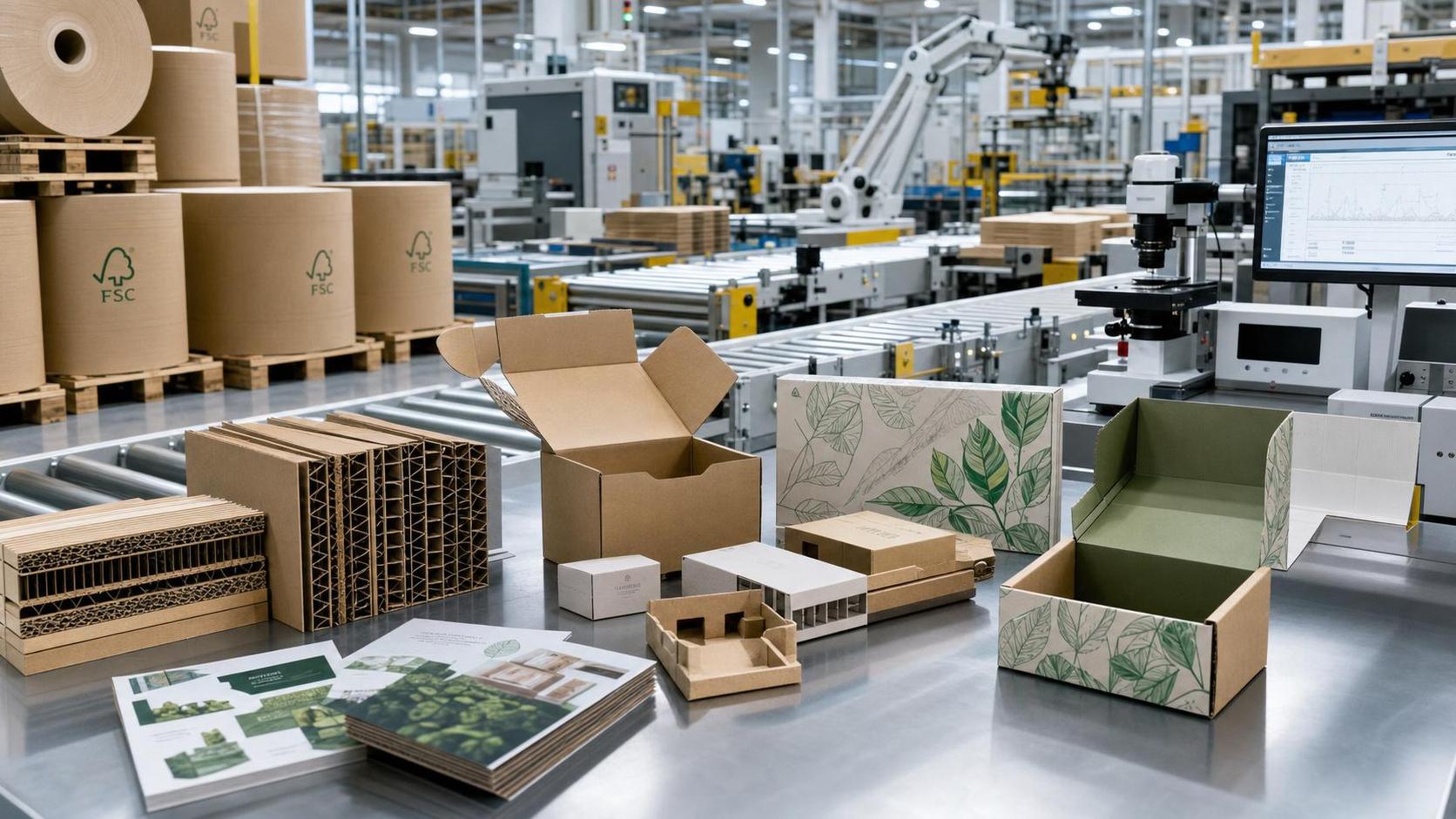
Why sustainable paper packaging has moved from image to operating discipline
In 2026, sustainable paper packaging sits at the meeting point of margin pressure, regulation, and logistics resilience.
What changed is not only buyer preference. Cost structures, reporting duties, and packaging performance requirements changed together.
That combination makes packaging decisions harder to separate from plant efficiency, sourcing strategy, and market access.
Across consumer goods, e-commerce, food service, industrial transport, and tissue-related distribution, paper-based formats are gaining strategic weight.
Yet the most important shift is qualitative. Sustainable paper packaging is now judged by total system performance, not by recycled content alone.
Strength-to-weight ratios, print adaptability, barrier functionality, converting speed, traceability, and end-of-life outcomes all matter at once.
From the recent market direction, the winners are not always those using the most fiber.
They are often those aligning material choices with machinery capability, compliance evidence, and demand volatility.
The signal is getting clearer across regulations, materials, and machinery
Several forces are making sustainable paper packaging a board-level issue rather than a packaging department discussion.
First, forest-linked due diligence is becoming more detailed.
FSC documentation, EUDR readiness, chain-of-custody clarity, and supplier auditability now shape market eligibility as much as price negotiations.
Second, paper price volatility still influences planning, but the conversation has matured.
The question is no longer only how to secure tonnage. It is how to secure fit-for-purpose tonnage with stable converting behavior.
Third, automation is changing what counts as affordable.
A substrate that appears cheaper on paper may become expensive if it slows die-cutting, raises glue consumption, or increases spoilage.
This is where the broader industrial print and paper ecosystem matters.
Insights from digital printing, corrugated board forming, post-press processing, and folder gluing now directly inform packaging strategy.
IPPS has been tracking this convergence closely.
Its lens on web tension control, inkjet behavior on corrugated surfaces, and folding-gluing dynamics reflects a larger truth.
Packaging sustainability increasingly depends on process intelligence, not only material substitution.
The drivers are connected rather than isolated
- Regulation pushes better traceability, fiber origin proof, and recyclability claims discipline.
- Retail and e-commerce demand lighter packs that still protect goods through rough handling cycles.
- Brand owners want short-run variation, which favors digital print flexibility on paper-based substrates.
- Converters need formats that run fast on corrugators, die-cutters, and folder gluers without unstable waste rates.
- Investors and procurement systems increasingly compare carbon claims against measurable operational data.
Cost pressure is shifting from raw material price to total converting economics
One of the more revealing 2026 shifts is how cost is being calculated.
Sustainable paper packaging used to be evaluated with a narrow unit-price mindset.
Now the focus is moving toward total converting economics and delivered packaging value.
That means planners are comparing caliper consistency, moisture sensitivity, flute performance, glue response, print surface behavior, and pack-out efficiency.
In practical terms, lightweighting is still attractive, but only when machine settings, board architecture, and transit demands stay aligned.
A poorly matched downgrade can erase savings through crush failures, returns, and line interruptions.
The same applies to coated or barrier-enhanced grades.
They can improve grease, humidity, or shelf-life performance, but may introduce repulpability questions or converting complexity.
This broader cost view favors organizations that connect packaging design with real machine data.
That is especially true in corrugated formats, where micro-level process changes can produce macro-level cost swings.
Compliance now shapes design choices much earlier
Another notable shift is timing.
Compliance used to enter the process during final approval or supplier qualification.
In 2026, it enters at concept stage, especially for sustainable paper packaging crossing multiple jurisdictions.
Claims around recyclability, renewable content, and deforestation-free sourcing are facing more scrutiny.
This affects coatings, wet-strength additives, inks, adhesives, and mixed-material attachments.
What looks sustainable in marketing language may perform poorly in recovery systems or fail documentation tests.
More companies are therefore simplifying structures, reducing hard-to-separate layers, and tightening supplier specification language.
A useful pattern is emerging here.
Sustainable paper packaging increasingly rewards designs that are technically modest but operationally transparent.
That often means fewer decorative complications, cleaner substrate families, and better traceability records.
Where compliance pressure tends to surface first
- Fiber origin records that cannot be updated across changing supplier networks.
- Barrier treatments that improve performance but weaken recyclability narratives.
- Print and adhesive choices that complicate recovery or food-contact expectations.
- Regional packaging variants lacking a unified evidence trail.
Automation is quietly deciding which sustainable paper packaging models scale
Not every paper-based concept survives industrial reality.
The difference between pilot success and volume success often comes down to automation compatibility.
This is why equipment intelligence matters more than many packaging roadmaps admit.
High-speed digital printers support versioning and shorter campaigns, but substrate variability still affects registration and ink behavior.
Corrugated lines can deliver lightweight, strong structures, yet moisture and tension stability remain decisive for output quality.
Die-cutting and stamping machines add premium value, but intricate structures may lower usable speed and increase board waste.
Folder gluers are now central to paper replacing plastic formats.
If gluing windows are inconsistent, the sustainability claim quickly collides with downtime and reject rates.
This is where intelligence platforms such as IPPS offer practical relevance.
By connecting inkjet algorithms, bonding curves, and tension decoupling insights, they help turn sustainable paper packaging into a controllable system.
That systems view is becoming more valuable than isolated machinery specifications.
The impact is spreading beyond packaging teams
A more mature sustainable paper packaging market changes several business functions at once.
Finance teams see a shift from visible material savings to hidden operational risk management.
Operations teams deal with substrate variability, machine calibration, and line balancing.
Commercial teams face more customer questions about proof, not just promises.
Sourcing teams must compare suppliers by resilience, documentation quality, and processing consistency.
In fast-moving markets, the biggest risk is fragmented decision-making.
A low-cost board grade, a bold sustainability claim, and a legacy converting setup can easily conflict.
More advanced organizations are solving this by using one operating framework for design, compliance, and line performance.
That does not eliminate trade-offs, but it makes them visible earlier.
Questions worth asking before the next packaging cycle
- Does the current sustainable paper packaging design run efficiently at planned speed, not just acceptable speed?
- Are compliance documents updated enough to survive tighter audits and cross-border reviews?
- Which packaging claims depend on supplier statements rather than verified process data?
- Where could digital print, board redesign, or glue reduction improve both flexibility and cost?
What deserves attention next
The next phase of sustainable paper packaging will likely be less about dramatic concept shifts and more about disciplined optimization.
Expect tighter integration between certified sourcing, lightweight board engineering, digital print responsiveness, and automated finishing control.
The strongest positions will come from treating packaging as a live industrial system.
That means monitoring paper indices, test performance, adhesive behavior, waste rates, and regulatory updates together.
A sensible next move is to review current formats against three lenses.
Check whether the structure is still cost-efficient, whether the evidence base is still compliant, and whether the line setup is still scalable.
If one of those lenses fails, the packaging may look sustainable while becoming commercially fragile.
In that sense, 2026 is not just a year of greener materials.
It is a year when sustainable paper packaging becomes a test of industrial coordination, data quality, and operational judgment.
The most useful response is not to chase every new claim.
It is to build a phased review plan, compare substrate and converting options with real production data, and keep watching the signals that change cost and compliance together.
Industry Briefing
Get the top 5 industry headlines delivered to your inbox every morning.
Recommended News