
How High-Speed Actuation Technology Improves Line Precision
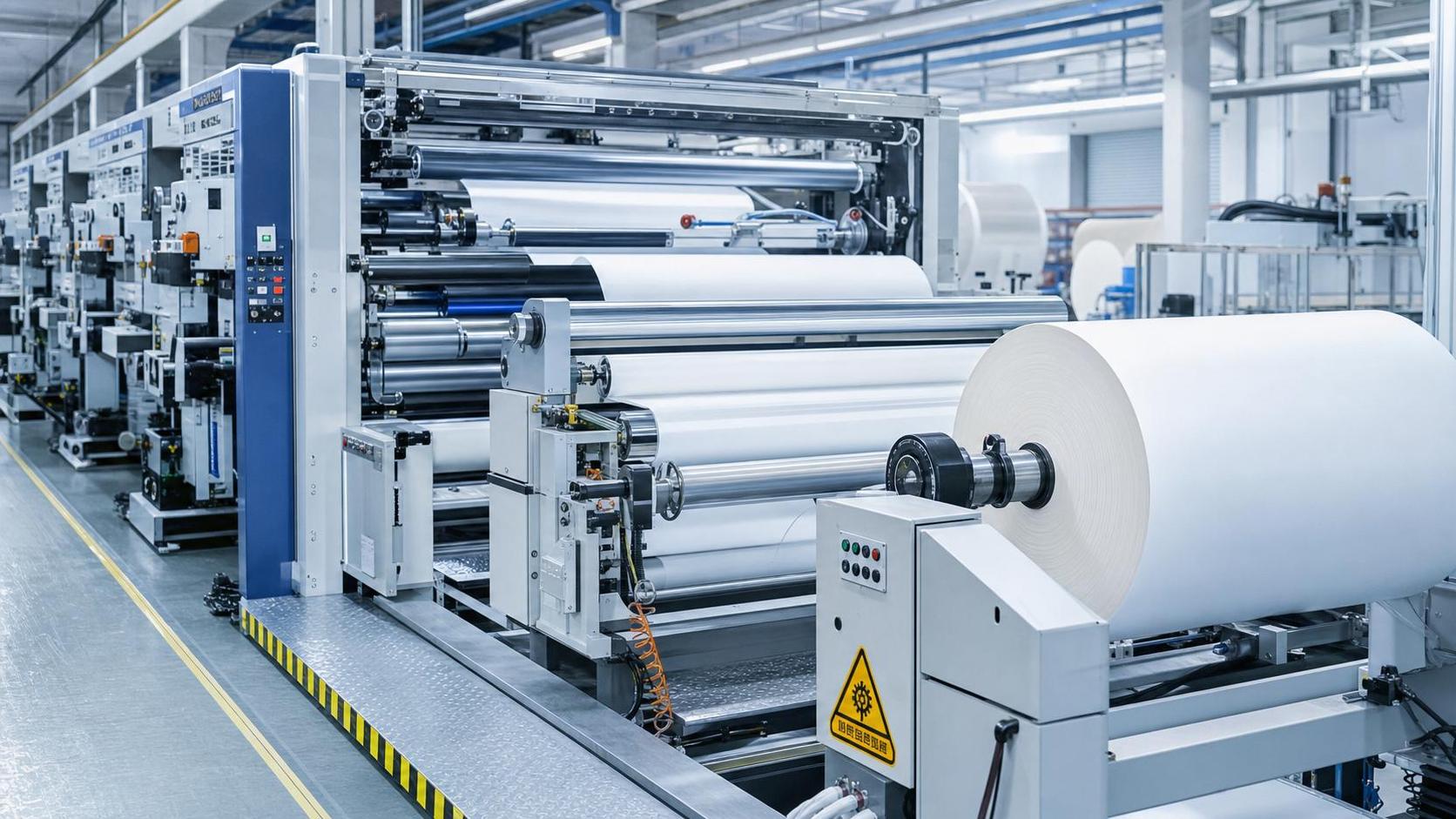
Line precision has become a strategic issue across print, converting, corrugation, and tissue production.
At higher machine speeds, small motion errors quickly turn into waste, misregistration, unstable bonding, and uneven finished quality.
That is why High-Speed Actuation Technology matters.
It improves how fast a system reacts, how accurately it follows commands, and how consistently it holds position, force, or tension under changing loads.
For IPPS and the wider paper-based manufacturing landscape, this is not an abstract control topic.
It sits at the center of digital print quality, corrugated board stability, post-press precision, and automated tissue throughput.
Why precision is harder at modern production speeds
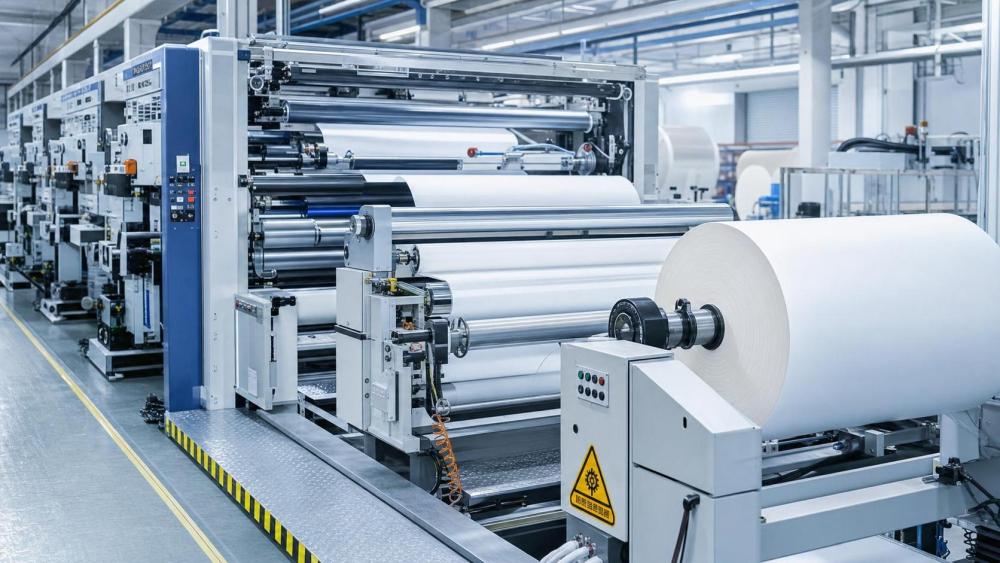
As line speeds rise, the control window becomes smaller.
A delayed correction that seems minor at low speed can become visible on the product within milliseconds.
In industrial digital printers, this appears as poor droplet placement, color-to-color shift, or weak repeatability across variable jobs.
In corrugated board lines, it can show up as flute distortion, web tracking drift, or unstable tension across long steel-intensive machine paths.
In die-cutting, stamping, and folder gluing, inaccurate motion affects creasing depth, cut alignment, glue placement, and folding geometry.
Tissue machinery faces similar pressure.
Embossing, rewinding, perforation, and packaging all depend on rapid, coordinated servo response without vibration or overshoot.
This is why High-Speed Actuation Technology is now evaluated as a line-level capability, not just a component feature.
What High-Speed Actuation Technology actually changes
At a practical level, actuation technology covers motors, drives, feedback devices, controllers, and the mechanical interfaces that turn control commands into motion.
The high-speed part is not only about maximum velocity.
It is about response bandwidth, acceleration control, settling time, synchronization accuracy, and disturbance rejection.
A better actuator loop reacts faster to material variation, load changes, and command updates.
It also returns to target position with less oscillation.
That difference becomes visible in line precision through several mechanisms.
Faster correction of dynamic error
When the material shifts, stretches, or accelerates unevenly, the system must correct before the defect becomes physical output.
High-Speed Actuation Technology shortens that correction cycle.
Tighter multi-axis coordination
Precision lines rarely depend on one axis.
Printheads, feeders, knives, rollers, rewinders, and glue stations must move as one timed system.
Better actuation reduces phase lag between them.
More stable force and tension behavior
Precision is not only positional.
In web handling and converting, stable force control is often the hidden reason a line stays accurate over time.
Where the gains appear in paper and print systems
The benefits of High-Speed Actuation Technology vary by process, but the pattern is consistent.
It reduces the gap between target motion and real motion during fast production.
These gains are especially relevant in sectors shaped by shorter runs, customized packaging, and sustainability pressure.
When material mix changes often, precision must survive variability, not just steady-state production.
Why the topic is gaining weight now
The market has changed faster than many machine architectures.
Digital printing demands image accuracy on diverse paper surfaces.
Corrugated and folding lines must support e-commerce volume without sacrificing box quality.
Tissue operations seek continuous output with fewer manual corrections.
At the same time, paper replacing plastic has raised expectations for both productivity and resource efficiency.
That combination makes precision losses more expensive.
Waste, rework, adhesive overuse, and register defects now affect margin, sustainability metrics, and tender competitiveness.
IPPS follows this shift closely because motion quality increasingly connects mechanical performance with data-driven smart manufacturing.
In other words, High-Speed Actuation Technology has become part of the intelligence layer of modern paper systems.
How to judge real precision performance
A specification sheet may highlight servo power or top speed, but those values alone say little about line precision.
More useful evaluation points include the following.
- Response under disturbance, not only under ideal load conditions.
- Repeatability at production speed, especially during acceleration and deceleration.
- Encoder resolution and feedback latency across multiple axes.
- Tension stability across different substrates, moisture levels, or board grades.
- Mechanical stiffness, backlash control, and vibration damping around the actuator chain.
- Controller integration with print algorithms, inspection systems, and recipe-based changeovers.
Usually, the strongest systems are not the fastest on paper.
They are the ones that stay accurate after heat buildup, material variation, and continuous production shifts.
That is where High-Speed Actuation Technology shows its true value.
Questions worth asking during evaluation
- How quickly does the line recover from a splice, speed change, or substrate variation?
- What happens to registration and tension near maximum rated output?
- Which precision indicators are monitored in real time, and how are corrections applied?
- Can the actuation platform support future upgrades in automation or inspection?
Precision as a business outcome
The strongest case for High-Speed Actuation Technology is not theoretical elegance.
It is operational consistency.
More accurate actuation helps keep print aligned, board handling stable, cuts repeatable, and folding predictable.
That often means fewer stops, less waste, cleaner startup, and tighter quality bands.
It also supports broader strategic goals.
A line with better precision can process thinner substrates more safely, use adhesive more efficiently, and maintain quality across short-run customization.
Those benefits matter in global packaging and paper markets where sustainability claims must align with measurable process control.
From this angle, High-Speed Actuation Technology is not only a machine design choice.
It is a precision infrastructure decision.
A practical next step for comparing systems
A useful comparison starts with the process bottleneck, not the catalog headline.
If the main risk is registration drift, focus on synchronization and feedback timing.
If the issue is web instability, study tension control response and decoupling behavior.
If finishing quality varies, examine settling time, mechanical stiffness, and motion repeatability under real production loads.
For any line under review, it helps to map three things together: target speed, precision tolerance, and disturbance profile.
That framework makes High-Speed Actuation Technology easier to assess in business terms.
From there, deeper analysis through IPPS market intelligence, process trend tracking, and equipment benchmarking can turn a technical feature into a clearer selection standard.
Industry Briefing
Get the top 5 industry headlines delivered to your inbox every morning.
Recommended News