
How Packaging Automation Cuts Changeover Time in Mixed SKU Lines
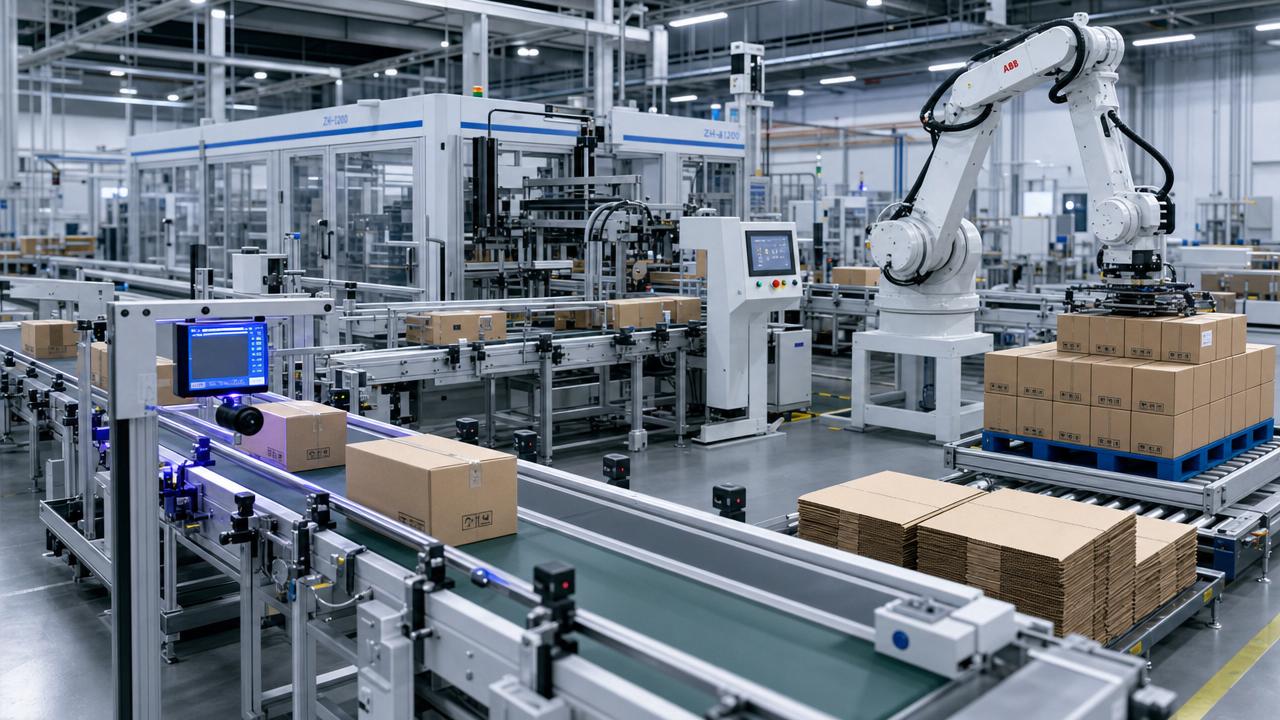
In mixed SKU packaging environments, every extra minute spent on setup changes can erode throughput, raise labor pressure, and increase the risk of errors.
Packaging automation helps operators cut changeover time by streamlining adjustments, improving line coordination, and reducing manual intervention across printing, converting, and end-of-line workflows.
For operations focused on uptime, consistency, and faster response to diverse order demand, packaging automation has become a practical performance lever.
What Packaging Automation Means in Mixed SKU Lines
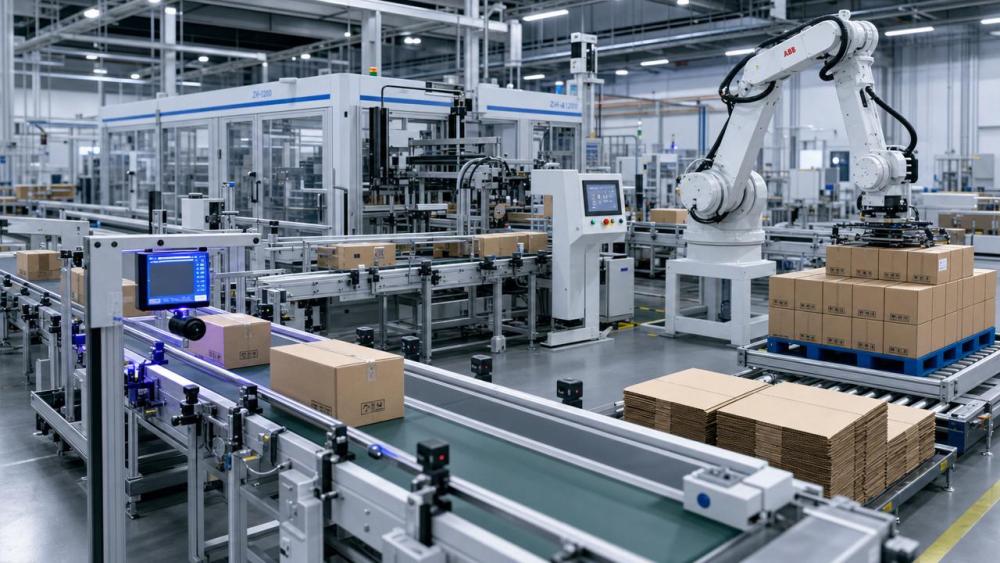
Mixed SKU lines process products with different dimensions, graphics, pack counts, substrates, and case formats within short production windows.
That complexity often affects digital printing, corrugated conversion, die-cutting, folder gluing, labeling, case packing, palletizing, and inspection.
Packaging automation refers to connected controls, servo adjustments, recipe management, machine vision, and synchronized material handling.
Its purpose is simple: reduce time between SKUs while maintaining registration, glue quality, stacking stability, and traceable product data.
In paper-based packaging, changeovers are rarely isolated events.
A board grade shift may affect print settings, creasing depth, fold paths, adhesive profiles, and pack-out patterns at the same time.
Without packaging automation, those dependencies create waiting time, setup variation, and repeated manual corrections.
Why Changeover Time Has Become a Critical Industry Metric
Global packaging operations now face shorter runs, more promotions, private-label growth, e-commerce diversity, and stronger sustainability requirements.
These pressures make fast, repeatable changeovers a direct contributor to total equipment effectiveness and order responsiveness.
IPPS closely follows this shift across digital print, corrugated lines, post-press converting, and automated tissue packaging systems.
In each segment, packaging automation supports both productivity and precision.
Current signals shaping line design
- Shorter campaign lengths increase the number of changeovers per shift.
- Versioned packaging requires fast artwork and coding transitions.
- Paper-based materials need tighter tension and folding control.
- Labor variability raises the value of guided, recipe-driven setup.
- Traceability expectations require digital verification during every format switch.
How Packaging Automation Reduces Changeover Time
The biggest gain comes from removing scattered manual steps and replacing them with structured digital execution.
Packaging automation does not only speed movement.
It shortens decision time, reduces trial-and-error, and stabilizes the first acceptable output after a product switch.
1. Recipe-based setup reduces adjustment time
Stored recipes can recall dimensions, pressure values, fold geometry, print positions, glue patterns, and conveyor spacing in seconds.
This avoids searching for previous settings or rebuilding knowledge from memory.
2. Servo systems replace mechanical hand changes
Motorized guides, heads, belts, and rails move automatically to target positions.
That improves repeatability and reduces inconsistency between shifts.
3. Vision systems verify setup before waste accumulates
Cameras can confirm print alignment, code accuracy, carton orientation, flap presence, and label placement during startup.
Errors are detected early, before downstream backlog or scrap grows.
4. Integrated controls synchronize line sections
Printing, converting, folding, gluing, and packing can change together through shared data and linked control logic.
This removes hidden waiting time between otherwise capable machines.
5. Guided workflows reduce setup dependency on individuals
Digital prompts, checklists, alarms, and parameter limits make the process easier to execute consistently.
That matters especially when SKU variety expands faster than workforce experience.
Business Value Across Printing, Converting, and End-of-Line Operations
The value of packaging automation extends beyond labor savings.
Faster changeovers improve usable capacity, planning flexibility, and output quality across the full packaging chain.
- More production time remains available for sellable output.
- Less startup waste supports cost control and sustainability targets.
- Short-run jobs become easier to schedule profitably.
- Format variation can be handled with lower operational stress.
- Digital records simplify troubleshooting and continuous improvement.
For corrugated and paper packaging, these gains are especially important because substrate behavior often changes with humidity, flute profile, coating, and stiffness.
Packaging automation helps lines respond to those variables without rebuilding settings from scratch.
Typical Use Cases in Mixed SKU Packaging Environments
Different packaging processes benefit from packaging automation in different ways.
The most effective approach depends on where changeover loss actually occurs.
Practical Implementation Points and Risk Controls
Packaging automation delivers the best results when implementation follows actual loss points, not broad assumptions.
A useful starting point is a changeover map covering each stop, adjustment, test, and approval step.
Recommended focus areas
- Measure internal and external setup time separately.
- Prioritize repeated manual actions with high variation.
- Standardize recipes, naming rules, and revision control.
- Link inspection results to setup confirmation logic.
- Track first-good-pack time, not only machine restart time.
It is also important to maintain clean master data.
Poorly structured SKU parameters can weaken packaging automation and create false confidence in recipe accuracy.
Mechanical condition matters as well.
Worn belts, unstable vacuum, inconsistent glue viscosity, or sensor drift can limit automation performance even with strong software.
A Practical Next Step for Smarter Packaging Changeovers
For operations managing mixed SKU flow, the next step is to identify where packaging automation can remove the most repeated setup friction.
That may be digital job change, corrugated tension control, tool presetting, folder-gluer servo setup, or robotic case pattern switching.
A focused review of changeover history, waste at startup, and line synchronization gaps often reveals the strongest investment path.
As IPPS continues tracking intelligent print, converting, and paper packaging systems, one conclusion remains clear.
Packaging automation is no longer just about speed.
It is a practical foundation for resilient mixed SKU operations, stable quality, and faster adaptation in modern packaging production.
Industry Briefing
Get the top 5 industry headlines delivered to your inbox every morning.
Recommended News