
Precision Die Cutting: Tolerance Limits That Matter
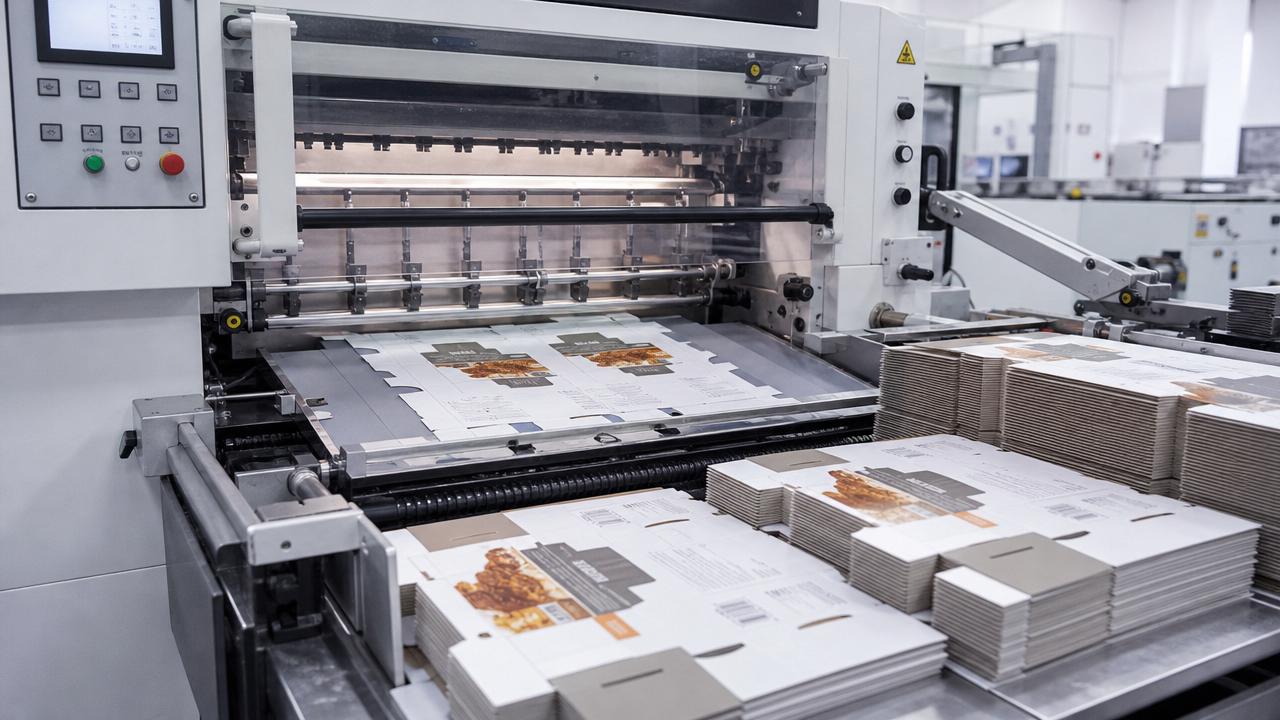
For technical evaluators, precision die cutting is a control discipline, not only a shaping process. Tolerance limits define whether blanks run smoothly, fold correctly, register accurately, and protect product quality.
In packaging, labels, cartons, inserts, and paperboard components, small dimensional drift can trigger waste, glue issues, poor stacking, and unstable feeding. That is why precision die cutting remains a key benchmark across converting systems.
Within the broader industrial print and paper landscape, precision die cutting connects printing accuracy, board behavior, creasing consistency, and final pack performance. It influences both premium finishing quality and overall line efficiency.
Precision Die Cutting and the Meaning of Tolerance Limits
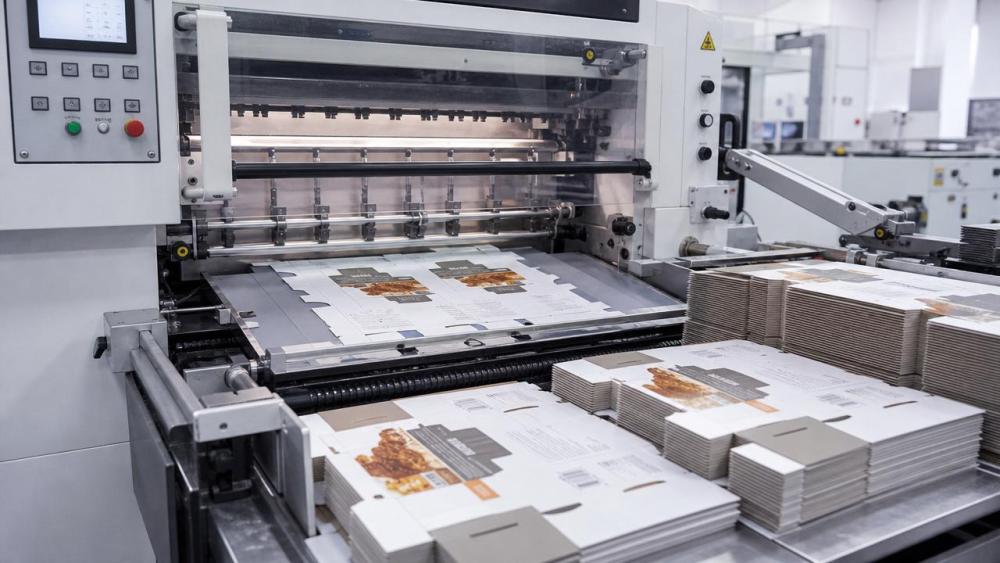
Precision die cutting refers to controlled cutting, creasing, and shaping of substrates within defined dimensional windows. These windows are the tolerance limits accepted by design, tooling, and downstream converting requirements.
A tolerance is not a single number. It may involve cut-to-cut distance, slot width, crease position, panel squareness, edge burr, kiss-cut depth, and registration to printed graphics.
In practice, precision die cutting quality depends on the full system. Machine rigidity, sheet transport, tool condition, substrate stability, and operator setup all influence the achievable tolerance band.
For paper, board, film, and laminated structures, acceptable limits vary. Thin labels may require very tight registration, while corrugated transit packs may prioritize crease integrity and flap alignment.
Core tolerance dimensions
- Overall blank length and width
- Position of cuts relative to print
- Crease line location and depth consistency
- Hole, window, and slot geometry
- Repeatability across speed changes and long runs
Current Industry Signals Behind Precision Die Cutting Requirements
Tolerance expectations are rising because packaging formats are changing. Digital printing, shorter runs, versioned graphics, lighter substrates, and automated packing all leave less room for dimensional variation.
Across the integrated print and paper equipment sector, several signals are shaping precision die cutting standards:
This is why precision die cutting is increasingly evaluated as part of a complete converting workflow. Tolerances must support printing, folding, gluing, stacking, transport, and end-use protection together.
Why Tolerance Limits Matter in Real Production
The business value of precision die cutting appears in scrap reduction, stable throughput, cleaner downstream handling, and fewer quality claims. Good tolerance control protects both efficiency and appearance.
Fit and functional performance
If slot widths drift or panel dimensions vary, cartons may not lock, tuck, or stack correctly. In retail packaging, that can affect shelf presentation and tamper performance.
Creasing and folding behavior
Precision die cutting affects fold memory and crack resistance. A crease line that shifts slightly can produce skewed boxes, broken coating, or glue flap mismatch during folder gluer operation.
Print registration and visual quality
In digitally printed cartons and decorative sleeves, poor cut registration can expose white edges, trim into logos, or disturb premium stamping zones. Visual defects often start as tolerance failures.
Waste rates and line efficiency
Dimensional instability causes stops, misfeeds, and rejected blanks. Precision die cutting reduces rework because each sheet enters downstream equipment with more predictable geometry.
Typical Tolerance Drivers Across Materials and Applications
Different substrates create different tolerance challenges. Precision die cutting should therefore be judged by material behavior, not only by a machine’s nominal specification.
This material-based view is especially important for mixed production portfolios. Precision die cutting performance that looks excellent on one grade may not transfer directly to another.
What Defines Precision Die Cutting Capability
A realistic assessment should examine repeatability under production conditions. Precision die cutting capability is shaped by equipment design, process controls, tooling discipline, and environmental stability.
Machine platform factors
- Frame rigidity and vibration behavior
- Feeding accuracy and sheet transfer consistency
- Pressure uniformity across the cutting area
- Registration sensing and servo correction response
- Quick setup repeatability between jobs
Tooling and consumable factors
- Rule height consistency
- Knife sharpness and wear rate
- Rubber ejection balance
- Creasing matrix compatibility
- Maintenance history of dies and anvils
Precision die cutting becomes measurable only when these factors stay stable over time. One successful sample run does not prove sustained tolerance control.
Practical Evaluation Points for Tolerance Control
When reviewing precision die cutting performance, tolerance data should come from repeat runs, not single-sheet inspection. A practical review can include the following checkpoints:
- Measure dimensional drift from startup to steady production speed.
- Compare center and edge positions across the sheet width.
- Check crease depth consistency after speed changes.
- Inspect registration against printed marks and decorative areas.
- Review waste causes by category, not only total percentage.
- Confirm downstream folding and gluing behavior on sampled blanks.
It is also useful to separate machine error from substrate variation. Moisture change, board curl, and print expansion can falsely appear as precision die cutting limits.
Implementation Notes for More Stable Precision Die Cutting
Improving tolerance control usually requires coordination between printing, die making, converting, and quality inspection. Small adjustments across the workflow often outperform one major machine change.
- Standardize substrate conditioning before cutting.
- Use application-specific tolerance targets by product type.
- Link print registration data with die cut inspection results.
- Monitor tool wear before visual defects become rejects.
- Validate blanks in downstream folder gluer and packing stages.
- Track repeatability across shift changes and maintenance intervals.
For integrated print and paper operations, precision die cutting should be viewed as a data-driven quality node. It links digital print accuracy, corrugated forming behavior, and post-press efficiency in one measurable step.
Next-Step Perspective
Precision die cutting decisions should start from tolerance limits that truly affect converting results. The most useful benchmark is not the broadest claim, but the most repeatable outcome on target materials.
A structured review of registration, crease quality, material response, and downstream fit can reveal where precision die cutting adds measurable value. In modern packaging systems, those tolerance limits are where productivity and product quality meet.
For IPPS-focused operations, the next practical step is to compare tolerance performance across print, die cutting, and folding stages using shared production data. That approach turns precision die cutting from an isolated process into a strategic control point.
Industry Briefing
Get the top 5 industry headlines delivered to your inbox every morning.
Recommended News