
Precision Die Cutting: Tolerance Issues to Check
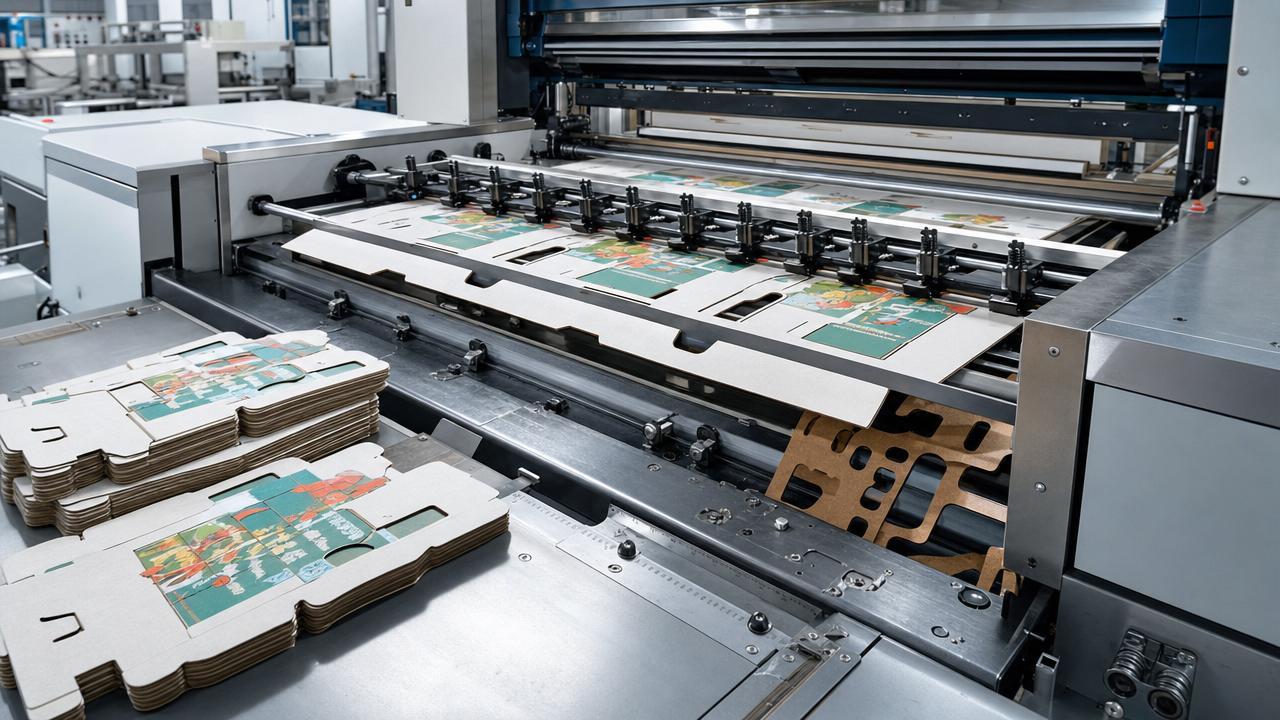
In precision die cutting, small tolerance errors can create large production losses. They affect cut accuracy, crease consistency, fit-up quality, stripping behavior, and final box performance.
For high-speed converting lines, tolerance control is not only a tooling issue. It also reflects machine condition, substrate behavior, registration stability, and process discipline.
This FAQ-style guide explains the tolerance points that matter most in precision die cutting. It helps identify what to inspect, compare, and correct before defects become repeatable waste.
What does tolerance mean in precision die cutting?
In precision die cutting, tolerance is the allowed variation from the target dimension, position, depth, or angle. It defines how much deviation remains acceptable in real production.
A die-cut blank may look acceptable visually, yet still fail functional requirements. Small shifts can cause folding stress, glue flap mismatch, or poor carton squareness.
Tolerance in precision die cutting usually involves several checkpoints:
- Cut-to-print registration
- Blank overall size
- Crease line position
- Crease depth and width
- Hole or slot position
- Nicking and stripping behavior
- Sheet-to-sheet repeatability
Because packaging lines run at speed, one unstable tolerance rarely stays isolated. It often spreads into downstream folding, gluing, stacking, and filling problems.
Which tolerance issues should be checked first?
The first priority is dimensional accuracy. Measure the finished blank against the drawing, not just one sample but a sequence taken across time.
If blank length or width drifts, the root cause may come from sheet registration, die wear, feeder variation, or inconsistent board caliper.
1. Cut-to-print registration
This is critical in branded packaging. In precision die cutting, even a slight mismatch makes graphics appear off-center or trims legal text unexpectedly.
Check front-edge registration, side-guide consistency, and print distortion. Sometimes the die is correct, but the printed sheet expands or shrinks.
2. Crease line tolerance
Crease location must match the structural design. A crease shifted by a small amount can change panel width and ruin folding symmetry.
Depth also matters. Too shallow causes cracking or spring-back. Too deep weakens the panel and may create board bursting during folding.
3. Internal feature position
Handles, windows, slots, and lock tabs require tight control. In precision die cutting, these features must align with mating parts or retail requirements.
4. Waste stripping tolerance
Poor stripping often signals tolerance trouble. If bridges are inconsistent or scrap hangs on edges, nicking and cutting pressure should be reviewed.
Why do tolerance errors happen even with a good die?
A well-made die does not guarantee stable precision die cutting. Machine dynamics and material behavior can shift tolerances during actual production.
Common causes include:
- Uneven sheet feeding
- Side lay inconsistency
- Pressure imbalance across the platen
- Board moisture variation
- Tooling wear or damaged rules
- Matrix mismatch with board thickness
- Speed-induced vibration
Corrugated board adds more complexity. Flute direction, liner stiffness, and warp can change crease response and cut profile across the sheet.
In digital print workflows, substrate movement and print stretch also matter. Precision die cutting must match actual printed dimensions, not only CAD intent.
How can tolerance be evaluated during machine or process assessment?
A useful evaluation combines measurement, observation, and repeatability testing. One perfect sample proves little if variation grows after several hundred sheets.
Measure repeatability, not only accuracy
Take samples from startup, middle run, and speed changes. Compare critical dimensions across the set. Precision die cutting quality depends on stability over time.
Inspect both cut and fold performance
A blank may pass dimensional checks yet fail folding tests. Fold several samples and inspect cracking, angle recovery, glue flap alignment, and box squareness.
Review machine-side indicators
Check feeder alignment, chase locking, make-ready consistency, pressure map, and stripping section behavior. These often reveal why precision die cutting tolerance drifts.
Compare across materials
Run at least two board types if possible. A process that looks stable on paperboard may struggle on micro-flute or recycled corrugated stock.
What tolerance mistakes cause the highest downstream cost?
The most expensive errors are often not dramatic at the die cutter. They become serious later, especially in folder-gluers, filling lines, and logistics handling.
In precision die cutting, these mistakes deserve special attention:
- Creases that shift panel widths and break glue alignment
- Minor registration errors on premium printed packs
- Tab or slot variation that disrupts auto-lock assembly
- Uneven cut depth causing fiber pull and dust
- Blank size drift that reduces stack quality and feeding reliability
These defects increase hidden costs. Waste rises, speed falls, inspection intensifies, and customer complaints become harder to trace back to the original cause.
How can precision die cutting tolerance be improved in practice?
Improvement starts with controlling variables in a fixed order. Adjusting pressure alone rarely solves a tolerance problem permanently.
Standardize tooling conditions
Verify rule height, ejection material condition, matrix specification, and chase flatness. Consistent tooling is the base of reliable precision die cutting.
Stabilize substrate input
Control moisture, caliper variation, grain or flute direction, and preconditioning. Many tolerance complaints are actually material variation in disguise.
Use a repeatable inspection plan
Define critical dimensions, sample intervals, and action limits. This keeps precision die cutting decisions objective instead of dependent on visual judgment alone.
Validate at real production speed
Slow-speed acceptance can hide vibration and feeding issues. Always confirm precision die cutting quality near the intended operating speed.
Precision die cutting is only as good as its most unstable tolerance point. Reliable quality comes from linking tooling, machine setup, material control, and verification routines.
For stronger production decisions, review tolerance performance across the full converting chain. Check how die cutting results influence folding, gluing, appearance, and final pack function.
If a line shows recurring defects, start with measurable checkpoints above. That approach turns precision die cutting from a reactive correction task into a controlled process advantage.
Industry Briefing
Get the top 5 industry headlines delivered to your inbox every morning.
Recommended News