
When does smart packaging automation equipment pay for itself?
When does smart packaging automation equipment pay for itself?
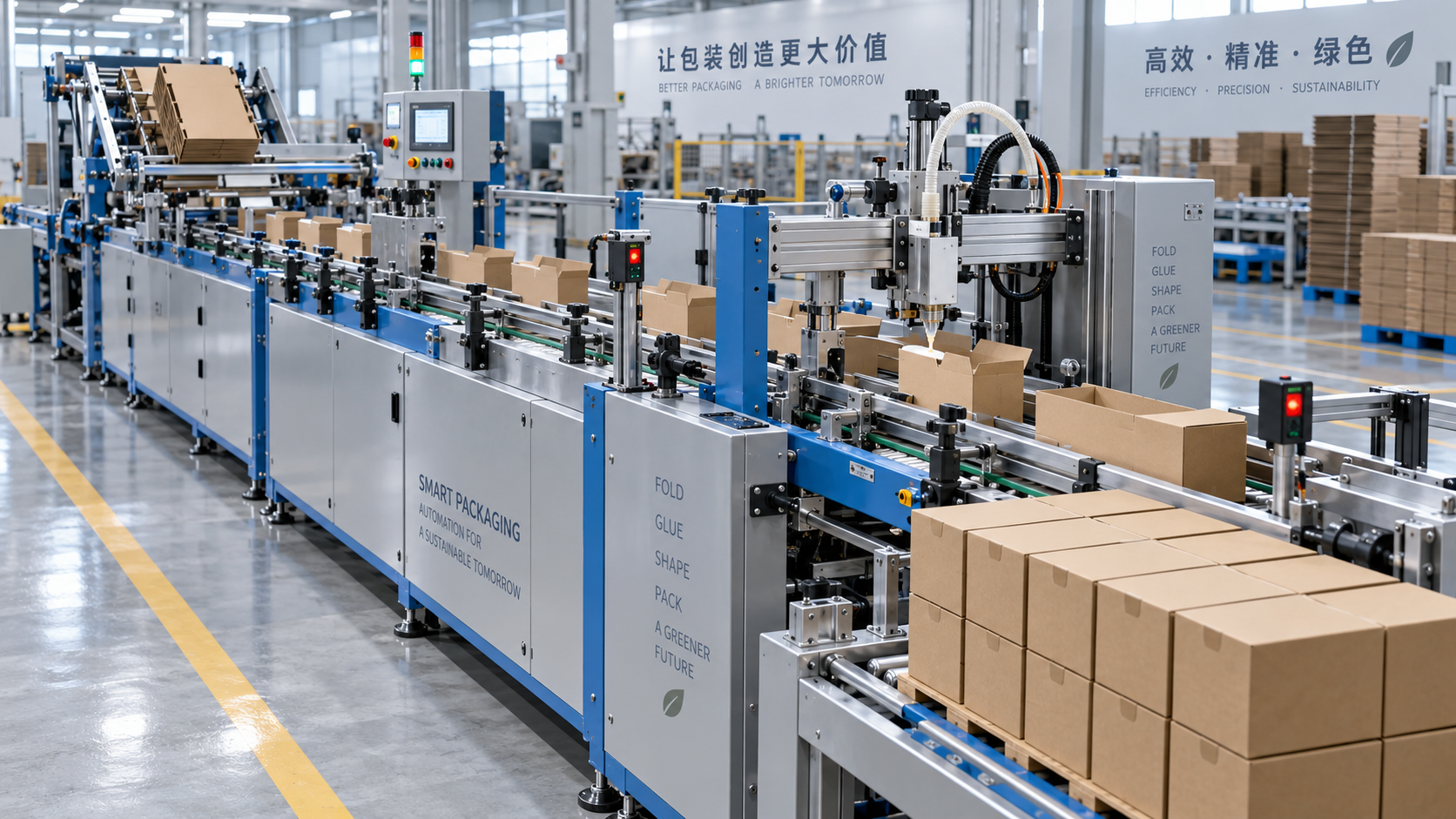
When does smart packaging automation equipment pay for itself—and which savings can finance teams confidently count? For printing and paper packaging operations, the answer depends on installed costs, achievable utilization, labor savings, waste reduction, and ongoing maintenance—not headline machine speeds. A credible payback analysis must also distinguish added capacity from sales the business can actually capture.
The practical answer is that equipment pays for itself when cumulative incremental cash flow recovers the full investment. That date may differ substantially from a supplier’s estimate if installation interrupts production, operators need longer to reach stable output, or extra capacity remains unsold. The approval case should explain not just the expected payback period, but what must happen on the factory floor to achieve it.
Start with the production constraint, not the machine quotation
Automation creates financial value by changing a specific operating condition. Perhaps manual feeding requires overtime, folder-gluer changeovers restrict short-run work, or inconsistent corrugated board quality causes downstream rejects. Each problem needs a different investment case.
A faster die-cutter does not increase shipments if folding and gluing already constrain the line. Likewise, an automated tissue wrapper cannot deliver its rated output when upstream rewinding repeatedly stops. In both situations, the new machine may simply produce more work-in-progress.
Before requesting proposals, establish a baseline covering the actual product mix: accepted output per staffed hour, paid labor hours, setup time, scrap, unplanned stops, and outsourced work. Include demanding substrates and frequent-changeover jobs, not just long runs of easy products. Average performance without this context can hide the very losses automation is supposed to remove.
This whole-line perspective connects the areas covered by Global Industrial Print & Paper Systems (IPPS): industrial digital printing, corrugated board production, die-cutting and stamping, automatic folder-gluing, and tissue processing. Their economics depend on how materials and orders move between processes, not on isolated equipment specifications.
Build the investment figure beyond the purchase price
The quoted equipment price is only the starting point. A useful approval model separates one-time implementation spending, recurring operating costs, and working capital. Otherwise, a low purchase price can conceal an expensive installation or an ongoing service commitment.
- Delivered equipment: machine, options, tooling, freight, insurance, and applicable nonrecoverable duties or taxes.
- Site readiness: foundations, electrical supply, compressed air, extraction, guarding, and layout changes.
- Integration: conveyors, inspection systems, production software interfaces, data mapping, and commissioning.
- Transition: training, trial materials, temporary outsourcing, and lost contribution during installation shutdowns.
- Operating support: maintenance, replacement parts, subscriptions, service travel, energy, consumables, and internal technical labor.
Record when these cash flows occur. Deposits may leave the business months before acceptance, while savings start only after production stabilizes. Additional inventory and receivables needed for higher sales also consume cash; include their timing rather than treating all incremental contribution as immediately available.
Which savings belong in the payback calculation?
A defensible model distinguishes measurable cash savings from operational benefits that may become financial gains later. Both matter, but they should not carry the same weight in an approval decision.
Labor savings require a staffing decision
Reduced operator involvement is not automatically reduced payroll. Cash savings arise when the project removes overtime, temporary labor, a planned hire, or a position through a documented staffing change. Include the continuing need for replenishment, quality checks, supervision, cleaning, and fault recovery.
If employees move to another department, describe the benefit accurately. Redeployment creates financial value when it avoids an otherwise necessary expense or enables profitable production. The same labor hours cannot be counted as both payroll savings and the labor supporting additional sales.
Waste reduction needs a consistent measurement boundary
Lower startup waste, better registration, controlled glue application, and earlier defect detection can reduce avoidable material costs. Measure material consumed per accepted unit before and after automation, adjusting for product mix and material prices. Deduct any lost scrap-recovery proceeds from the savings.
For digital printing, reduced makeready waste may be partly offset by ink, cleaning, or printhead-related costs. On corrugated and converting lines, substrate variation, moisture, tension, and tooling condition can affect yield. Trial results should therefore use production-representative materials rather than ideal demonstration stock.
Additional output is worth its contribution, not its revenue
Count extra volume only when there is a credible route to selling and delivering it. Use incremental sales less the additional cash costs required to fulfill them, including materials, freight, commissions, and any extra shifts or support resources. Do not apply total sales revenue as the benefit.
Avoided outsourcing can be more directly supportable: compare the external cost removed with the full incremental cost of producing internally. Keep speculative growth separate from committed orders, repeat demand, and documented outsourcing expenditure.
Calculate payback using a monthly cash-flow schedule
For a stable operation, a screening calculation is straightforward:
Simple payback period = net initial investment ÷ annual net incremental cash benefit.
Annual net incremental cash benefit includes realizable operating savings and incremental contribution, less added operating cash costs. However, this shortcut becomes unreliable when installation spending is staged, production ramps gradually, or demand is seasonal.
For approval, build a monthly schedule from the first project payment. Enter implementation outflows, ramp-up losses, verified savings, incremental contribution, and working-capital changes in their expected months. Payback occurs when cumulative incremental project cash flow turns nonnegative and remains recovered under the modeled assumptions.
Keep financing separate from operating performance unless the analysis explicitly measures equity cash flow. Mixing loan proceeds with unlevered project benefits can make equipment appear to repay itself earlier without improving its economics. Similarly, depreciation is not a cash outflow, although related tax effects may matter in an after-tax model.
Payback alone also ignores returns after recovery and, in its simple form, the time value of money. Compare net present value over a consistent evaluation horizon, using the company’s approved discount rate. Include major replacements and support costs that fall after the expected payback date.
Test the assumptions most likely to change the answer
The strongest sensitivity analysis follows the production process. Saleable output depends on scheduled hours, actual availability, operating speed, and acceptable yield. Confirm how each measure is defined so that setup losses, rejects, or downtime are not deducted twice.
Develop base and downside cases around specific uncertainties:
- Slower ramp-up: delay full savings while retaining training and support costs.
- Weaker demand: remove uncommitted growth volume while preserving independently achievable savings.
- Lower availability: test realistic repair delays, spare-parts lead times, and technical support coverage.
- Different job mix: increase changeovers or the share of difficult formats and substrates.
- Higher recurring costs: vary consumables, software fees, maintenance, and energy where exposure is material.
Ask a more revealing question than “What is the expected payback?”: what minimum verified benefit is required to meet the company’s investment threshold? If the project needs near-perfect utilization and every forecast order to succeed, the financial case has little room for error.
Make supplier validation part of the financial case
A demonstration should test the assumptions that drive returns. Request trials using representative materials, job lengths, print coverage, box styles, and changeover sequences. Measure accepted output over a defined period, including interruptions and operator interventions—not just a brief peak-speed run.
Agree on acceptance criteria before placing the order. These should address throughput, quality, staffing, changeover performance, integration, and test conditions. Distinguish factory acceptance from site acceptance, because upstream feeding and downstream handling can change results after installation.
For smart packaging automation equipment, digital functionality also needs scrutiny. Establish who owns production data, whether interfaces require paid licenses, how remote access is secured, and what happens if a subscription ends. Predictive maintenance features have limited financial value unless someone can interpret the alerts and act before a failure.
IPPS’s focus on process technology and commercial intelligence is relevant to this comparison: technical features need translation into accepted output, resource consumption, and lifecycle cost. Sustainability claims deserve the same discipline. Measure material or energy reductions against a defined baseline; do not assume automation itself establishes environmental compliance or a lower carbon footprint.
Approve a measurable operating change
There is no universal acceptable payback period. A replacement needed to maintain production, a growth investment, and a discretionary labor-saving retrofit carry different risks. Compare the proposal with credible alternatives, including targeted retrofits, maintenance improvements, outsourcing, or retaining the existing process with its documented costs.
Before approval, assign an owner and an evidence source to each major benefit. Operations should validate throughput and staffing; maintenance should confirm service requirements; sales should support incremental demand; finance should reconcile the cash-flow model. Set review points after commissioning using the same baseline definitions.
The investment is ready when its recovery date rests on achievable operating changes, complete installed costs, and benefits the business can actually retain. If one uncertain assumption determines the outcome, resolve that assumption through a trial, a firmer commercial commitment, or a narrower project scope before committing capital.
Industry Briefing
Get the top 5 industry headlines delivered to your inbox every morning.
Recommended News