
Sustainable Paper Packaging: Cost Myths and Trade-Offs
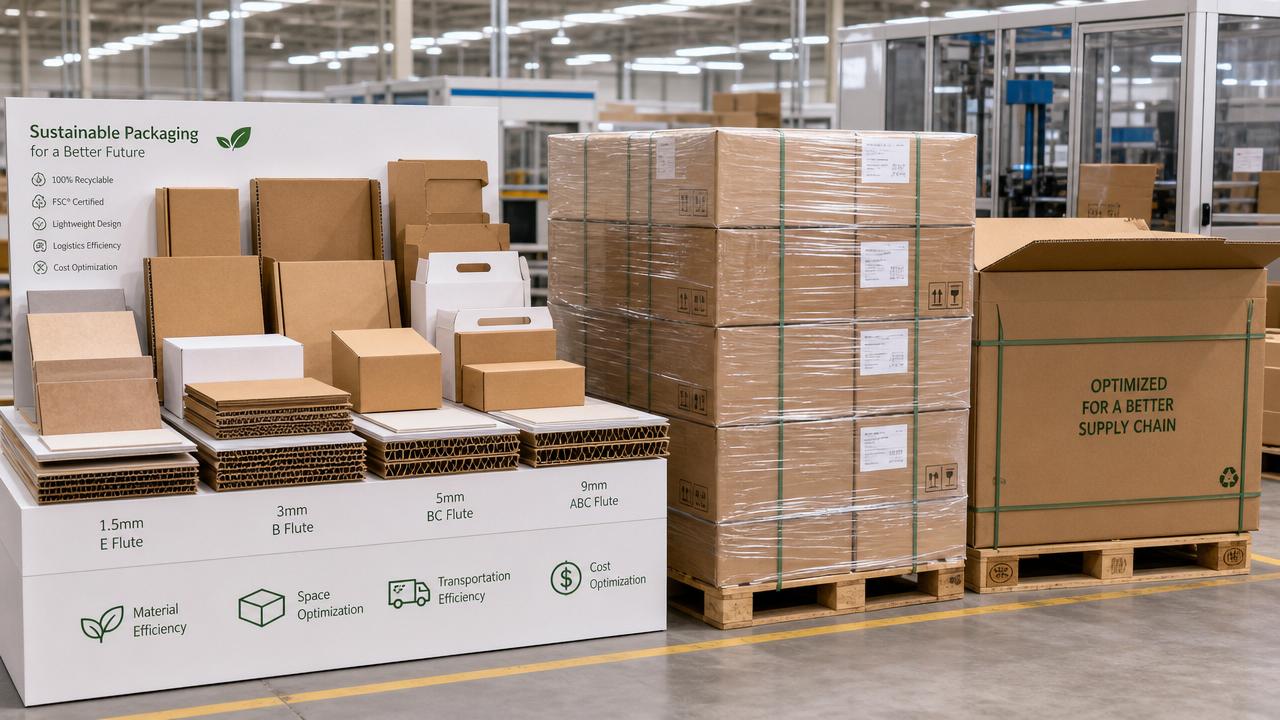
For finance approvers, sustainable paper packaging is rarely a simple “pay more to be greener” decision. In most real purchasing cases, the unit price tells only part of the story.
Freight density, pack-out efficiency, damage rates, compliance exposure, SKU complexity, and customer perception can all change the true economics. A cheaper board grade can become expensive fast.
This is why the most useful question is not whether sustainable paper packaging costs more. It is where it costs more, where it saves money, and what trade-offs matter most.
For finance leaders, the answer is usually nuanced: some greener options raise upfront spend, but others improve total cost through material reduction, better logistics, lower waste, and stronger risk control.
That makes sustainable paper packaging a capital discipline issue as much as an ESG issue. Sound approval depends on understanding the full cost structure, not reacting to sticker price alone.
What finance approvers really need to know before approving sustainable paper packaging
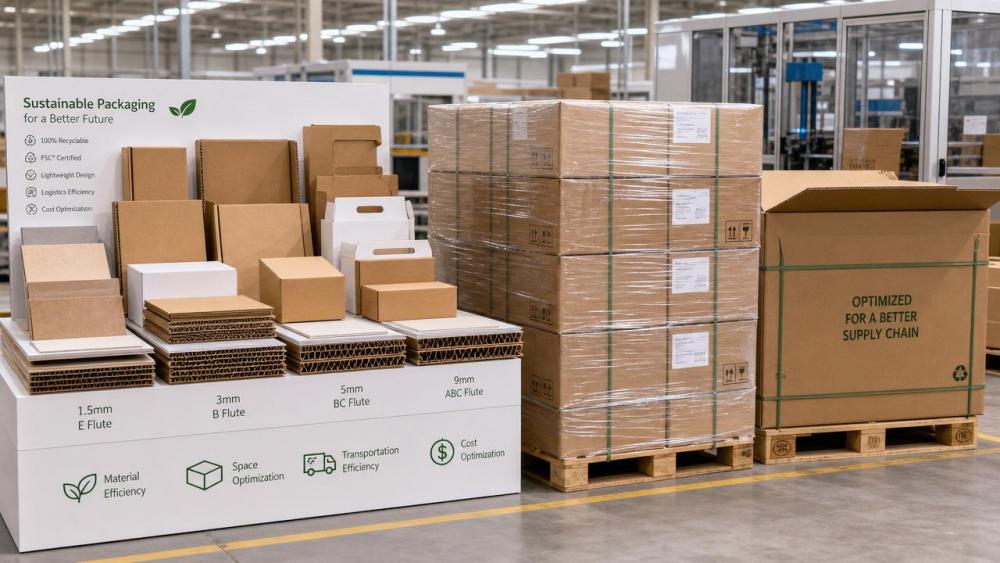
When buyers search for sustainable paper packaging, their hidden question is often financial: will this decision hurt margins, or can it support both cost control and long-term resilience?
That is especially true for approval teams. They are less interested in broad sustainability claims and more concerned with measurable budget impact, operational disruption, and the credibility of projected returns.
In practice, finance approvers usually care about five things. First, how the new packaging changes total landed cost. Second, whether quality or throughput is affected.
Third, they want to know if the packaging reduces risk linked to regulation, retailer standards, or customer expectations. Fourth, they need implementation assumptions to be realistic.
Fifth, they want clarity on timing. A sustainable switch that saves money only after major downtime, tooling changes, or reject spikes may not fit current cash priorities.
So the evaluation standard should be broader than “green equals premium.” The better framework is: what changes across procurement, conversion, warehousing, transport, claims, and compliance?
Myth 1: sustainable paper packaging always costs more than conventional options
This is the most common myth, and it survives because teams compare invoice price per unit instead of total performance-adjusted cost. That creates a distorted picture from the start.
Yes, some certified fibers, specialty barrier papers, or premium recycled grades can carry a higher material price. But not every sustainable paper packaging format is more expensive.
Cost can fall when redesign reduces basis weight, eliminates secondary components, improves nesting efficiency, or simplifies print and finishing steps. Less material can outweigh a higher per-ton price.
For example, a corrugated redesign may lower board consumption while preserving stacking strength through flute optimization, better creasing, or smarter structural geometry. Finance should value that engineering effect.
Similarly, digital printing can reduce obsolete inventory in short runs or multi-SKU campaigns. A higher print cost per sheet may still create better economics through reduced overproduction.
In other cases, replacing mixed-material packaging with mono-material paper structures may simplify recycling streams and retailer acceptance. That can have indirect but meaningful commercial value.
The lesson is simple: sustainable paper packaging may cost more, less, or roughly the same. The answer depends on design, run profile, machinery compatibility, and supply chain context.
Myth 2: the unit price is the best way to compare packaging options
For finance approvers, unit price is useful, but it is not enough. Packaging should be evaluated as a system cost, not a line-item commodity alone.
A low-cost carton that slows forming speeds, increases glue use, or causes more jams may destroy savings on the packing line. Operations losses often exceed material savings.
The same applies in logistics. Slightly better paper packaging design can improve pallet utilization, cube efficiency, and transport loading. Small dimensional gains scale quickly across high shipment volumes.
Damage reduction matters too. If a stronger or more stable structure reduces crush, scuffing, or moisture-related failures, the avoided claims can justify a higher packaging spend.
Finance teams should therefore compare at least six dimensions: material cost, conversion efficiency, machine performance, freight impact, damage risk, and end-of-life or compliance implications.
This matters in industries where paper-based packaging interacts with digital print, die-cutting, folding-gluing, and corrugated board processing. One design choice can affect several cost centers at once.
A procurement model focused only on purchase price may underfund the better option. A total cost model makes the trade-offs visible and supports more defensible approvals.
Where sustainable paper packaging often creates real savings
Not every project will save money, but several recurring areas deserve attention because they often produce measurable financial gains beyond the material invoice.
The first is source reduction. Lighter grammage, better board engineering, and more precise box design can reduce fiber use without sacrificing required performance in transit or on shelf.
The second is operational efficiency. Packaging designed for cleaner feeding, folding, gluing, and stacking can improve line stability and lower labor intervention, especially in high-volume runs.
The third is inventory and obsolescence control. Digitally printed or modular packaging strategies reduce the need for large stocks of preprinted packaging across many product variants.
The fourth is freight and warehousing. Better dimensional optimization can increase units per pallet, improve container fill, and reduce the cost of storing or shipping empty converted packs.
The fifth is waste reduction. Sustainable paper packaging programs often trigger broader design reviews that cut rejects, simplify SKUs, and improve specification discipline between procurement and production teams.
The sixth is risk mitigation. As reporting obligations and sourcing scrutiny increase, approved fiber chains, recyclability alignment, and better documentation can protect future market access.
These savings are not theoretical. They are common in packaging programs that combine material science, converting know-how, and realistic plant-level validation before rollout.
The trade-offs finance teams should examine before saying yes
Good approvals depend on recognizing that every sustainable packaging gain may come with a technical or commercial trade-off. These should be tested openly, not hidden in optimistic assumptions.
One common trade-off is performance versus lightweighting. Reducing material may lower cost and carbon impact, but it can also narrow safety margins for stacking, puncture resistance, or moisture exposure.
Another is recyclability versus barrier performance. In some categories, moving toward more recyclable paper structures may require compromise on grease, vapor, or liquid protection unless new coatings perform well.
There is also a throughput trade-off. A new paper grade may behave differently in printing, die-cutting, or folder-gluing, affecting setup times, registration stability, or adhesive performance.
Appearance can be another issue. Recycled content or unbleached fibers may align with sustainability goals, but they may not match the brightness or surface smoothness expected by premium brands.
Supply continuity deserves attention too. A more sustainable specification is only valuable if qualified suppliers can deliver consistent quality, certification, and lead times across regions.
Finance should not reject these trade-offs automatically. The right question is whether the business value gained is worth the operational complexity introduced.
How to evaluate sustainable paper packaging using total cost of ownership
The best practical tool for finance approvers is a total cost of ownership model. It converts broad sustainability claims into operational and financial terms that can be verified.
Start with direct material cost: board, paper, coatings, adhesives, inks, and any certification-related premium. Then include tooling, setup, and testing costs for launch.
Next, add conversion economics. Measure speed loss or gain, makeready waste, spoilage, downtime, labor intervention, and maintenance effects across printing and post-press stages.
Then model logistics: units per case, cases per pallet, pallet stability, dimensional weight, truck fill, warehouse density, and reverse logistics where relevant.
Include quality outcomes as well. Estimate product protection, complaint rates, returns, and retailer deductions. For e-commerce, packaging failure costs can be disproportionately high.
Compliance and strategic risk should also be valued. Certification readiness, recyclability alignment, retailer packaging scorecards, and future regulation all have financial implications, even if indirect.
Finally, compare payback periods under realistic volume scenarios. A sustainable paper packaging project with moderate upfront cost may still be attractive if savings scale reliably over time.
This approach helps finance shift from opinion-based approval to evidence-based approval. It also improves cross-functional alignment because assumptions become visible and testable.
Questions finance approvers should ask suppliers and internal teams
Approving the right solution requires better questions, not just more presentations. Finance teams should ask suppliers for proof tied to operations, not generic sustainability language.
Ask what specific cost drivers change: material weight, line speed, waste, freight, damage, or compliance exposure. If a supplier cannot quantify the pathway, the business case is weak.
Ask whether the proposal has been validated on machinery similar to yours. Performance on one corrugator, printer, or folder-gluer does not guarantee identical results elsewhere.
Ask how sensitive the economics are to volume, moisture conditions, print coverage, or shipping distance. Good models show ranges, not only best-case assumptions.
Ask whether design simplification is possible. Sometimes the best sustainable paper packaging result comes not from a premium substrate, but from eliminating unnecessary complexity.
Ask about implementation risks: qualification lead time, artwork changes, tool revisions, operator training, and backup supply. Hidden transition costs often sit outside procurement spreadsheets.
Internally, ask operations and quality teams where current packaging creates avoidable losses. Those pain points often reveal where a sustainable redesign can deliver the fastest returns.
When paying more is justified—and when it is not
There are cases where a higher packaging cost is financially rational. If the switch improves market access, reduces claims, meets retailer requirements, or lowers future compliance risk, the premium may be justified.
It may also make sense when packaging is visible to the consumer and contributes to conversion, retention, or brand trust. In some categories, packaging perception has real revenue influence.
Paying more can also be justified when a project builds a strategic capability, such as variable digital printing, faster customization, or easier transition away from problematic mixed materials.
But not every green upgrade deserves approval. If the proposal delivers weak functional improvement, uncertain customer value, and no credible operational savings, a premium may be hard to defend.
The same is true when sustainability claims are vague, supplier validation is limited, or line compatibility remains unproven. Finance should require phased trials before full commitment.
The strongest decisions come from matching the packaging choice to the business objective: cost reduction, compliance readiness, market differentiation, or operational resilience.
A practical decision framework for finance-led approvals
To make better decisions, finance teams can use a simple four-step framework. First, define the business problem the packaging change is meant to solve.
Second, separate hard savings from soft benefits. Hard savings include material, freight, labor, and waste. Soft benefits include brand lift, retailer preference, and future risk reduction.
Third, score the trade-offs: performance, line compatibility, supply continuity, and implementation complexity. A lower-carbon solution is not automatically the better operational solution.
Fourth, require pilot evidence with clear KPIs. Track speed, waste, claims, packing quality, and total landed cost before scaling the change across plants or product lines.
This framework is especially useful in paper-based packaging environments shaped by advanced printing, converting precision, and rapidly changing e-commerce demand patterns.
It allows finance approvers to support innovation without lowering investment discipline. Just as importantly, it protects the organization from simplistic “green premium” thinking in both directions.
Conclusion: sustainable paper packaging should be judged by business outcomes, not assumptions
Sustainable paper packaging is not automatically cheaper, and it is not automatically more expensive. The real answer sits in the trade-offs across design, operations, logistics, and risk.
For finance approvers, the key is to move beyond unit price and assess total economic impact. That includes material efficiency, machinery performance, freight, damage, compliance, and brand relevance.
Many cost myths persist because teams evaluate packaging in isolation. In reality, packaging decisions affect multiple functions, and the best financial outcome often comes from system-level optimization.
So the right approval question is not “Are we paying more for sustainability?” It is “What business result are we buying, and is the return credible?”
When that question is answered with evidence, sustainable paper packaging becomes less of a cost debate and more of a strategic operating decision.
Industry Briefing
Get the top 5 industry headlines delivered to your inbox every morning.
Recommended News