
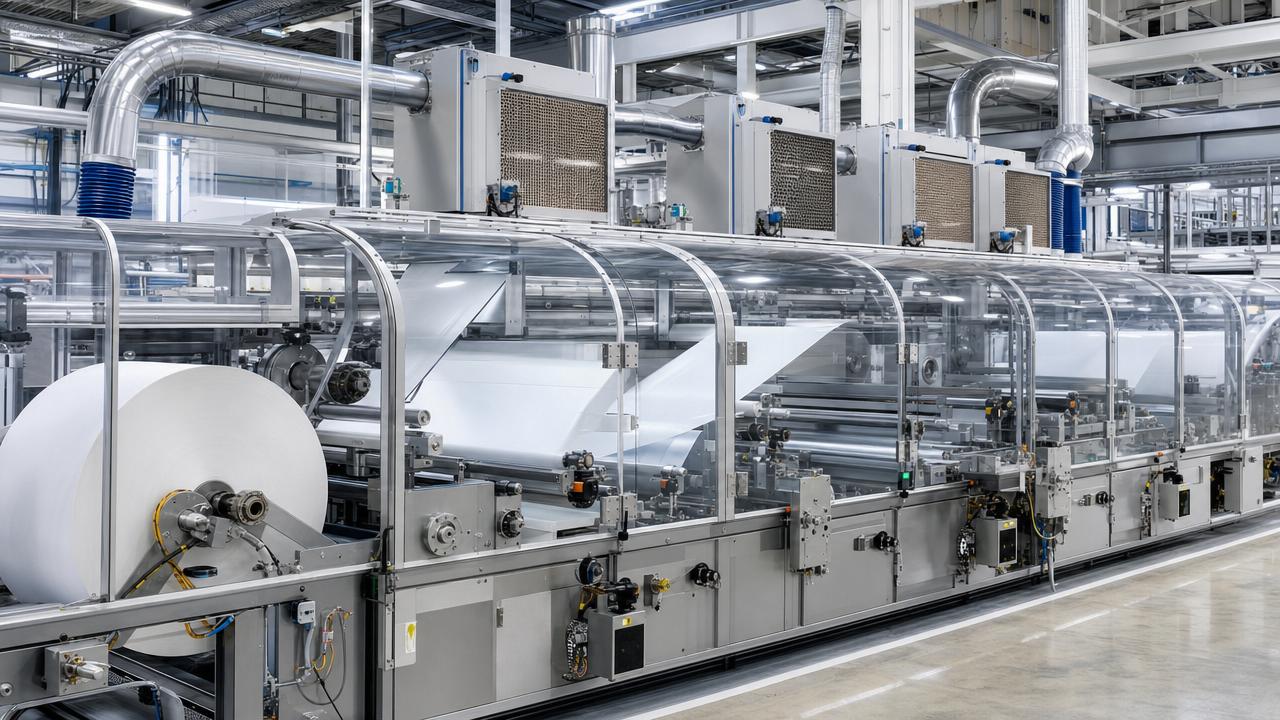
Precision Containment Solutions: Key Selection Risks
Selecting Precision Containment Solutions for industrial print and paper systems is no longer a simple safety or housekeeping decision.
It directly affects web stability, ink control, dust mitigation, adhesive integrity, and long-term equipment reliability across demanding paper-based production lines.
For technical evaluators, the real challenge is identifying hidden risks before they compromise throughput, compliance, maintenance access, or product quality.
What Technical Evaluators Are Really Trying to Validate
Most searches for Precision Containment Solutions are not about definitions. They are about whether a system will work under production stress.
Evaluators need to know if containment will stabilize the process, protect operators, reduce contamination, and avoid creating new bottlenecks.
In printing and paper operations, containment touches airflow, substrate movement, dust capture, mist control, adhesive behavior, and equipment accessibility.
A technically sound choice therefore starts with production risks, not with enclosure dimensions, catalog materials, or generic compliance statements.
The best containment solution is the one that supports line performance while controlling emissions, particles, vapors, heat, and maintenance exposure.
Why Containment Is Different in Print and Paper Systems
Industrial digital printers introduce ink mist, solvent traces, aerosolized chemistry, and sensitive printhead environments that require stable localized control.
Corrugated board lines create paper dust, starch residue, heat, steam, vibration, and high web speeds across long equipment footprints.
Die-cutting and stamping machines generate fibers, foil fragments, lubricants, and micro-debris around high-speed mechanical interfaces and registration systems.
Folder gluers add adhesive fumes, glue stringing, compression dust, and access challenges around folding rails, belts, nozzles, and inspection cameras.
Tissue converting lines demand hygiene-focused containment while managing fiber dust, static, embossing debris, packaging film particles, and rapid changeovers.
Because each process creates different contamination behavior, one containment design rarely fits every line without performance compromises.
Technical evaluation must connect containment geometry, airflow strategy, materials, cleaning methods, and controls to each machine’s operating reality.
Risk One: Material Incompatibility With Ink, Glue, Heat, and Cleaning Agents
Material selection is one of the most underestimated risks in Precision Containment Solutions for print and paper applications.
Transparent panels may haze, crack, swell, or discolor when exposed to cleaning solvents, ink chemistry, adhesives, starch, or elevated temperatures.
Gaskets and seals can absorb solvents, lose elasticity, shed particles, or react with oils used in mechanical drive zones.
Metals require careful selection when moisture, steam, acidic paper additives, or aggressive washdown routines are present near containment surfaces.
Static behavior is also critical, especially around tissue dust, light paper fibers, and high-speed converting where attraction and ignition risks increase.
Evaluators should request chemical compatibility data, temperature limits, cleaning validation records, and expected service life for each material group.
A simple visual inspection is not enough. Materials should be assessed against real consumables, maintenance fluids, and planned sanitation procedures.
The practical question is not whether the enclosure looks robust, but whether it remains stable after thousands of production hours.
Risk Two: Airflow That Solves One Problem and Creates Another
Airflow is central to containment performance, yet poorly balanced airflow can damage process stability in subtle ways.
Excessive extraction near a digital print zone may disturb droplet trajectories, drying profiles, or substrate flatness during high-resolution imaging.
Weak extraction near a corrugator or die-cutting station may allow dust migration into sensors, bearings, cameras, and electrical cabinets.
Uncontrolled negative pressure can pull fibers across web paths, increase edge flutter, or disrupt lightweight substrates during acceleration.
Positive pressure designs may protect sensitive zones, but they can push contaminants into adjacent operator areas if exhaust pathways are insufficient.
Evaluators should demand airflow mapping, capture velocity data, pressure cascade logic, and confirmation under production-speed conditions.
Testing at idle speed is misleading. The real challenge appears when webs move, sheets flex, fans run, and thermal loads rise.
Good containment engineering balances capture efficiency with print quality, web tension, drying behavior, operator comfort, and energy consumption.
Risk Three: Dust Control That Ignores Particle Behavior
Paper dust is not a single contamination category. Its size, moisture, charge, and adhesive behavior change across production stages.
Fine tissue fibers can remain airborne, while corrugated debris may settle quickly but accumulate in mechanical pockets and cable routes.
Die-cutting operations produce localized bursts that require source capture rather than broad room-level ventilation alone.
If the containment system only captures visible dust, it may fail to protect sensors, bearings, printheads, encoders, and inspection optics.
Filter selection must account for particle loading rate, pressure drop, replacement access, and whether dust may contain coatings or additives.
Evaluators should review dust generation points, maintenance logs, historical failure modes, and cleaning frequency before approving a containment concept.
Effective containment reduces both airborne migration and hidden accumulation, because accumulated dust becomes a quality, fire, and maintenance risk.
A credible supplier should explain where particles travel, not merely state that filtration efficiency is high.
Risk Four: Maintenance Access Becomes an Afterthought
Containment that blocks maintenance access often fails in practice, even if it performs well during acceptance testing.
Operators may leave panels open, bypass interlocks, remove shields, or delay cleaning when access is awkward during routine production.
In folder gluers, technicians need fast access to belts, folding rails, glue nozzles, compression sections, and reject mechanisms.
In digital printing, printhead maintenance, wiping systems, ink circulation checks, and inspection camera cleaning must remain predictable and safe.
For corrugated lines, containment must respect hot surfaces, steam systems, moving webs, splicer zones, and emergency recovery procedures.
Evaluators should simulate routine interventions, not just review CAD drawings or vendor animations during procurement meetings.
Ask how long filter changes take, which tools are needed, and whether work can be performed without contaminating the process.
The best designs convert maintenance from an exception into a controlled, repeatable, operator-friendly sequence.
Risk Five: Certification Gaps and Compliance Assumptions
Compliance risk often appears when a containment system is treated as auxiliary equipment rather than part of the production safety architecture.
Depending on application, evaluators may need to examine machine guarding, electrical safety, fire risk, dust control, emissions, and hygiene requirements.
For global suppliers, documentation should align with target market expectations, including CE, UL, ATEX-related assessments, or local ventilation rules.
Food-contact packaging and hygiene-sensitive tissue production may require additional attention to cleanability, material traceability, and contamination prevention.
Sustainability claims should also be verified, especially when containment affects energy use, filter waste, consumable usage, or emissions control.
Certification statements must be tied to specific configurations, not general product families that may differ from the delivered system.
Technical evaluators should require risk assessments, declarations, test reports, maintenance manuals, and change-control procedures before final approval.
Assumed compliance is dangerous because small configuration changes can alter guarding logic, airflow performance, electrical classification, or cleaning suitability.
Risk Six: Integration With Sensors, Controls, and Line Automation
Modern paper-based manufacturing depends on cameras, sensors, closed-loop controls, and data systems that can be affected by containment decisions.
Transparent panels may create glare for inspection cameras, while vibration from extraction units may interfere with precision measurement devices.
Doors, panels, and interlocks should communicate clearly with line controls without causing unnecessary stops or unsafe restart conditions.
Containment alarms should distinguish filter loading, airflow loss, open access points, pressure imbalance, and exhaust system failure.
If alarms are too frequent or unclear, operators may normalize them, reducing the value of the entire monitoring system.
For high-speed lines, integration must support production diagnostics, maintenance planning, and root-cause analysis rather than only basic safety shutdowns.
Evaluators should confirm data availability, alarm hierarchy, interface protocols, and whether the system supports future automation upgrades.
Containment is increasingly part of the digital factory, not a passive cover placed around mechanical equipment.
Risk Seven: Lifecycle Cost Hidden Behind a Lower Purchase Price
Initial price rarely reflects the true cost of Precision Containment Solutions in continuous industrial operation.
Filters, seals, panels, extraction energy, cleaning time, downtime, spare parts, and rejected output can outweigh purchase-price differences.
A low-cost design may require frequent disassembly, special consumables, proprietary filters, or cleaning procedures that disrupt production schedules.
Energy consumption is especially important when extraction fans run continuously across multiple stations and shifts.
Technical evaluators should calculate total cost using realistic duty cycles, contamination loads, labor rates, and planned maintenance intervals.
They should also quantify avoided failures, reduced cleaning time, improved uptime, and lower contamination-related waste.
A higher-quality containment system can be financially superior if it protects print quality, reduces stoppages, and extends component life.
The procurement question should shift from “What does it cost?” to “What production risk does it remove?”
How to Evaluate Suppliers Before Committing
A capable supplier should begin with a process audit, not a standard enclosure proposal based only on machine dimensions.
The audit should identify contamination sources, operator tasks, cleaning routines, airflow constraints, heat loads, and sensitive machine components.
Ask suppliers to explain why each material, fan, filter, seal, and access point is suitable for the specific process.
Request references from comparable applications, especially if your line involves digital inkjet, corrugation, tissue converting, or high-speed post-press systems.
Evaluation should include factory acceptance criteria, site acceptance testing, airflow verification, operator training, and maintenance documentation.
Where possible, use pilot testing or temporary measurement campaigns to verify dust levels, pressure behavior, and process impact.
Suppliers should provide clear upgrade paths for additional sensors, filtration stages, exhaust treatment, or future production expansion.
The strongest partners understand that containment must support productivity, compliance, safety, quality, and long-term maintainability simultaneously.
A Practical Selection Checklist for Technical Teams
Start by mapping each contamination source and ranking its effect on safety, quality, downtime, equipment wear, and regulatory exposure.
Next, define containment performance targets in measurable terms, including airflow, pressure, particle reduction, access time, and alarm response.
Confirm that material choices match inks, adhesives, cleaners, steam, heat, dust, static conditions, and hygiene expectations.
Review the design with operators and maintenance technicians, because they understand where bypass behavior and access frustration usually occur.
Validate integration with existing safety circuits, machine controls, inspection systems, data platforms, and emergency procedures.
Demand documentation that supports compliance claims and clarifies responsibility for installation, testing, training, spare parts, and future modifications.
Calculate lifecycle cost over several years, not only the purchase order value or installation expense.
Finally, define acceptance tests that reproduce real operating speeds, contamination loads, heat conditions, and routine maintenance interventions.
Conclusion: Choose Containment as a Process Performance System
Precision Containment Solutions should be evaluated as process performance systems, not as secondary protective covers or cosmetic housekeeping upgrades.
For industrial print and paper operations, the wrong choice can disturb airflow, reduce quality, increase downtime, and weaken compliance confidence.
The right choice protects printheads, webs, operators, optics, adhesives, mechanical systems, and production schedules without limiting access.
Technical evaluators gain the best results by focusing on material compatibility, airflow balance, dust behavior, maintainability, integration, and lifecycle economics.
When containment is selected through that lens, it becomes a measurable contributor to safer, cleaner, and more reliable paper-based manufacturing.