
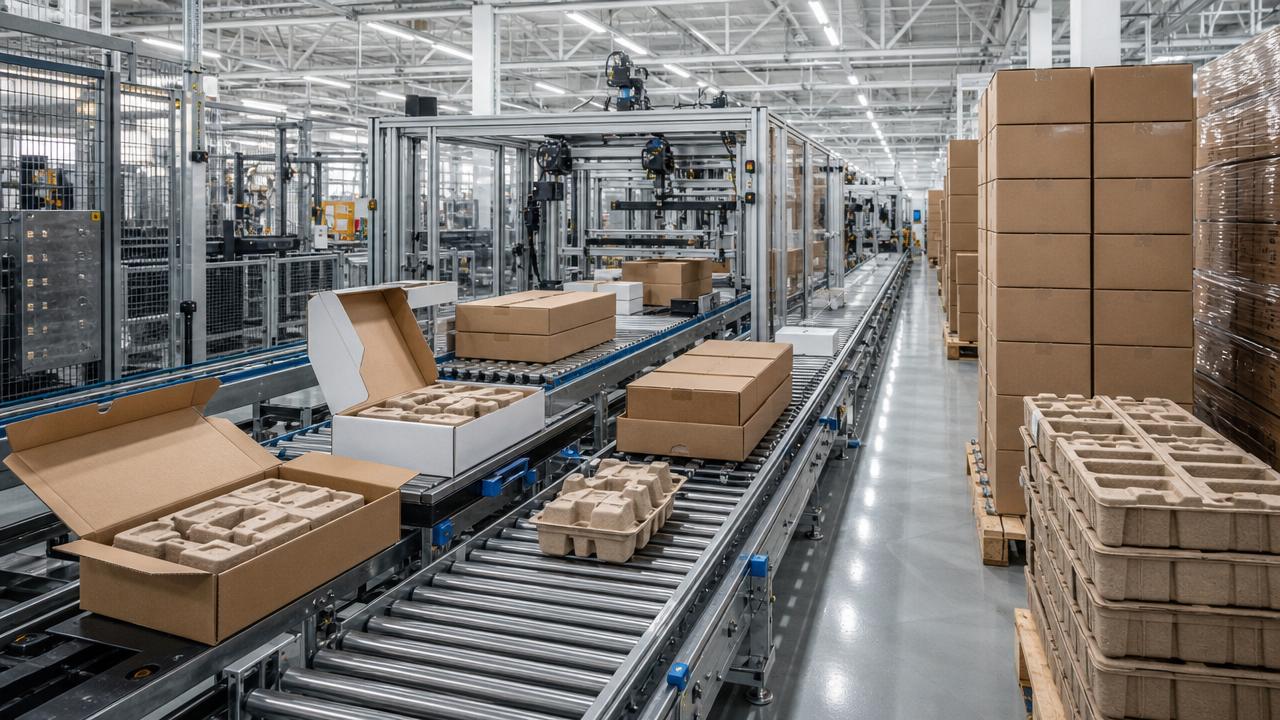
Paper-Based Packaging: When It Cuts Total Cost
For business evaluators, paper-based packaging is no longer just a sustainability preference—it is a total-cost decision. When designed around material efficiency, logistics performance, print flexibility, and end-of-life compliance, paper-based packaging can reduce expenses across procurement, warehousing, fulfillment, branding, and regulatory risk. This article examines when the shift from plastic or mixed-material formats creates measurable savings, and when hidden costs in strength, automation compatibility, or supply volatility may offset the benefits.
The real question: does paper reduce system cost, not unit price?
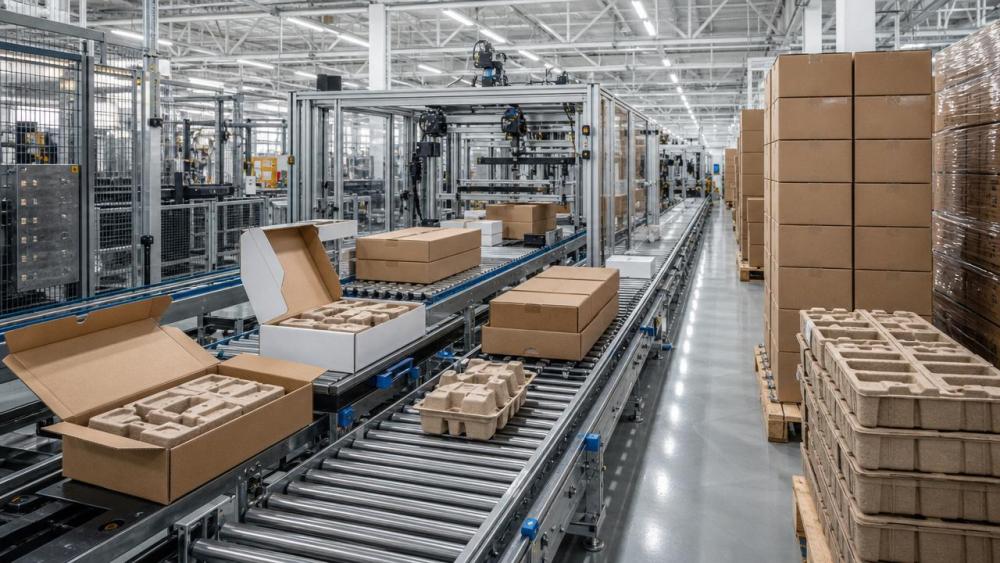
The strongest business case for paper-based packaging appears when buyers evaluate the full packaging system, not only the quoted material price.
A paper shipper, sleeve, wrap, or molded insert may cost more per unit than a plastic equivalent at first glance.
However, total cost changes when cube utilization, damage rates, freight density, automation speed, branding, compliance, and disposal fees are included.
For business evaluators, the key is identifying whether paper improves more than one cost line simultaneously.
If it only supports a sustainability message, the business case may be weak or dependent on marketing value.
If it reduces void fill, lowers returns, simplifies recycling, and enables faster print changes, the economics become much stronger.
The decision should therefore begin with a cost map across procurement, converting, packing, shipping, customer experience, and end-of-life management.
Where paper-based packaging most often cuts cost
Paper-based packaging delivers measurable savings when its structural design eliminates secondary materials or reduces the number of packaging components.
For example, a right-sized corrugated mailer can replace a plastic pouch, carton, labels, and excessive void fill.
In e-commerce, dimensional weight is often more expensive than material, making compact paper formats financially attractive.
Corrugated board also performs well when flute selection, liner grade, and compression requirements are engineered to the distribution route.
A lighter board that survives the same stacking and drop conditions can reduce both material usage and freight load.
Paper also cuts cost when it allows fast design variation without plates, tooling delays, or large minimum order quantities.
Industrial digital printing supports seasonal graphics, localized compliance text, and SKU-specific packaging without holding excessive printed inventory.
This flexibility matters when brands manage many variants, unstable demand, or frequent promotional cycles across different sales channels.
Material efficiency: the first savings lever
Material savings rarely come from simply replacing plastic with thicker paper. They come from better engineering and fewer layers.
Business evaluators should ask whether the proposed paper format reduces gauges, removes laminates, or simplifies inserts and dividers.
A corrugated structure can provide cushioning and stacking strength in one component, especially for moderate-weight consumer goods.
Molded pulp can replace foam inserts when the product geometry is stable and shock requirements are well understood.
Paper wraps and sleeves can replace rigid trays where product presentation matters but heavy protection is unnecessary.
The cost advantage improves when converters optimize board grades instead of defaulting to conservative specifications.
Over-engineered paper packaging can quickly lose its cost benefit through unnecessary basis weight, oversized blanks, or inefficient die layouts.
A proper trial should compare grams per packed product, not only price per square meter or price per thousand units.
Logistics economics: cube, weight, and damage performance
Freight is often where paper-based packaging proves or loses its business case. The package must protect without increasing volume.
Right-sizing is critical because carriers increasingly price parcels by dimensional weight rather than actual weight.
A compact paper mailer or low-profile corrugated design can lower shipping cost even if the material price is higher.
For palletized goods, compression strength and stacking stability directly influence warehouse density, truck loading, and damage-related claims.
Corrugated board lines can produce flutes that balance strength and lightweighting, but specifications must match real handling conditions.
If paper packaging collapses under humidity, vibration, or long storage cycles, savings disappear through returns and replacement shipments.
Evaluators should request distribution testing, including drop, vibration, compression, climate exposure, and pallet pattern validation.
The most useful metric is cost per successfully delivered unit, not packaging cost per packed unit.
Automation compatibility can decide the outcome
A paper format that looks economical on a spreadsheet may fail if it slows packing lines or increases labor.
Automatic folder gluers, case erectors, inserters, and labeling systems require predictable board behavior, crease quality, and glue performance.
If paper dust, poor folding memory, or inconsistent blanks create stoppages, the real cost rises quickly.
Business evaluators should involve operations teams early, especially when switching from flexible plastic to formed paper structures.
Line trials should measure packs per minute, jam frequency, changeover time, glue consumption, rejection rates, and operator intervention.
The best projects use packaging machinery capabilities as design constraints, not as late-stage implementation details.
When paper packaging is engineered for existing automation, it can improve throughput through easier stacking, feeding, and barcode placement.
When it requires major equipment modification, the payback period must include tooling, training, downtime, and maintenance cost.
Print flexibility: savings beyond decoration
Many companies underestimate the financial value of print flexibility in paper-based packaging decisions.
Digital printing on paper and corrugated substrates can reduce inventory risk by producing shorter runs and more frequent updates.
This is valuable for products with changing regulatory claims, multilingual markets, retailer-specific artwork, or short promotional windows.
Instead of storing multiple preprinted variants, brands can hold neutral blanks and print closer to demand.
That approach reduces obsolete packaging, warehousing space, write-offs, and emergency reprint premiums.
It also supports direct-to-consumer personalization, serialized information, QR codes, and traceability without separate labels.
For evaluators, the question is not whether digital print is visually attractive, but whether it improves working capital.
When SKU complexity is high, print-on-demand paper packaging can create savings that traditional unit comparisons miss.
Regulatory and disposal cost: where paper gains strategic value
Regulation is making packaging economics less predictable, especially for plastics, mixed materials, and formats with poor recyclability.
Extended producer responsibility schemes, plastic taxes, landfill restrictions, and retailer sustainability scorecards can change total cost quickly.
Paper-based packaging often benefits from established collection systems and clearer consumer recycling behavior.
However, not every paper format is automatically low-risk. Coatings, adhesives, inks, windows, and barrier layers matter.
A paper package that cannot be recycled at scale may lose much of its regulatory advantage.
Business evaluators should verify recyclability claims through recognized standards, local infrastructure, and customer market requirements.
Certification also matters when customers require FSC, PEFC, deforestation compliance, or documented fiber sourcing.
In regulated markets, paper may cut cost by reducing future exposure, even when immediate material savings are modest.
When paper-based packaging does not reduce cost
Paper is not the lowest-cost answer in every application. High moisture exposure can require coatings that increase cost and complexity.
Products needing strong oxygen, grease, aroma, or liquid barriers may require hybrid structures that are harder to recycle.
Heavy, sharp, or fragile products may need more paper mass than expected to reach equivalent protection.
In some cases, plastic films still provide unmatched barrier performance at extremely low weight.
Paper can also become expensive when fiber markets are volatile, energy prices rise, or supply chains face regional shortages.
Small buyers may lack the purchasing leverage needed to secure stable board grades or specialty papers.
Another hidden cost appears when packaging redesign triggers artwork changes, line validation, retailer approval, or new compliance documentation.
A disciplined evaluation should identify these switching costs before declaring paper the cheaper option.
A practical evaluation framework for business teams
Start by defining the current baseline in measurable terms: unit cost, pack labor, freight cost, damages, storage, and disposal.
Next, identify which cost lines the paper alternative is expected to improve, and assign owners for each assumption.
Procurement should validate material pricing and availability, while engineering validates performance, machinability, and design feasibility.
Operations should test throughput, changeovers, rejects, and labor impact under realistic production conditions.
Logistics should calculate dimensional weight, pallet utilization, truck fill, and damage probability across actual routes.
Marketing should quantify any branding, shelf impact, customer preference, or retailer compliance value.
Finance should combine these inputs into a total-cost model, including one-time transition expenses and sensitivity ranges.
The result should be a decision based on cost per delivered, compliant, saleable unit over the packaging lifecycle.
Key metrics to include in the total-cost model
A robust model should include material cost per unit, but that should be only the starting point.
Add conversion yield, scrap rate, minimum order quantity, inventory carrying cost, and artwork obsolescence risk.
Include packing speed, direct labor, equipment downtime, glue or tape use, and line maintenance changes.
For distribution, calculate parcel dimensional weight, pallet efficiency, container loading, warehouse slotting, and damage-related returns.
For compliance, include producer responsibility fees, certification costs, audit requirements, and potential penalties for non-compliant materials.
End-of-life assumptions should reflect actual markets, not idealized recycling claims from a supplier presentation.
Finally, include customer experience metrics such as unboxing complaints, disposal convenience, and perceived sustainability credibility.
These factors help evaluators avoid decisions that look cheaper in procurement but cost more across the business.
Where machinery and supplier capability matter
The success of paper-based packaging depends heavily on converting quality and machinery competence.
Corrugated board forming, precision die-cutting, creasing, gluing, and print registration influence both performance and line efficiency.
Suppliers with modern digital printers can support shorter runs, variable data, and fast artwork changes without excessive setup waste.
Advanced die-cutting and folder-gluer systems can improve dimensional consistency, which reduces jams and assembly problems.
For molded fiber or specialty paper formats, tooling quality and drying control can affect strength, appearance, and unit economics.
Business evaluators should therefore assess supplier process capability, not only sustainability claims or quoted prices.
Ask for production tolerances, quality data, certification evidence, machine compatibility references, and contingency plans for fiber supply.
A cheaper supplier may create higher total cost if inconsistency causes downtime, rejects, or customer complaints.
Best-fit scenarios for cost-effective paper conversion
Paper conversion is most attractive for e-commerce goods where right-sizing and recyclability improve both shipping cost and customer perception.
It also fits fast-moving consumer goods with frequent design changes, retailer-specific versions, or seasonal campaigns.
Light-to-moderate weight products with predictable handling conditions often achieve strong protection without excessive board weight.
Brands facing plastic reduction targets may gain additional value through compliance, retailer acceptance, and stronger sustainability communication.
Paper is also compelling when packaging simplification removes labels, inserts, trays, or void fill from the system.
By contrast, applications requiring high moisture resistance, long cold-chain exposure, or extreme barrier performance need deeper validation.
The best candidates are products where paper improves logistics, print agility, disposal, and brand value at the same time.
That combination is what turns a sustainability initiative into a measurable total-cost advantage.
Conclusion: paper cuts cost when it is engineered as a system
Paper-based packaging reduces total cost when it is treated as an integrated business decision, not a material substitution exercise.
The strongest savings come from right-sizing, fewer components, efficient corrugated structures, digital print flexibility, and simpler end-of-life compliance.
The weakest cases appear when paper requires excessive weight, new barriers, slower automation, or complex supplier transitions.
For business evaluators, the practical answer is to compare cost per delivered, compliant, saleable unit.
If paper improves that number while reducing regulatory and brand risk, the shift is commercially justified.
If it only improves appearance or sustainability messaging, the decision needs stronger evidence before scale-up.
The future of paper-based packaging belongs to companies that combine fiber science, precision converting, digital printing, and disciplined cost modeling.
When those elements align, paper does more than replace plastic; it lowers system cost and strengthens operational resilience.