
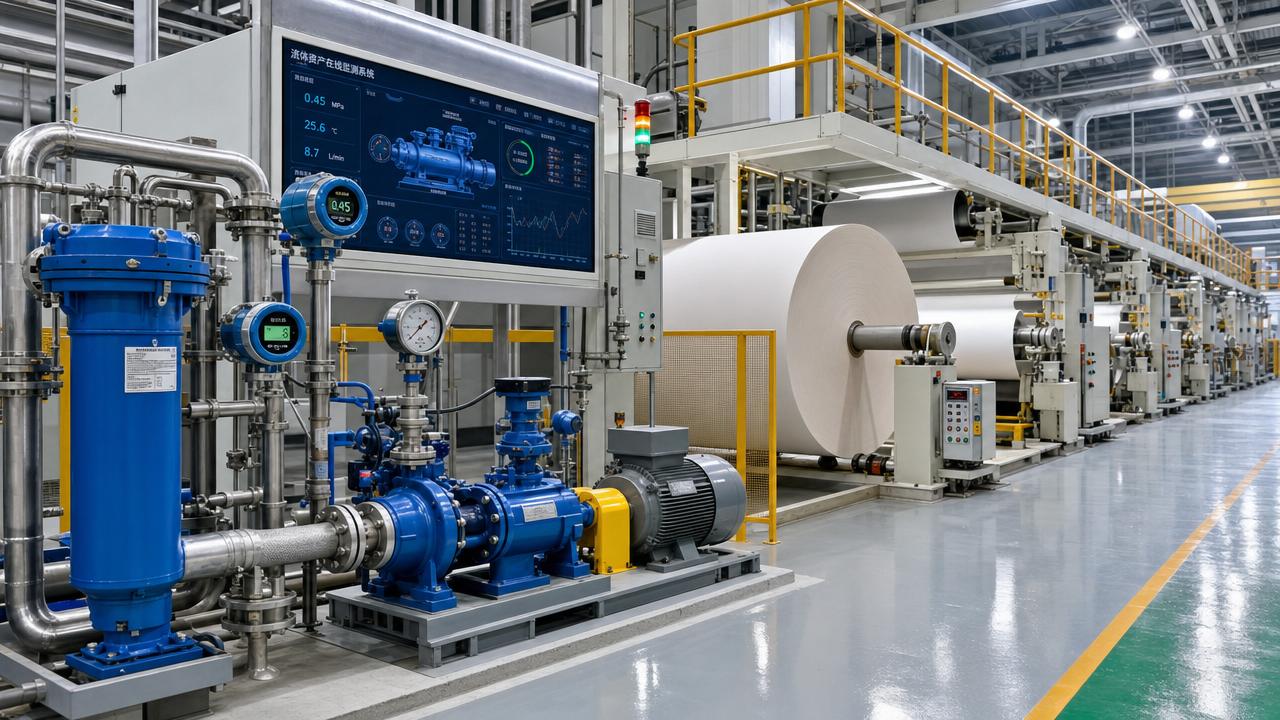
Critical Flow Assets: Maintenance Signals That Protect Production Uptime
For after-sales maintenance teams, Critical Flow Assets are the hidden guardians of uptime across digital printers, corrugators, folder gluers, and tissue lines.
When air, ink, steam, glue, vacuum, lubrication, or web tension begins to drift, production rarely stops at once—but the warning signals are already there.
This article outlines the maintenance indicators that matter most, helping technicians detect abnormal flow behavior early and prevent cascading failures.
In paper-based manufacturing, most unplanned downtime does not begin with a dramatic breakdown. It usually starts as a small flow deviation.
A pressure pulse, unstable vacuum, glue viscosity change, ink starvation, or tension oscillation may look minor during operation.
For after-sales maintenance personnel, the practical question is not whether a component is still running today.
The real question is whether the flow behavior shows that the machine can keep running tomorrow under production load.
Critical Flow Assets are the systems that move, meter, stabilize, or regulate production media across the line.
They include pumps, valves, filters, nozzles, hoses, manifolds, dryers, steam traps, glue circuits, lubrication points, vacuum generators, and tension control loops.
Because these assets are connected to quality, speed, energy, and safety, their early signals deserve priority in maintenance planning.
Start With the Flow Signals That Usually Come Before Downtime
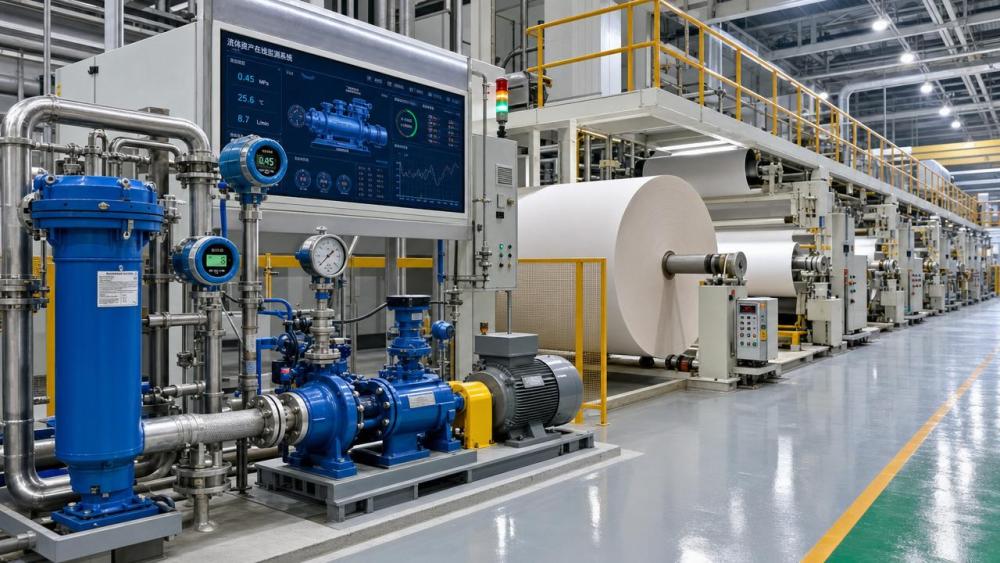
The most useful maintenance signals are not always alarms. Many alarms appear only after production stability has already been damaged.
Technicians should watch for repeatable deviations that appear before stoppage, waste increase, or operator intervention becomes frequent.
In digital printing, ink pressure fluctuation, nozzle dropouts, temperature drift, and recirculation imbalance often appear before printhead failure.
In corrugated board lines, steam pressure loss, condensate accumulation, and unstable paper moisture usually precede warp, delamination, or speed reduction.
On folder gluers, adhesive temperature, viscosity, pump rhythm, and nozzle cleanliness determine whether folding remains stable at high speed.
In tissue converting, vacuum stability, web tension, lubrication flow, and air delivery influence embossing, rewinding, cutting, and packaging synchronization.
A practical rule is simple: when flow behavior becomes less predictable, mechanical damage and quality losses become more likely.
Maintenance teams should therefore treat abnormal flow variation as a production risk, not merely as a utility adjustment.
Ink, Coating, and Fluid Delivery: Small Restrictions Create Large Quality Losses
For industrial digital printers, ink flow is a direct uptime factor because printheads depend on stable pressure, filtration, and temperature.
A partially blocked filter may not stop production immediately, but it can starve channels during high-coverage jobs.
Technicians should compare inlet and outlet pressure across filters, not only check whether ink is visibly circulating.
Rising differential pressure indicates contamination, drying, pigment settlement, or an underspecified maintenance interval for the actual production mix.
Another important signal is recurring nozzle compensation. If software correction increases steadily, the physical ink path may be deteriorating.
Inspect degassing units, recirculation pumps, meniscus control, tank agitation, and ink temperature stability before replacing expensive printhead components.
For coating or varnish circuits, viscosity drift should be recorded with ambient temperature, batch information, and machine speed.
When viscosity is corrected repeatedly during a shift, the system may be suffering from evaporation, contamination, poor sealing, or heating instability.
Good after-sales service links these data points together, turning scattered operator comments into a useful flow diagnosis.
Steam, Heat, and Condensate: Corrugator Signals That Cannot Be Ignored
Corrugated board production relies on controlled heat transfer. Steam flow, condensate removal, and roll temperature determine paper bonding and board flatness.
A corrugator can keep moving while heat balance is already drifting beyond the ideal process window.
Common warning signs include slow warm-up, uneven roll surface temperature, increased warp, unstable glue gelatinization, and repeated speed limitation.
Maintenance technicians should verify steam pressure at use points, not only at the boiler or main header.
Blocked strainers, leaking rotary joints, failed steam traps, and condensate back pressure often create hidden heat transfer losses.
Infrared temperature checks across preheaters and corrugating rolls help detect uneven heating before product defects become severe.
Condensate hammering, unusual pipe vibration, or frequent trap discharge changes should be investigated quickly because they affect both safety and uptime.
For after-sales teams, documenting steam-side conditions during customer visits creates strong evidence for maintenance recommendations.
It also prevents repeated replacement of bearings, belts, or glue units when the root cause is thermal flow instability.
Glue and Adhesive Systems: Watch Consistency, Not Only Application Volume
In folder gluers, laminators, and corrugated bonding, adhesive flow must be stable in volume, timing, temperature, and rheology.
A machine may show correct glue presence while still producing weak bonding, stringing, splashing, or folded-box rejects.
After-sales maintenance teams should monitor glue viscosity, tank temperature, hose heating, nozzle condition, pump pulsation, and return-line behavior.
When operators increase glue volume to solve bonding problems, they may be masking poor adhesive transfer or unstable substrate wetting.
This often increases cost, drying load, contamination, and downstream sticking without solving the underlying flow issue.
For hot-melt systems, char formation, hose temperature imbalance, and nozzle clogging are leading indicators of future failures.
For cold-glue systems, sediment, microbial contamination, air entrainment, and viscosity shift can gradually reduce application accuracy.
Technicians should verify whether cleaning intervals match actual material behavior, especially during seasonal changes or new substrate introductions.
A strong maintenance record should connect adhesive settings with product type, line speed, ambient conditions, and observed bonding performance.
Air, Vacuum, and Pneumatics: Invisible Flow Problems Become Timing Problems
Compressed air and vacuum systems are easy to overlook because they often feel like background utilities.
Yet they control feeding, sheet separation, folding assistance, waste extraction, web handling, gripping, cleaning, and packaging motion.
A pressure gauge within range does not always prove that flow capacity is sufficient during peak machine cycles.
Technicians should look for delayed actuator response, unstable sheet feeding, poor suction at specific zones, and compressor cycling changes.
Vacuum loss may come from worn seals, blocked filters, cracked hoses, incorrect valve timing, or porous material changes.
Compressed air issues often involve water carryover, oil contamination, pressure drop, undersized tubing, leaking fittings, or clogged silencers.
After-sales teams should test dynamic pressure during operation instead of relying only on static readings during machine stops.
Leaks deserve special attention because they waste energy and reduce reserve capacity for high-speed production phases.
When pneumatic timing becomes inconsistent, the result may look mechanical, but the root cause is frequently unstable air flow.
Lubrication and Cooling: Protect Bearings, Gears, Printheads, and Drives
Lubrication is a Critical Flow Asset because it creates the protective film that separates moving surfaces under load.
Insufficient flow does not always produce immediate failure, but it accelerates wear, heat, vibration, and energy consumption.
Technicians should verify actual lubricant delivery at critical points, especially on high-speed shafts, gearboxes, chains, and cam mechanisms.
Automatic lubrication systems need inspection of pump output, line blockage, metering units, grease consistency, and controller cycles.
Over-lubrication also causes problems, including contamination, slippage, paper staining, sensor fouling, and unnecessary cleaning downtime.
Cooling circuits deserve equal attention in digital printers, drive cabinets, UV systems, hydraulic units, and tissue converting equipment.
Rising coolant temperature, low flow alarms, fouled heat exchangers, and pump cavitation can reduce component life rapidly.
Maintenance teams should record thermal trends, not simply reset warnings after production pressure pushes the line forward.
When lubrication and cooling data are linked with vibration and temperature readings, failure prediction becomes much more reliable.
Web Tension as a Flow Asset: Detect Oscillation Before Breaks and Wrinkles
Although web tension is not a fluid, it behaves like a flow variable across unwinding, printing, converting, and rewinding sections.
Stable tension carries material through the machine, while instability creates registration errors, wrinkles, breaks, telescoping, or inconsistent roll density.
After-sales technicians should watch dancer movement, load-cell signals, brake response, splice behavior, and acceleration-related tension spikes.
Recurring tension alarms near the same production phase often indicate process interaction rather than a single defective component.
Possible causes include worn brake pads, poor roll geometry, incorrect taper tension, sticky web edges, or sluggish drive tuning.
In tissue lines, tension instability can quickly propagate into embossing variation, rewinding defects, and packaging misalignment.
In digital printing on paper or corrugated media, tension drift affects print position, drying balance, and transport accuracy.
Maintenance teams should compare tension data with speed changes, material batches, humidity, and operator adjustments.
This makes troubleshooting faster and helps separate material behavior from machine control or mechanical problems.
Build a Maintenance Checklist Around Leading Indicators
A useful checklist should not be a long list of parts to inspect without priority or context.
It should focus on leading indicators that reveal flow degradation before quality, safety, or uptime is seriously affected.
For each Critical Flow Asset, define normal operating range, acceptable fluctuation, inspection frequency, and escalation threshold.
Include pressure differential, temperature trend, flow rate, vibration, noise, consumption rate, contamination level, and recovery time after adjustment.
Also record operator observations, because experienced operators often notice rhythm changes before instruments generate alarms.
A good service report should show what changed, when it changed, what production condition existed, and what action was taken.
Photos, trend screenshots, replaced filter condition, oil samples, and measured readings make after-sales recommendations more credible.
When possible, rank findings by production risk: immediate stop risk, quality risk, energy waste, component life risk, or housekeeping issue.
This helps customers approve the right actions instead of delaying repairs until downtime becomes unavoidable.
Separate Root Causes From Symptoms During Field Troubleshooting
Many maintenance mistakes happen when teams replace the component closest to the visible defect.
A print defect may be blamed on a printhead, while the real issue is filtration, degassing, or temperature control.
A weak carton bond may be blamed on glue, while the cause is nozzle pulse instability or substrate moisture variation.
A corrugator warp problem may be treated mechanically, although steam traps or condensate drainage are disrupting heat balance.
Field technicians should begin with a simple sequence: confirm the symptom, map the flow path, measure key points, then isolate variables.
Changing several settings at once may restore production temporarily, but it destroys evidence needed for durable correction.
Use baseline data from healthy machines whenever possible, especially for pressure curves, current draw, temperature profiles, and cycle timing.
If no baseline exists, create one after stabilization so future service visits can compare actual condition against known performance.
This discipline is especially important for high-speed packaging lines where small timing errors create large waste volumes.
Turn Flow Data Into Preventive Service Value
After-sales maintenance teams are not only repair providers. They help customers protect production capacity, material yield, and delivery reliability.
Critical Flow Assets give service teams a practical way to demonstrate value through early detection and measurable risk reduction.
Instead of saying a machine needs maintenance, technicians can show rising differential pressure, unstable vacuum, or worsening thermal response.
This converts maintenance from opinion into evidence, which is easier for production managers and procurement teams to approve.
For OEMs and service organizations, structured flow monitoring also improves spare parts planning and remote support accuracy.
Repeated patterns across customer sites can reveal design improvements, training needs, material sensitivity, or recommended upgrade packages.
For customers, the benefits are practical: fewer emergency stops, less waste, more stable quality, lower energy loss, and longer component life.
The strongest programs combine technician experience, sensor data, operator feedback, and clear escalation rules.
That combination protects uptime better than reactive maintenance focused only on failed parts.
Conclusion: Uptime Is Protected Before the Alarm Appears
Critical Flow Assets determine whether digital printers, corrugators, folder gluers, and tissue lines remain stable under real production pressure.
The most valuable maintenance work happens before alarms, shutdowns, and visible defects force urgent intervention.
After-sales teams should prioritize flow signals in ink, steam, glue, air, vacuum, lubrication, cooling, and web tension systems.
By tracking early deviations, technicians can identify root causes faster and prevent minor instability from becoming cascading failure.
For modern paper-based manufacturing, uptime is not protected by reaction speed alone. It is protected by disciplined signal reading.
When maintenance teams understand the behavior of Critical Flow Assets, they turn hidden operating data into reliable production continuity.