
How to evaluate industrial print suppliers for consistent quality
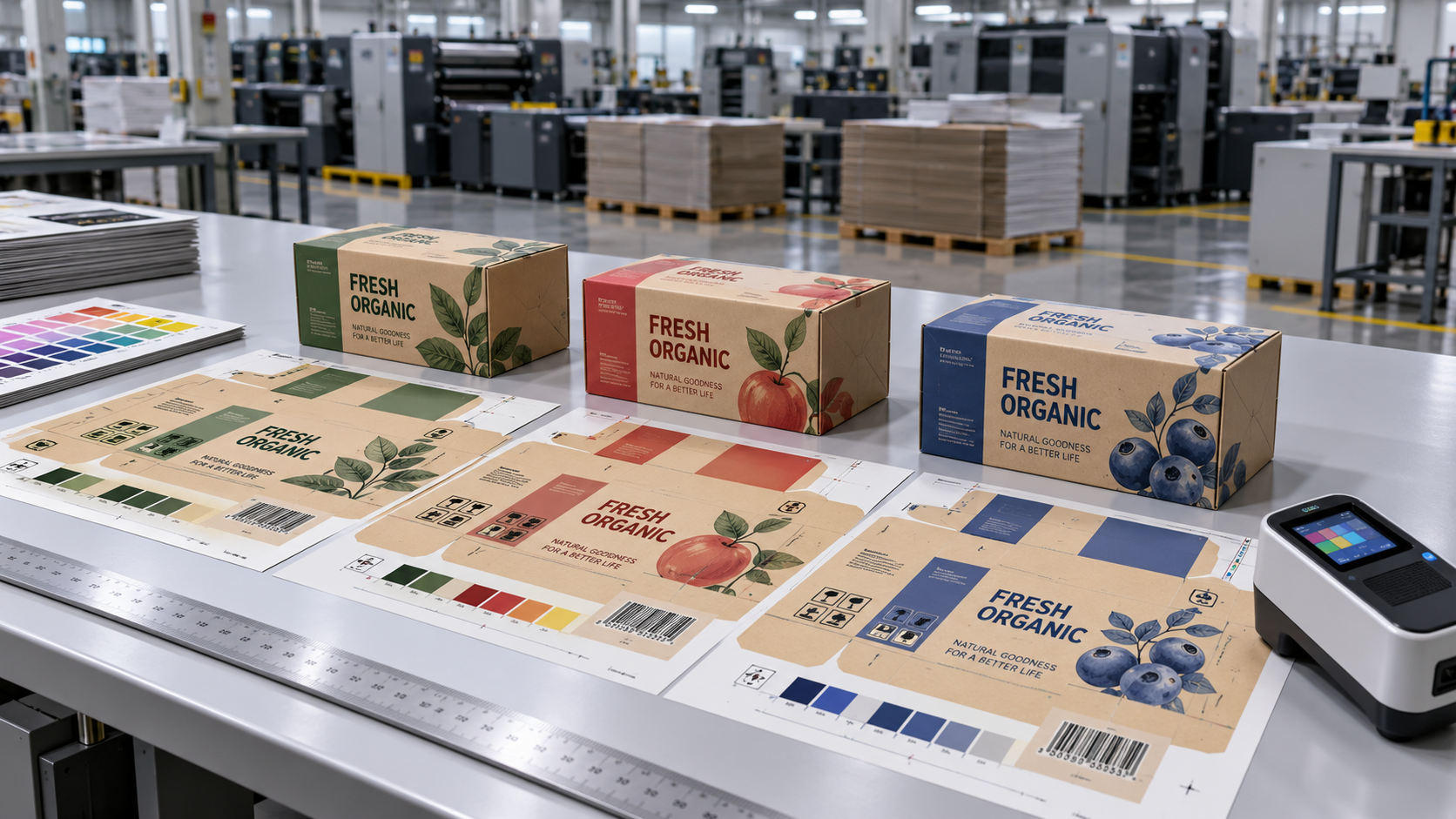
A sample pack arrives looking exactly right: clean solids, sharp text, and a brand color that matches the approved reference. Three production batches later, the shade has drifted, barcodes scan inconsistently, and folding exposes cracks along the printed crease. The supplier may still be meeting its own internal standard—but that standard was never aligned with yours.
For procurement teams searching for an industrial print buyer guide, suppliers should be compared on evidence of repeatability, not presentation quality alone. Consistent output depends on the interaction between equipment, substrates, inks, operators, finishing processes, and production conditions. This guide explains what to specify, what to verify during a trial, and how to turn technical findings into a defensible sourcing decision.
Define “consistent quality” before requesting quotations
A supplier cannot reliably meet an expectation that exists only as “similar to the sample.” Before comparing vendors, translate the end-use requirement into an acceptance specification shared by procurement, production, quality assurance, and brand stakeholders.
For printed corrugated packaging, appearance is only part of the requirement. A visually attractive sheet may warp during conversion, crack at a crease, or lose barcode readability after handling. For industrial labels, adhesion and resistance to the actual exposure conditions may matter more than a small color difference.
Choose limits according to application risk rather than copying another buyer’s specification. Premium retail cartons, shipping cases, and industrial instruction labels do not need identical appearance criteria. They do need clear, measurable acceptance rules.
Separate machinery capability from supplier process capability
A recognizable press brand is useful background, not proof of dependable output. Two suppliers using similar industrial digital printers can deliver very different results because their maintenance routines, substrate conditioning, color management, and operator practices differ.
If you are buying printed products, assess the complete production route. If you are buying printing equipment, apply the same logic to the proposed machine configuration, your intended materials, and the support needed to maintain performance after installation.
Ask about the production window, not just maximum speed
Rated speed rarely tells procurement what it needs to know: at what sustained speed does the system meet your specification on your substrate? Ink coverage, resolution, drying capacity, board absorbency, and variable-data complexity can all affect usable throughput.
Ask suppliers to identify the operating conditions behind their quality claims. For inkjet production, that includes print mode, ink set, primer where used, drying or curing settings, and nozzle-compensation practices. On web-fed systems, tension stability and registration deserve attention. On corrugated materials, board flatness and surface variability can affect printhead clearance and image quality.
A credible supplier will explain its limitations. “We can achieve this result, but only within this material range and production speed” is more useful than an unconditional promise.
Check whether finishing can preserve the print quality
Printing and post-press processing should not be qualified separately when the delivered item is a finished package. Die-cutting can reveal registration problems. Creasing can expose coating brittleness. Folder-gluing can introduce dimensional variation, adhesive contamination, or poor bond strength.
Request samples that have passed through the actual finishing route. Where durability matters, evaluate them after a defined conditioning period and relevant handling tests—not only immediately after printing.
Make the production trial difficult enough to be informative
A demonstration is designed to show what is possible. A qualification trial should reveal what is repeatable. Give shortlisted industrial print suppliers the same files, materials, acceptance criteria, and reporting requirements so their results can be compared fairly.
The trial artwork should represent your real workload, including demanding elements such as large solids, neutral grays, fine reversed text, gradients, small codes, and variable content where applicable. Avoid testing only an attractive image that hides weaknesses.
- Use representative substrates. Specify the actual grade and coating, with more than one material lot where variability is a known risk.
- Run under normal production conditions. Record speed, setup time, waste, consumables, and any manual intervention needed to remain within tolerance.
- Sample throughout the run. Collect output from startup, stable production, later stages, and after a planned stop and restart.
- Repeat the job on another occasion. A second run can expose dependence on a particular operator, fresh calibration, or unusually favorable conditions.
- Complete the finishing and functional tests. Check the delivered product, not just the printed sheet or web.
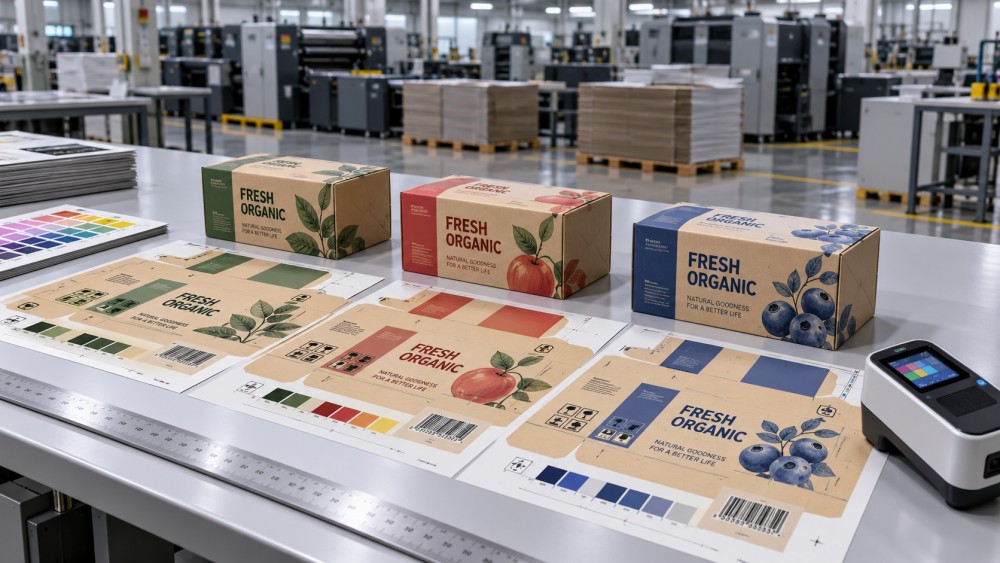
Agree on sample selection before production begins. If the supplier chooses only its best sheets afterward, the exercise proves little. Retain identified samples with matching measurement records so disagreements can be traced to a specific point in the run.
For machinery purchases, distinguish factory acceptance testing from site acceptance testing. Factory results establish performance under the agreed demonstration conditions; installation-site testing confirms that the delivered configuration works with your utilities, environment, operators, and materials.
Read quality records, not just certificates
An ISO 9001 certificate can indicate a documented quality management system within its stated scope. It does not certify that your packaging will meet a particular color tolerance or durability requirement. Check the certificate’s validity, covered location, and scope, then examine how the system operates on the production floor.
Ask to see anonymized records from comparable jobs. Useful evidence includes color trends, defect logs, calibration histories, preventive maintenance completion, customer complaints, and corrective actions. Individual pass results matter less than whether the supplier detects drift early and prevents recurrence.
Color control requires a shared measurement method
A color-difference number without its measurement conditions is incomplete. Agree on the reference, color-difference formula, instrument conditions, backing, sampling locations, and timing after printing. Visual assessment should also use agreed lighting and viewing conditions.
ISO 13655 provides measurement requirements relevant to graphic arts, while appropriate parts of ISO 12647 may inform process-control specifications. Their applicability depends on the printing process and production condition; do not treat a standards reference as a universal quality guarantee.
Inspect more than average color difference. Averages can conceal an unacceptable brand-color patch, cross-sheet variation, or isolated defects. Ask for the distribution of results and the proportion of samples meeting each critical limit.
Find out what happens when output moves out of control
During an audit, ask an operator: “What makes you stop the job, and who authorizes restarting it?” The answer often reveals more than a polished quality manual.
- Are control limits visible and understood?
- Does inspection detect the defects that matter to your application?
- How is suspect output identified, isolated, and prevented from shipping?
- What checks follow a printhead replacement, ink change, or major maintenance event?
- Can the supplier demonstrate that a previous corrective action remained effective?
Automated inspection is valuable, but its coverage must be understood. A camera system may identify missing print or registration errors without confirming color accuracy, barcode quality, or adhesive bond strength.
Traceability and change control protect future orders
Repeatability depends on knowing what changed when a result changes. A supplier should be able to connect a finished batch to its artwork revision, substrate lot, ink batch, machine, production settings, inspection results, and relevant finishing records.
Test this capability rather than accepting a general assurance. Select one retained sample and ask the team to retrieve its production history. Slow, incomplete reconstruction is a warning that containment may also be difficult when a complaint occurs.
Your agreement should define which changes require notification or approval. These may include substrate substitutions, ink reformulations, production-site transfers, subcontracted finishing, or significant changes to the established process. Not every adjustment needs buyer approval, but changes that could affect fit, function, appearance, or compliance should not be invisible.
Where sustainability claims influence purchasing, verify them separately. FSC chain-of-custody claims require appropriate scope and transaction documentation. EUDR obligations, where applicable, concern due diligence and should not be treated as interchangeable with forest certification. Neither replaces print-performance testing.
Compare the cost of acceptable output—not the quoted unit price
The cheapest quotation can become expensive when quality variation creates inspection work, sorting, reprints, line stoppages, or emergency freight. Compare suppliers using a common scenario: the same volume, artwork mix, materials, delivery schedule, and acceptance specification.
For outsourced print, calculate cost per accepted unit, including tooling, setup charges, expected waste, logistics, and the agreed handling of rejected goods. Keep assumptions visible rather than disguising uncertain failure costs as precise forecasts.
For equipment, extend the comparison to ink and primer consumption, printhead maintenance, cleaning materials, energy, software, service, operator time, and realistic uptime. Clarify whether quoted consumable usage comes from your artwork or a favorable test pattern.
Support capability belongs in the quality assessment. Ask about local technical coverage, spare-parts availability, escalation routes, and recovery procedures. A redundant press is not automatically a qualified backup: confirm that transferred work can meet the same specification.
Turn the evidence into a purchasing decision
A weighted scorecard helps procurement distinguish a persuasive presentation from a qualified supplier. An illustrative allocation is 35% for trial quality and repeatability, 20% for process control and traceability, 15% for substrate and finishing capability, 15% for capacity and support, and 15% for total cost. Adjust these weights to your business risk.
Set non-negotiable gates before scoring. A supplier that cannot meet a critical barcode, safety, or functional requirement should not win because its price compensates mathematically. Missing evidence should remain an open risk, not receive an optimistic score.
Before approval, incorporate the specification, reference samples, sampling plan, reporting requirements, change-control rules, and nonconformance remedies into the purchasing agreement. Establish how disagreements will be measured and resolved.
Then use a controlled ramp-up rather than treating one successful trial as permanent qualification. Review the first production batches against the same criteria and monitor ongoing performance. The right industrial print supplier is not simply the one that produces an excellent sample. It is the one that can explain, document, and repeatedly deliver the conditions that made that sample possible.
Industry Briefing
Get the top 5 industry headlines delivered to your inbox every morning.
Recommended News