
How Critical Containment Technology Reduces Dust Exposure Risks
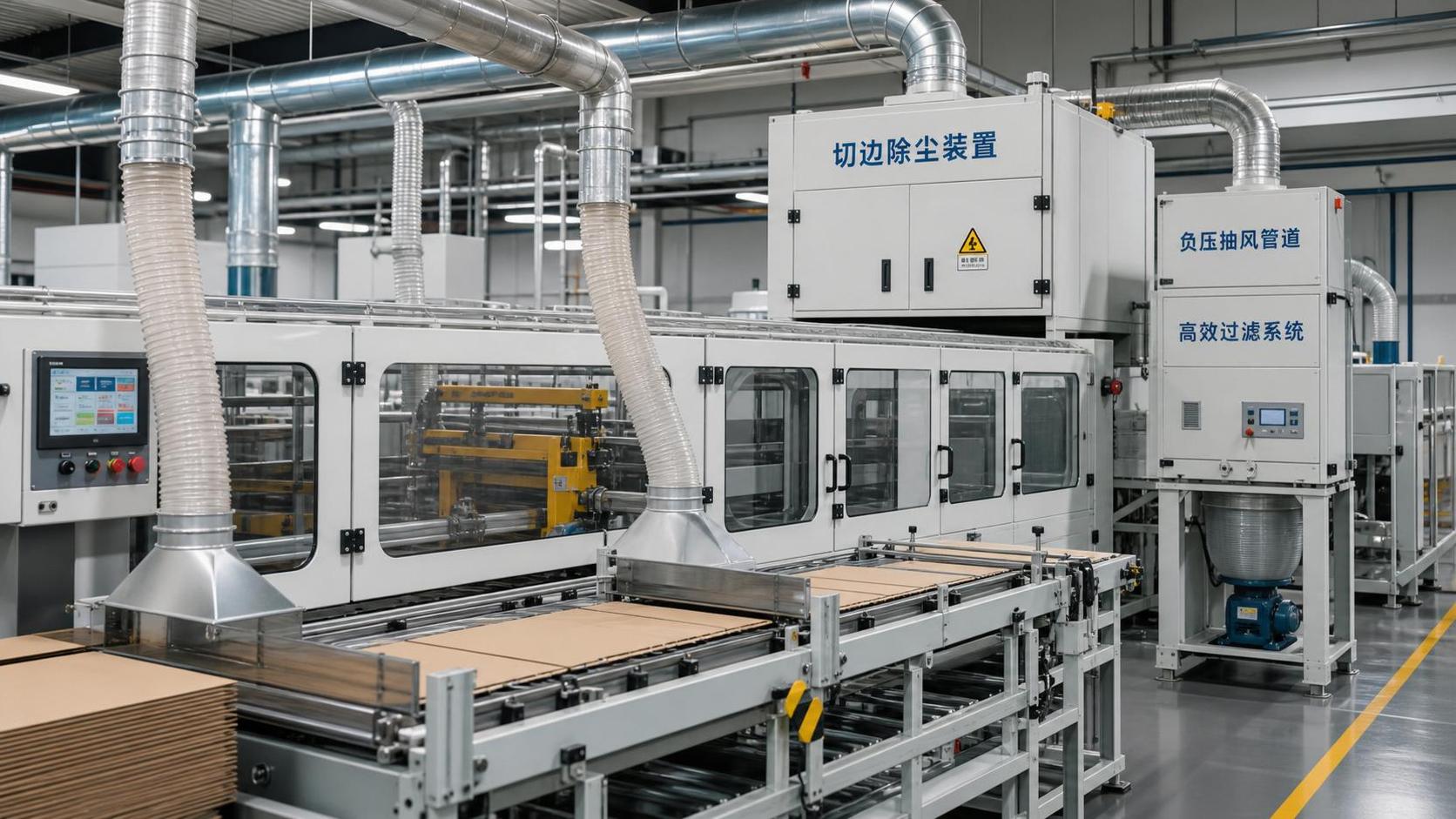
Why is Critical Containment Technology getting so much attention in paper-based production?
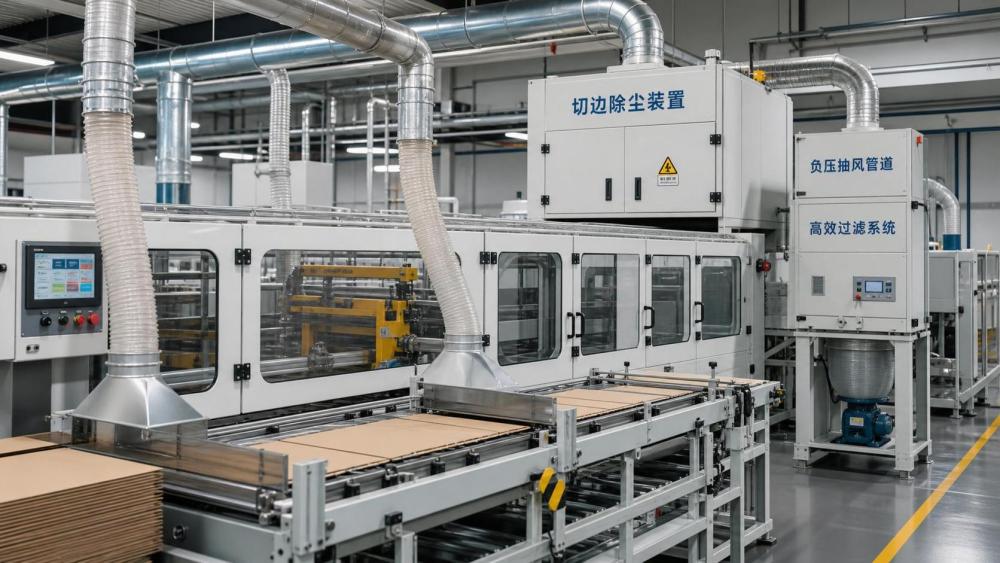
In dust-sensitive production, airborne particles are never just a housekeeping issue. They affect print quality, operator exposure, machine uptime, and audit performance at the same time.
That is why Critical Containment Technology has moved from a niche engineering topic to a practical operating priority across print, corrugation, post-press, and tissue converting lines.
The pressure is easy to understand. Packaging runs are faster, customization is higher, and paper-based materials are replacing more plastic formats in global supply chains.
In these conditions, even fine dust can create visible defects, unstable bonding, sensor fouling, or extra cleaning downtime. Exposure risk also rises when dusty tasks are still managed with open handling.
Critical Containment Technology reduces those risks by controlling where dust is generated, how it moves, and whether it reaches people, products, or sensitive equipment.
This matters across the wider IPPS landscape. Digital printers depend on stable droplet behavior, corrugated lines rely on consistent tension and board cleanliness, and tissue machinery needs controlled environments to protect hygiene expectations.
So the real question is not whether containment matters. It is where poor containment is already costing quality, safety, and efficiency without being fully measured.
What does Critical Containment Technology actually include?
Many people assume it only means dust collectors. In practice, the concept is broader and much more operational.
Critical Containment Technology usually combines enclosure design, local exhaust capture, pressure control, filtration, transfer isolation, and cleaning strategy into one coordinated system.
The goal is simple. Dust should be contained at the source, not chased after it spreads.
In actual facilities, this may involve sealed trim extraction points, enclosed paper dust discharge, negative pressure zones near cutting stations, or controlled waste handling around rewinding and converting sections.
For digital printing, containment also helps protect printheads, optics, and transport systems. For folder-gluers and die-cutters, it supports cleaner fold lines, adhesive performance, and reduced particulate buildup.
The table below helps separate basic dust management from true containment thinking.
This difference is important when evaluating new projects or retrofits. A cleaner floor does not always mean lower airborne exposure.
Which operating areas benefit most from better containment?
The strongest gains usually appear in areas where paper dust is continuously generated and product sensitivity is high.
On corrugated board lines, dust can build around slitting, scoring, trimming, and transfer points. If left unmanaged, it can migrate into downstream printing and converting zones.
In industrial digital printing, fine particles can interfere with substrate presentation, nozzle reliability, and image consistency. The result may look like a print issue, even when the root cause is environmental.
Post-press equipment has its own weak points. Die-cutting, stripping, blanking, and folding stages often create short bursts of airborne dust that are easy to underestimate.
Tissue processing adds another layer. High-speed converting, embossing, and rewinding can release light particles that travel quickly and settle on machine surfaces or packaged goods.
A practical way to prioritize is to check where three conditions overlap:
- Dust is generated repeatedly, not occasionally.
- The area affects product appearance, bonding, hygiene, or machine precision.
- Operators still rely on open cleaning or manual intervention.
Where those signals appear together, Critical Containment Technology usually delivers visible operational value rather quickly.
How do you judge whether a containment upgrade is really needed?
The need is rarely confirmed by one measurement alone. More often, it shows up as a pattern of small problems across safety, quality, and maintenance.
For example, repeated print defects, frequent sensor cleaning, dusty glue zones, or unexplained variation after shift change can all point to airborne particle movement.
The same is true when waste handling areas look acceptable, yet nearby surfaces collect dust again within hours. That often suggests capture is too weak or airflow direction is wrong.
In practical assessments, it helps to review both hard data and floor-level observations.
- Air sampling trends near generation points and operator stations.
- Defect patterns linked to certain substrates, speeds, or machine sections.
- Unplanned cleaning time per shift or per job change.
- Filter loading behavior and extraction stability.
- Audit findings related to contamination pathways or exposure control.
IPPS often highlights this cross-functional view in paper-based manufacturing intelligence. Dust risk is not isolated. It connects material flow, machine dynamics, process control, and compliance expectations.
That is why containment decisions are stronger when they are tied to actual process behavior, not just to a general wish for cleaner production.
What mistakes make Critical Containment Technology underperform?
The most common mistake is treating containment as an add-on rather than a process design issue. A powerful fan cannot fix poor hood placement or open transfer points.
Another problem is focusing only on visible dust. The finer fraction is often the more important one for exposure and sensitive equipment contamination.
There is also a planning gap around maintenance access. If enclosures are awkward to open, operators may bypass them during jams, inspections, or quick adjustments.
In mixed production sites, airflow conflicts are common too. A containment zone may lose effectiveness if nearby doors, fans, or compressed air cleaning disturb pressure balance.
A short checklist can prevent many of these failures:
- Confirm the exact dust source before selecting hardware.
- Match airflow design to substrate speed and machine geometry.
- Avoid open waste drops where particles can re-enter the room.
- Review operator access so safe behavior stays practical.
- Validate performance after installation, not only at handover.
When these basics are missed, even a costly system may reduce very little real exposure.
How should implementation be planned without disrupting production?
A workable rollout starts with containment mapping, not equipment shopping. That means identifying dust sources, escape paths, affected assets, and the most expensive consequences.
In many facilities, the best approach is phased improvement. Start with the zone where exposure risk and quality loss overlap most clearly.
This could be a trim extraction upgrade on a corrugator, enclosed dust capture near a die-cutter, or pressure-controlled isolation around a tissue converting section.
It also helps to define success before installation. Otherwise, teams may disagree later on whether the project worked.
In facilities following smart manufacturing goals, containment should also connect with digital monitoring. Pressure deviation, extraction alarms, and maintenance status are useful operating signals, not just utility data.
What is the smartest next step if dust exposure risks already look visible?
Start by narrowing the problem. Identify one line, one process stage, and one measurable symptom. That creates a manageable starting point for evaluating Critical Containment Technology.
Then compare current controls against actual operating conditions. A system designed for lower speeds or different substrates may no longer match present production reality.
It is also worth reviewing how dust risk interacts with larger business priorities. In paper packaging and tissue markets, cleaner, more stable production supports uptime, sustainability claims, and customer confidence.
Critical Containment Technology is most valuable when it is judged as a risk-reduction tool across quality, safety, compliance, and equipment reliability together.
A practical next move is to build a short decision file covering source points, current losses, required controls, and verification methods. That turns a broad concern into an actionable improvement plan.
When containment strategy is aligned with real process behavior, dust exposure risks become easier to reduce without sacrificing speed, precision, or production continuity.
Industry Briefing
Get the top 5 industry headlines delivered to your inbox every morning.
Recommended News