
Vietnam Enforces New Pesticide Disclosure & Ban for Tissue Packaging Materials
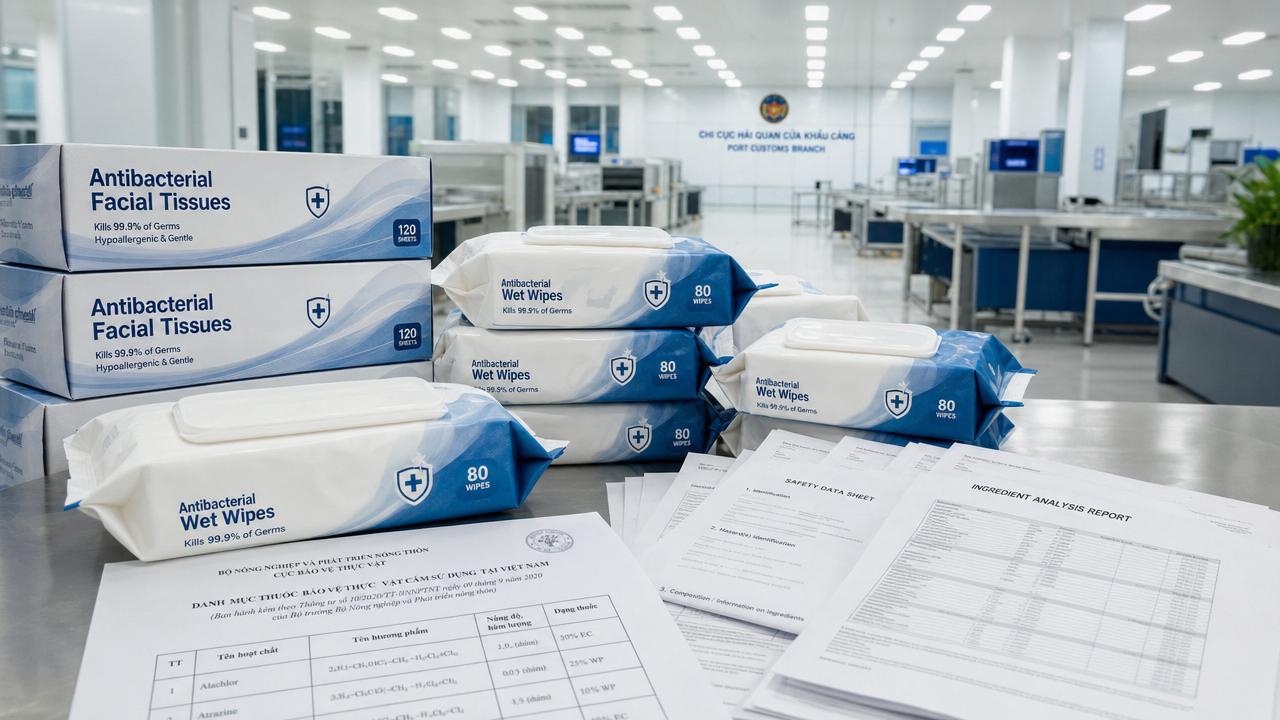
Vietnam’s new regulatory requirement on pesticide and biocide disclosure and prohibition for imported paper-based packaging materials — including those used in tissue packaging lines (e.g., disinfectant wipe packaging, antibacterial facial tissue boxes) — took effect on 1 May 2026, significantly impacting global suppliers and exporters serving the Vietnamese market.
New Regulatory Mandate Effective 1 May 2026
Starting 1 May 2026, Vietnam requires full disclosure of all insecticidal and fungicidal substances present in imported paper-based packaging materials. This applies specifically to products used in tissue packaging lines, such as packaging for disinfectant wipes and antibacterial facial tissue boxes. A mandatory ‘prohibited + disclosure’ list has been introduced, banning 12 categories of active ingredients. Non-compliant shipments face automatic rejection or destruction at the border. Customs inspection coverage for affected goods has been raised to 100%.
Impact Across the Supply Chain
Direct Exporters and Trading Companies
These entities now bear primary responsibility for verifying ingredient declarations and ensuring conformity with Vietnam’s updated list before shipment. Failure to submit accurate, verifiable documentation results in clearance delays, financial penalties, or cargo disposal — directly affecting order fulfillment and customer trust.
Raw Material Suppliers
Suppliers of coated papers, antimicrobial barrier layers, or treated pulp must now provide certified composition data — especially regarding residual biocides used during manufacturing or finishing. Lack of traceable, third-party-verified test reports may disqualify materials from downstream use in Vietnam-bound packaging.
Contract Manufacturers and Packaging Converters
Firms producing finished packaging (e.g., printed boxes, laminated pouches, embossed sleeves) must reassess formulations, adhesives, coatings, and surface treatments. Any intentional or incidental use of banned substances — even at trace levels — triggers non-compliance. Process validation and material substitution timelines are now critical path items.
Logistics and Compliance Service Providers
Freight forwarders, customs brokers, and regulatory consultants must integrate new documentation checks into pre-clearance workflows: verified substance declarations, updated safety data sheets (SDS), and proof of absence for all 12 prohibited categories. Real-time alignment with Vietnamese customs’ digital import platforms is essential.
Key Actions for Affected Enterprises
Immediate Ingredient Audit and Documentation Upgrade
Conduct full chemical inventory mapping across all packaging components — base paper, inks, varnishes, adhesives, laminates, and functional additives. Replace unsupported claims with laboratory-verified analytical reports (e.g., GC-MS, HPLC) confirming absence of listed substances.
Supplier Qualification and Contractual Alignment
Update supplier agreements to mandate ongoing compliance certification and right-to-audit clauses. Require annual revalidation of biocide-free status — not just one-time declarations — given evolving testing protocols and enforcement scrutiny.
Pre-Shipment Compliance Verification Protocol
Implement a mandatory pre-shipment gate: cross-check SDS, CoA (Certificate of Analysis), and formulation statements against Vietnam’s official prohibited list. Assign internal compliance officers to sign off before release — integrating this step into ERP or PLM systems where feasible.
Customs Declaration Readiness and Traceability Infrastructure
Ensure batch-level traceability from raw material sourcing through final packaging. Prepare granular, bilingual (English–Vietnamese) technical dossiers for customs submission — including substance names, CAS numbers, concentrations, and functional purpose — to avoid classification disputes.
Industry Perspective: Beyond Compliance to Strategic Resilience
Analysis shows this measure reflects a broader regional shift toward ‘chemical-by-chemical’ accountability in consumer-facing packaging — moving beyond broad-spectrum safety certifications (e.g., FDA 21 CFR, EU Framework Regulation (EC) No 1935/2004) toward targeted substance control. What deserves closer attention is the de facto elevation of Vietnam’s import regime to ‘pre-market authorization’ standards for certain functional additives — requiring manufacturers to anticipate regulatory intent, not just react to published lists. From an industry perspective, lead times for reformulation, retesting, and requalification are now decisive competitive factors; companies with established green chemistry R&D pipelines and agile supply chain governance will gain measurable advantage.
Strategic Implications for Global Packaging Markets
This regulation marks more than a national import rule change — it signals a growing expectation for transparency in ‘invisible’ chemical functions within everyday packaging. For tissue packaging lines, where antimicrobial performance is often marketed as a key differentiator, the challenge lies in balancing efficacy with regulatory acceptability. The long-term trend points toward functionally equivalent, non-banned alternatives (e.g., silver-ion, zinc pyrithione, or plant-derived preservatives), but adoption hinges on scalable supply, cost parity, and consistent performance validation. Rational observation suggests that early adopters who invest in dual-compliance (e.g., meeting both Vietnam’s list and upcoming ASEAN harmonized standards) will reduce future recalibration costs and strengthen market access across Southeast Asia.
Source Information and Ongoing Monitoring
This article was generated based solely on the user-provided title, event date (1 May 2026), and summary description. Specific official source links were not provided in the input and should be verified continuously. Stakeholders are advised to monitor updates from Vietnam’s Ministry of Health (MOH), General Department of Vietnam Customs, and the National Institute of Food Control for detailed implementation guidance, enforcement interpretations, and potential revisions to the prohibited list or disclosure format requirements.
Industry Briefing
Get the top 5 industry headlines delivered to your inbox every morning.
Recommended News