
Critical Flow Management: Common Failure Points and Control Fixes
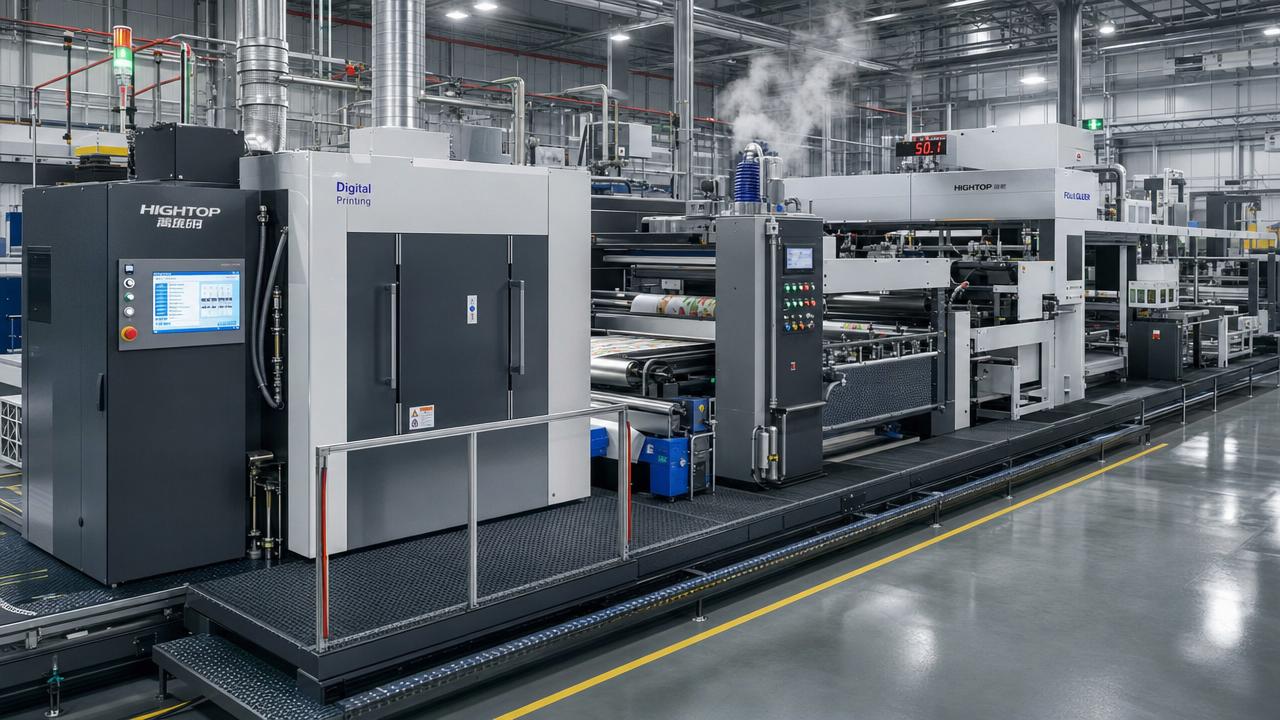
Critical Flow Management becomes visible when output starts drifting
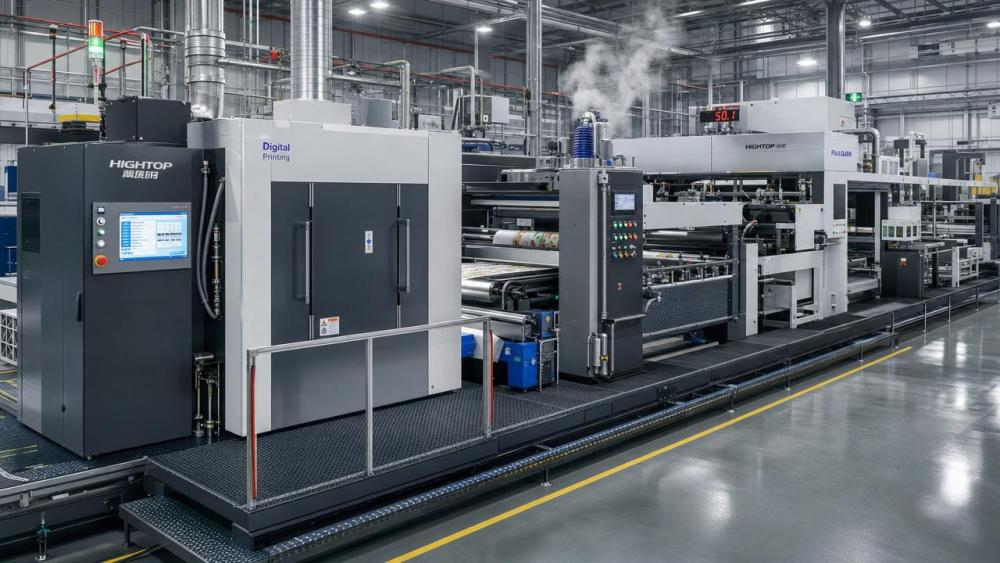
Critical Flow Management rarely fails in one dramatic moment. It usually slips first through small instabilities that seem unrelated.
A print line shows inconsistent density. A corrugator loses board flatness. A folder gluer starts missing windows. A tissue rewinder builds uneven rolls.
In each case, the visible defect appears late. The real issue begins earlier, inside fluid flow, substrate flow, adhesive flow, thermal flow, or control-data flow.
That is why Critical Flow Management matters across the IPPS landscape. High-speed paper-based manufacturing depends on stable transfer, not just fast mechanics.
In practical terms, good Critical Flow Management protects yield, reduces waste, and prevents recurring downtime from becoming a structural production problem.
The same flow problem behaves differently across machine environments
Different applications place different stress on flow stability. That is the first judgment point before comparing equipment, upgrades, or troubleshooting plans.
Industrial digital printers demand micron-level drop consistency and fast data-response timing. Corrugated lines care more about web tension balance, steam distribution, and liner behavior.
Post-press systems often fail through adhesive delivery, sheet transport timing, and registration drift between stations. Tissue converting adds another layer through rewinding tension and cleanliness control.
A common mistake is treating all flow issues as pump capacity or line speed issues. In reality, Critical Flow Management must be matched to the process physics of each section.
A quick comparison of where control focus shifts
This kind of comparison is more useful than reading a generic specification sheet. It shows where Critical Flow Management truly determines process reliability.
Digital print lines fail early at the ink and data interface
In digital printing, Critical Flow Management starts before ink reaches the substrate. The hidden risks sit in circulation loops, temperature control, degassing, and waveform synchronization.
A line may appear productive during short runs, yet lose consistency on variable-data packaging jobs. That often points to unstable pressure under rapid image changes.
More demanding scenarios include corrugated surfaces, absorbent liners, and high-coverage graphics. Here, droplet behavior and substrate roughness amplify every weakness in Critical Flow Management.
The useful question is not only maximum speed. It is whether the platform keeps droplet placement stable while handling viscosity shifts, purge cycles, and production heat buildup.
- Check pressure fluctuation during long production windows, not just startup samples.
- Confirm how filtration, recirculation, and purge logic affect nozzle recovery.
- Review data pipeline latency when jobs include personalization or rapid artwork switching.
- Test on the real substrate mix, especially coated, recycled, and corrugated grades.
On corrugated lines, tension balance matters more than headline speed
Corrugated production brings a different reality. Critical Flow Management is spread across steam, moisture, starch application, paper tension, and thermal transitions.
In this environment, extreme web behavior can turn a minor control mismatch into board warp, flute collapse, or unstable bonding.
The biggest misunderstanding is focusing on single-point tension values. Real performance depends on how fast the system decouples disturbances between unwind, heating, forming, and double-backer sections.
This matters even more when recycled papers, lightweight grades, or rapid order changes enter the line. The operating window narrows quickly.
A stronger evaluation method combines steam response, starch consistency, and web control behavior under speed ramps. That is where Critical Flow Management becomes measurable.
Post-press lines expose flow weakness through glue and transfer accuracy
Die-cutting, stamping, and folder-gluer systems often appear mechanically precise, yet many chronic defects begin with unstable material or adhesive flow.
In premium packaging, small timing errors can ruin fold quality, metallic alignment, or seam strength. In e-commerce boxes, the same problem becomes throughput loss and rework.
Critical Flow Management here is less about one subsystem and more about coordination. Glue viscosity, valve timing, carton travel speed, and compression time must stay inside one narrow window.
When order patterns shift between short custom runs and long-volume production, fixed settings rarely hold. Adaptive control matters more than nominal accuracy.
- Validate glue performance at target humidity and plant temperature.
- Check whether vision and transport controls compensate for board variation.
- Measure cleanability and maintenance time for nozzles, valves, and hoses.
- Compare restart stability after stops, not only continuous full-speed operation.
Tissue converting needs quiet control, not aggressive correction
Tissue lines highlight another side of Critical Flow Management. The material is light, sensitive, and easily distorted by overcorrection.
A control loop that reacts too sharply can create breakage, telescoping rolls, or softness variation, even if sensor feedback looks fast on paper.
In actual converting rooms, dust, humidity, embossing load, and rewind diameter changes all influence stability. Control quality depends on how calmly the system absorbs variation.
That is why Critical Flow Management in tissue processing favors stable closed-loop tension, clean airflow paths, and predictable transitions between upstream and downstream modules.
Where misjudgment happens before the line even starts
Many recurring losses come from wrong assumptions made during evaluation, retrofit planning, or root-cause analysis.
One common error is reading Critical Flow Management as a component question. A better view is system interaction under changing load, substrate, and environment.
Another mistake is approving a solution on short demonstration runs. Some failures emerge only after heat soak, adhesive aging, paper batch changes, or data-heavy job transitions.
Cost is also misread. A cheaper control package may raise waste, startup time, spare usage, and operator intervention over the full equipment life.
- Do not treat similar substrates as identical processing conditions.
- Do not separate mechanical speed from control response capability.
- Do not ignore maintenance access, cleaning routines, and sensor drift.
- Do not assume one stable recipe survives all humidity and grade changes.
A practical way to improve Critical Flow Management before losses scale
The most useful next step is to map the real flow chain, not just the machine layout. That includes material, fluid, thermal, air, and signal movement.
Then compare three operating states: startup, steady production, and recovery after a stop. Many weak points only appear during transitions.
For IPPS-relevant sectors, this approach aligns with broader pressures already shaping investment decisions: faster customization, tighter sustainability targets, recycled inputs, and more automated operation.
Critical Flow Management should therefore be reviewed as a lifecycle issue. It affects capacity, quality, energy use, maintenance rhythm, and the credibility of digitalized production claims.
A solid review normally includes process data logging, disturbance testing, substrate-specific trials, and a shortlist of acceptable control limits for each critical zone.
When those limits are clear, equipment comparison becomes more honest. So does troubleshooting. The result is fewer hidden losses and more reliable scaling across print and paper systems.
Industry Briefing
Get the top 5 industry headlines delivered to your inbox every morning.
Recommended News