
Paper-Based Packaging Cost Trends to Watch in 2026
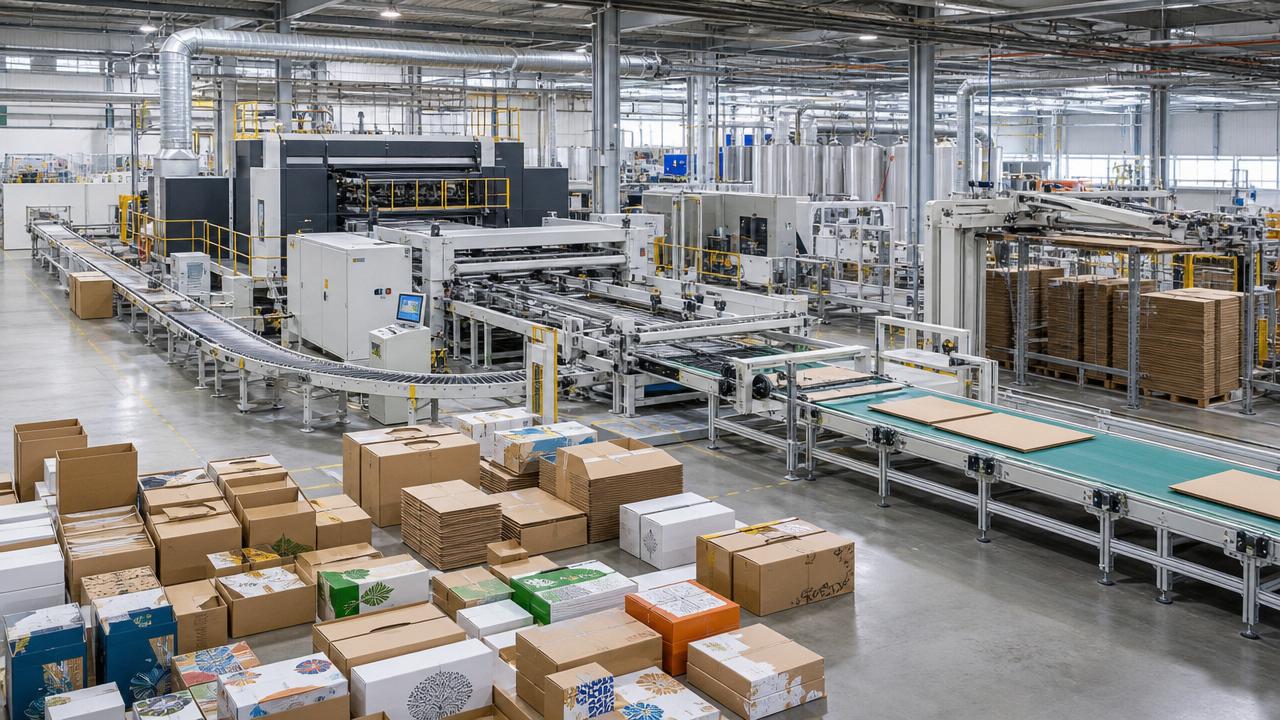
Paper-Based Packaging Costs Are Entering a More Complex Phase
As 2026 gets closer, paper-based packaging is no longer priced by fiber alone.
The bigger shift is that total cost now reflects raw materials, energy exposure, converting efficiency, compliance, and format flexibility at the same time.
That matters because margin pressure is colliding with sustainability targets and faster packaging redesign cycles.
In recent quarters, the market has shown mixed signals rather than one clear direction.
Containerboard pricing may stabilize in one region while energy, labor, or transport costs rise elsewhere.
This is why paper-based packaging cost trends now demand a broader reading.
For groups tracking global print and paper systems, the change is especially visible across corrugated lines, digital printing, finishing, and folding-gluing operations.
What used to be a packaging purchase decision increasingly looks like a production economics decision.
The Price Signal Is Moving Beyond Pulp
Pulp and recovered fiber still matter, but they no longer explain the full paper-based packaging equation.
Energy remains the most underestimated variable heading into 2026.
Steam generation, drying, board forming, printing, and post-press finishing all amplify utility sensitivity.
When power tariffs move, converting costs often change faster than board index contracts.
A second shift comes from compliance-linked sourcing.
FSC expectations, EUDR readiness, and chain-of-custody documentation are becoming embedded cost layers, not optional reporting extras.
The effect is subtle at first.
Certified supply can improve market access, yet documentation, traceability systems, and supplier qualification add cost before they add revenue.
More importantly, logistics is no longer a background item.
Paper-based packaging moves through bulky, volume-heavy flows, especially in corrugated formats.
Freight inefficiency can erase savings achieved through material downgrading or basis weight optimization.
What is pushing total cost upward or downward
The key takeaway is simple.
Watching paper price indices without watching converting efficiency now gives an incomplete cost picture.
A More Digital Packaging Mix Is Changing Cost Behavior
Another important trend is the growing role of shorter runs and versioned packaging.
Brand portfolios are expanding, seasonal updates are accelerating, and e-commerce keeps fragmenting packaging demand.
This pushes paper-based packaging toward more flexible print and finishing workflows.
In that environment, setup loss becomes more expensive than many buyers expect.
Industrial digital printers reduce plate-related constraints, but their economics depend on substrate behavior, ink laydown, data speed, and uptime stability.
Corrugated surfaces add another layer.
Ink droplet control, board smoothness, and moisture variation can change yield and appearance at scale.
This is where platforms like IPPS bring useful context.
By connecting printhead behavior, corrugation dynamics, and post-press performance, the market can be read as an integrated system rather than disconnected machinery categories.
That systems view matters in 2026 because cost leakage often starts between processes, not within one machine alone.
Where cost leakage often hides
- Frequent artwork changes that increase setup waste on board and ink.
- Poor tension control that creates print misregister or downstream converting defects.
- Glue application variation that raises rejection rates in folded cartons and corrugated packs.
- Overengineering pack strength because real logistics performance data is missing.
These issues do not always show up in supplier quotes.
They appear later as scrap, rework, slower output, and inconsistent shelf results.
Why Sustainability Can Raise Costs First, Then Lower Them
Paper-based packaging benefits from strong policy and consumer momentum, yet the transition is not cost-neutral.
The move away from plastic is driving demand for molded fiber, lighter corrugated solutions, recyclable barriers, and glue-reduction technologies.
At the early stage, this usually increases development cost.
New substrates may require print testing, bonding validation, and machine recalibration.
Die-cutting settings may change.
Folder gluer speeds may need adjustment.
Transit performance may also need a fresh compression review.
Still, the medium-term picture is more favorable.
Once formats are stabilized, lighter structures, better automation, and fewer material layers can reduce total landed cost.
This is especially true when packaging redesign also improves cube utilization and fulfillment efficiency.
The practical lesson is to separate transition cost from steady-state cost.
Many paper-based packaging projects look expensive in pilot mode and competitive in scaled production.
The Impact Will Not Be Equal Across Packaging Operations
Not every packaging format will feel 2026 cost pressure in the same way.
Corrugated shipping cases remain highly exposed to energy, logistics, and board performance trade-offs.
Folding cartons are more sensitive to design complexity, print quality expectations, and short-run economics.
Tissue-related paper conversion follows a different pattern, with hygiene demand staying resilient while energy and automation strongly influence cost competitiveness.
What ties these categories together is the growing importance of throughput quality.
A faster line is not automatically a lower-cost line if waste and maintenance rise with speed.
In the same way, cheaper material is not truly cheaper if it disrupts crease quality, print adhesion, or bonding reliability.
This is why cross-functional evaluation is becoming more valuable than unit price comparison alone.
Signals worth tracking quarter by quarter
- Regional recovered paper availability and collection quality.
- Electricity and gas exposure in converting-heavy supply bases.
- Certification readiness and documentation maturity among core suppliers.
- Waste rates at printing, die-cutting, and folding-gluing stages.
- Packaging redesign requests linked to e-commerce and sustainability claims.
What a Smarter 2026 Response Looks Like
The most effective response to paper-based packaging cost trends is not simple volume locking.
It is better visibility into how material, machinery, and market requirements interact.
That means comparing suppliers by operating stability, not only by board price.
It also means checking whether automation investments actually reduce total waste, labor dependence, and changeover friction.
A strong next step is to build a simple cost watchlist across five layers.
- Fiber exposure by grade, region, and certification requirement.
- Energy intensity by process, especially corrugation and drying.
- Conversion yield across print, die-cutting, and folding-gluing.
- Logistics efficiency by pack density and transport profile.
- Compliance readiness tied to export or retail channel rules.
From there, it becomes easier to tell whether a cost increase is temporary noise or a structural shift.
The companies that read paper-based packaging this way will likely make better investment timing decisions in 2026.
The market is still offering opportunities, but they sit with those who monitor process detail as closely as market headlines.
For the months ahead, the practical move is clear.
Track the signals, test assumptions against real converting data, and review whether current paper-based packaging specifications still match actual demand and cost reality.
Industry Briefing
Get the top 5 industry headlines delivered to your inbox every morning.
Recommended News