
Digital Printing Technology Trends Reshaping Packaging
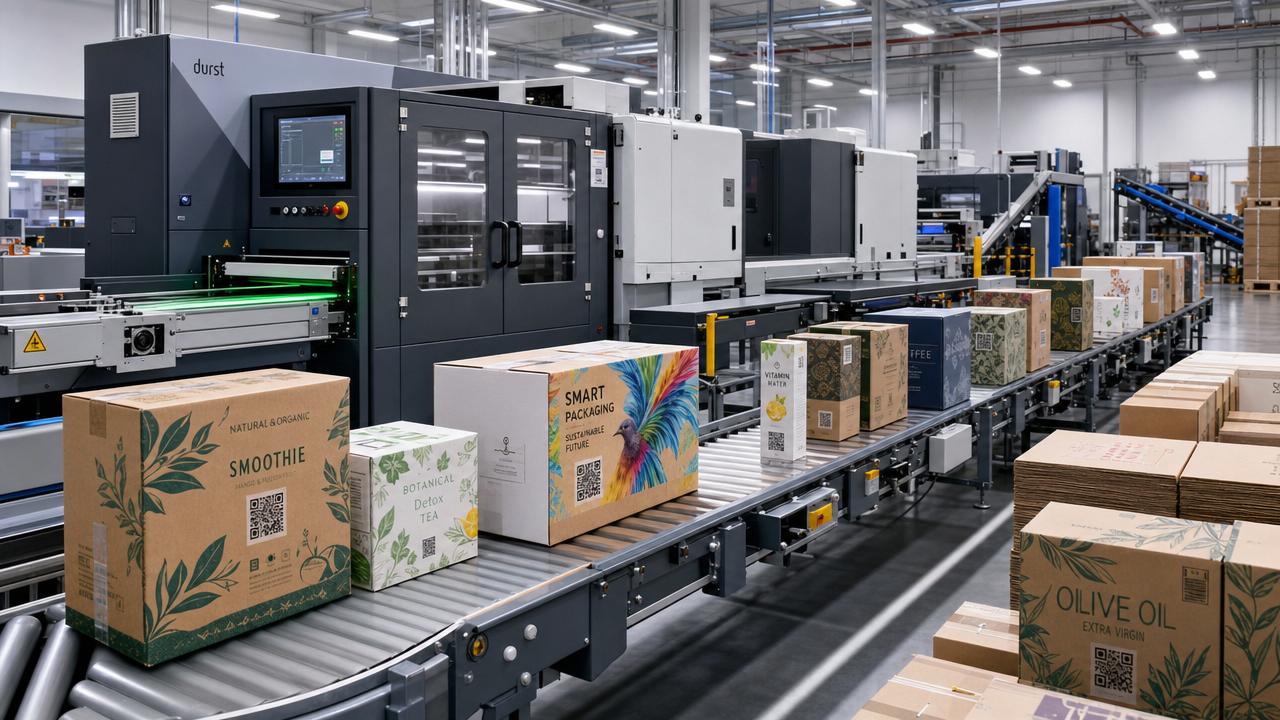
Digital printing technology is rapidly redefining how packaging is designed, produced, and delivered across global markets. From high-speed inkjet systems to smart finishing and sustainable paper-based solutions, the latest innovations are helping manufacturers meet rising demands for customization, efficiency, and eco-compliance. This article explores the key trends reshaping packaging and what they mean for industry decision-makers seeking reliable market intelligence.
Why digital printing technology matters more in packaging now
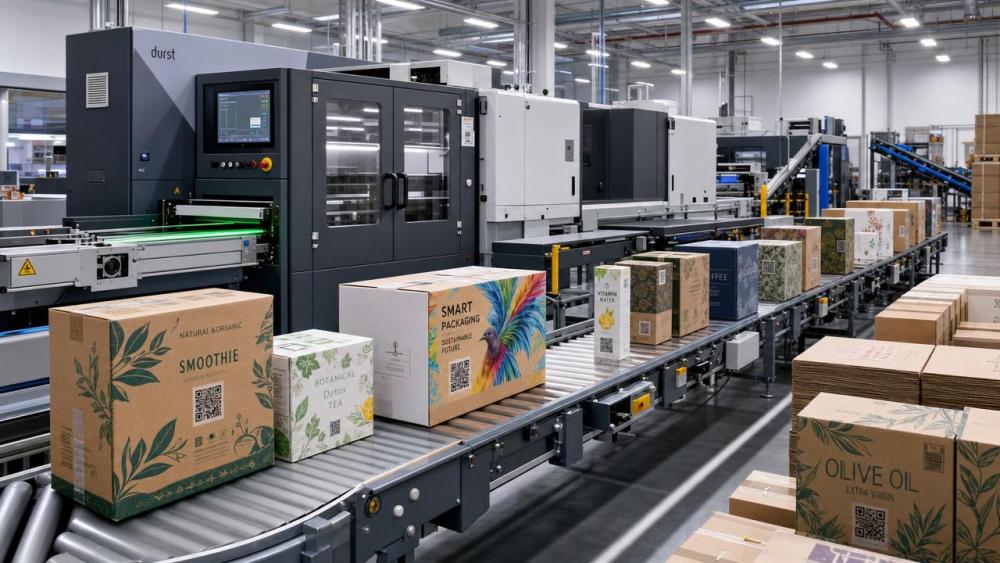
Search interest around digital printing technology in packaging usually comes from one practical question: which innovations are already changing cost, speed, and competitiveness, rather than remaining experimental concepts.
For information researchers, the answer is clear. Digital printing is no longer only a short-run labeling option. It is becoming a strategic production model for corrugated, folding carton, and paper-based packaging.
That shift is happening because packaging buyers now demand faster launches, more SKU variation, regional personalization, and tighter sustainability documentation. Traditional analog workflows still matter, but they struggle when flexibility becomes a core requirement.
As a result, the most important trend is not merely better print quality. It is the integration of digital printing technology with converting, data systems, substrate engineering, and compliance-driven packaging strategies.
For decision-makers evaluating market direction, the real takeaway is this: digital printing is moving from a niche capability to a broader packaging infrastructure layer, especially where responsiveness creates commercial value.
What information-focused readers usually need to understand first
Readers researching this topic are rarely looking for a generic definition. They usually want to know which trends are commercially meaningful, what problems they solve, and where adoption is accelerating fastest.
They also want to separate durable industry shifts from marketing noise. In packaging, new technology announcements are frequent, but not every improvement changes plant economics, buyer expectations, or supply chain structure.
The most valuable way to analyze digital printing technology trends is through five filters: application fit, productivity, substrate compatibility, workflow integration, and regulatory or sustainability impact.
When judged through those filters, several trends stand out. High-speed inkjet maturity, variable data packaging, hybrid production models, automated finishing, and eco-driven paper packaging are reshaping investment logic across regions.
High-speed inkjet is turning digital printing into a production platform
One of the strongest trends is the rapid improvement of industrial inkjet systems. Better printhead durability, faster RIP processing, improved drop control, and more stable web handling are expanding digital output at production scale.
In practical terms, this means digital printing technology can increasingly support medium and even longer packaging runs that once belonged almost exclusively to flexo or offset processes.
That matters because the traditional digital value proposition was centered on short runs and fast changeovers. Now the conversation includes throughput, uptime, total equipment effectiveness, and broader line utilization.
For corrugated and paperboard packaging, high-speed single-pass inkjet is especially important. It reduces setup waste, supports frequent artwork changes, and enables more responsive replenishment for e-commerce and retail channels.
Researchers should watch not only press speed claims, but also the surrounding production conditions. Ink performance, drying capability, board handling stability, and maintenance architecture often determine whether speed translates into real output.
In other words, productivity is no longer measured only in meters per minute. It must be evaluated in sellable sheets, color consistency, operator intervention, and compatibility with downstream converting processes.
Customization is shifting from premium feature to market expectation
Another major trend is the normalization of versioned packaging. Brands increasingly want regional graphics, seasonal campaigns, promotional variants, and limited editions without the cost burden of conventional plate changes.
Digital printing technology is well suited to this shift because it allows image changes from one print to the next. That creates value not only for marketing, but also for inventory control.
Instead of carrying large quantities of preprinted packaging, converters and brand owners can produce closer to actual demand. This lowers obsolescence risk, especially in fast-moving consumer goods with frequent design updates.
For e-commerce-focused packaging, customization has an additional role. It supports market-specific messaging, campaign tracking, and more visually distinctive unboxing experiences without forcing completely separate production systems.
From an intelligence perspective, the broader implication is that packaging is becoming a communication surface with dynamic value. Print is no longer purely decorative or informational. It is increasingly data-driven and responsive.
Variable data printing is becoming a packaging intelligence tool
Beyond customization, variable data printing is gaining importance as a functional capability. QR codes, serialized graphics, regional compliance data, traceability markers, and anti-counterfeit elements are becoming more common.
This trend reflects a deeper convergence between packaging and information systems. Digital printing technology allows each package to carry unique or semi-unique content without interrupting production flow.
For pharmaceutical, food, logistics, and premium consumer goods markets, that capability supports transparency, authentication, and supply chain visibility. It also helps align packaging with omnichannel marketing strategies.
Information researchers should note that variable data adoption depends on more than print hardware. It requires strong software integration, database control, workflow automation, and reliable inspection systems.
Where these elements are mature, digital packaging becomes a bridge between physical distribution and digital engagement. That is one reason investment decisions increasingly involve IT, operations, and compliance teams together.
Hybrid production models are outperforming all-or-nothing thinking
Many companies evaluating digital printing technology assume they must choose between analog and digital production. In practice, one of the most important trends is the rise of hybrid operating models.
Converters are combining digital presses with flexo, offset, die-cutting, folder gluing, and finishing systems to create more flexible manufacturing architectures. The goal is not technological purity, but application efficiency.
For example, analog may remain ideal for long, stable runs with limited design variation. Digital can then serve versioning, replenishment, prototyping, and urgent short-cycle orders with minimal setup waste.
This hybrid logic reduces investment risk because businesses do not need digital equipment to replace every existing line. Instead, they can assign work based on profitability, lead time sensitivity, and design complexity.
For market observers, this is a crucial point. The success of digital printing technology in packaging is often strongest where it complements conventional assets instead of competing with them in every scenario.
Smart finishing and post-press automation are now part of the value equation
Print quality alone does not determine packaging productivity. After printing, packages still need cutting, creasing, folding, gluing, embellishment, and quality inspection. This is where smart finishing trends become highly relevant.
As digital printing technology expands, converters increasingly need post-press systems that can handle shorter runs, faster job changes, and more diverse formats without creating downstream bottlenecks.
Automated die-cutting, intelligent registration, robotic handling, and high-speed folder gluing are therefore becoming strategic companions to digital print platforms. Without them, press flexibility can be lost in finishing delays.
For premium packaging, digital workflows also align with selective enhancement technologies such as spot effects, cold foil coordination, and tactile finishing methods that support higher shelf impact.
Researchers assessing competitiveness should look at the entire production chain. A digitally printed package only creates commercial advantage when finishing speed, accuracy, and labor efficiency match upstream print capability.
Sustainable paper-based packaging is accelerating adoption
Sustainability is not a side topic in packaging anymore. It is a direct driver of investment, procurement, and regulatory planning. This is especially true in markets responding to paperization and reduced plastic dependence.
Digital printing technology supports this transition in several ways. It reduces make-ready waste, allows demand-matched production, and can simplify shorter lifecycle packaging programs that require frequent design changes.
In corrugated and paperboard applications, digital systems are increasingly linked to sustainable packaging development because they help test new formats quickly and reduce excess inventory tied to obsolete graphics.
At the same time, eco-performance cannot be assumed automatically. Ink chemistry, de-inking behavior, recyclability, food-contact compliance, and energy consumption all remain important evaluation points.
For information-oriented readers, the key insight is that digital technology supports sustainability best when paired with suitable substrates, verified process controls, and realistic lifecycle assessment rather than broad environmental claims.
Substrate complexity remains a major technical and commercial challenge
One reason readers research digital printing technology trends is to understand where limitations still exist. In packaging, substrate complexity remains one of the most important practical constraints.
Corrugated board, coated paperboard, kraft materials, and specialty surfaces behave differently under high-speed inkjet conditions. Ink absorption, dot gain, surface energy, flute show-through, and drying behavior all affect performance.
This is particularly important for businesses serving e-commerce logistics and premium retail packaging simultaneously. The same print system may not deliver identical economics or visual outcomes across every substrate class.
As a result, leading suppliers are focusing on pretreatment, primer optimization, improved waveform control, and better transport stability. These developments are helping digital printing technology move into more demanding packaging environments.
For researchers, the lesson is simple: adoption success depends heavily on application matching. Technology trends should always be assessed in relation to board grade, finishing path, and final use requirements.
Data, workflow, and automation are becoming decisive differentiators
Packaging manufacturers once evaluated print equipment mainly through mechanical performance. Today, digital printing technology is also a software and automation decision.
Job onboarding, prepress automation, color management, press synchronization, inspection data, and ERP or MIS integration increasingly determine whether a digital workflow is scalable and profitable.
This matters because packaging demand is becoming more fragmented. More orders, more SKUs, and more version changes place pressure on administrative workflows as much as on physical production lines.
A press with strong imaging capability but weak data integration may still create hidden cost through manual intervention, slower scheduling, or quality inconsistency across repeated campaigns.
For strategic evaluation, readers should pay close attention to workflow ecosystems. The long-term winners in digital printing technology are likely to be platforms that reduce complexity across the full production environment.
How to judge whether a digital packaging trend has real business value
Not every innovation deserves immediate investment. For industry researchers and decision-makers, a useful framework is to ask whether the trend improves one or more of the following: margin, responsiveness, compliance, or asset utilization.
If a new digital capability only adds visual novelty without strengthening throughput, reducing waste, or enabling premium services, its strategic relevance may be limited.
Conversely, trends with strong value tend to solve recognized operational pain points. Examples include shorter lead times, lower SKU inventory, better version control, easier market testing, and more resilient response to demand volatility.
It is also wise to examine adoption barriers. These may include substrate qualification, operator training, service availability, software integration cost, or mismatch between digital output and finishing capacity.
In short, the most meaningful digital printing technology trends are those that improve the packaging business system, not just the printed image.
What these trends mean for the future of packaging intelligence
Looking ahead, digital printing technology will continue to reshape packaging through greater production flexibility, deeper data integration, and stronger alignment with sustainable paper-based formats.
The market is moving toward packaging operations that can switch designs quickly, produce economically at varied volumes, carry intelligent data, and fit into increasingly automated converting environments.
For organizations tracking this space, the priority is not simply to ask whether digital will grow. It is to understand where growth is commercially durable, technically supported, and strategically linked to end-market demand.
That is especially relevant in corrugated logistics packaging, personalized FMCG formats, premium folding cartons, and paper-based substitution programs influenced by environmental policy and consumer preference.
The companies best positioned to benefit will be those that connect print capability with workflow intelligence, finishing readiness, substrate expertise, and realistic sustainability execution.
Conclusion
Digital printing technology is reshaping packaging because it answers several urgent market needs at once: speed, customization, information integration, and more adaptive paper-based production.
For information researchers, the most important conclusion is that the trend is structural rather than temporary. High-speed inkjet maturity, hybrid manufacturing, smart finishing, and sustainable packaging pressure are reinforcing one another.
That does not mean every application will shift at the same pace. Success still depends on substrate fit, workflow architecture, finishing compatibility, and clear business logic.
But the overall direction is unmistakable. In packaging, digital printing technology is evolving from a specialized option into a critical capability for more responsive, intelligent, and future-ready production.
Industry Briefing
Get the top 5 industry headlines delivered to your inbox every morning.
Recommended News