
Precision Die Cutting: Common Tolerance Issues Explained
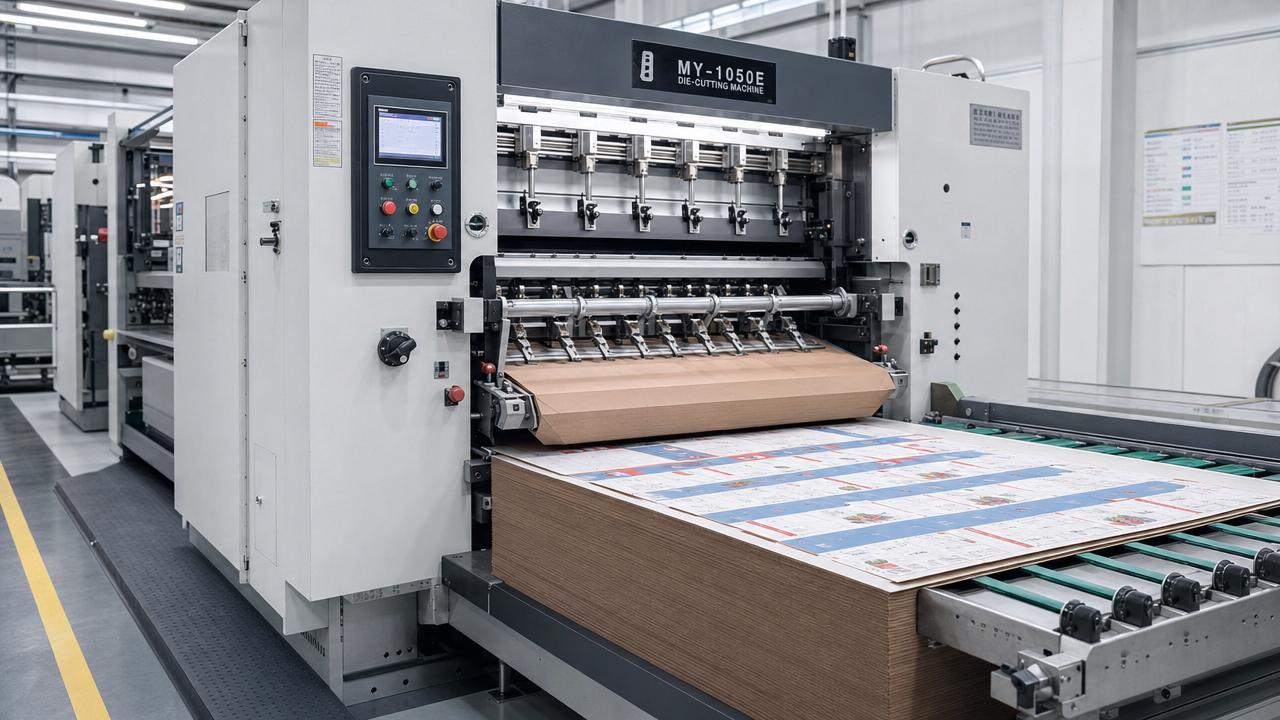
In precision die cutting, tolerance problems are rarely caused by a single factor. For technical evaluators, the real question is whether a machine, toolset, and process can hold repeatable accuracy under production conditions, not just during a controlled demo.
That is why evaluating precision die cutting requires more than checking a nominal tolerance claim. You need to understand how material behavior, tooling condition, registration stability, press setup, and operator control interact before defects become costly.
This article explains the most common tolerance issues, what typically causes them, and how to assess process capability with greater confidence when comparing equipment, suppliers, or converting lines.
What technical evaluators are really trying to verify
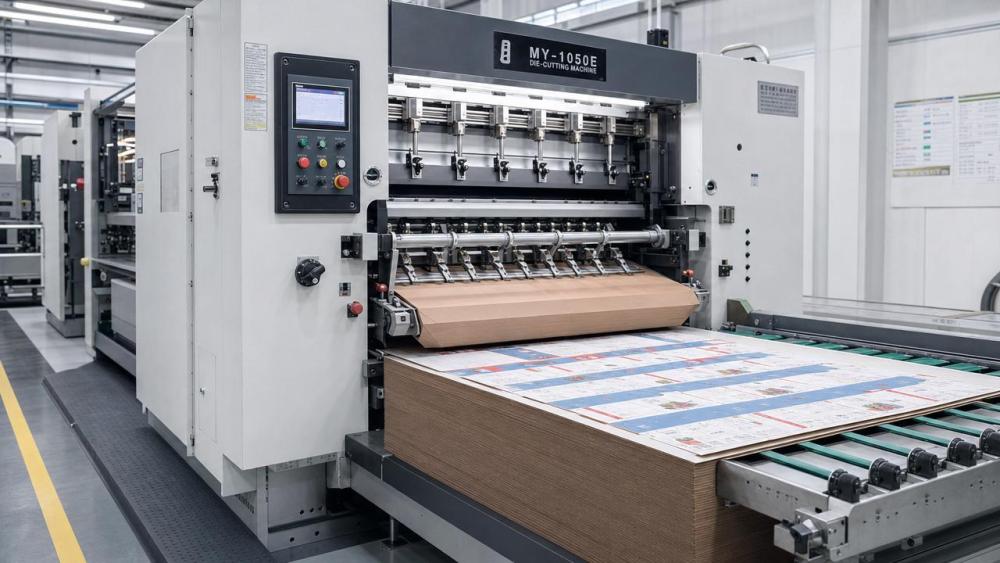
When people search for common tolerance issues in precision die cutting, they usually want to answer a practical question: why do parts drift out of spec even when the machine appears mechanically sound?
For technical assessment teams, the concern is broader. They need to know whether the system can consistently maintain dimensional accuracy, cut-to-print registration, crease location, hole position, and edge quality across speed changes, batch changes, and substrate variation.
In other words, the issue is not only tolerance on paper. It is process stability. A line that produces acceptable samples at low speed may still fail under normal throughput, long runs, humidity changes, or mixed job conditions.
This is especially important in packaging, labels, functional paper components, and printed converting, where downstream folding, gluing, sealing, stacking, or automated filling depends on tight dimensional control.
Why tolerance problems happen even on capable die cutting equipment
Most tolerance failures in precision die cutting come from cumulative error. A machine may be accurate, but small deviations from multiple sources stack together until the finished part falls outside the acceptable range.
Typical contributors include die wear, anvil wear, substrate caliper variation, print registration drift, sheet squareness issues, tension instability, feeder inconsistency, and setup variation between operators or shifts.
Environmental conditions also matter. Temperature and humidity affect paper expansion, liner movement, adhesive response, and board flatness. On thin films or laminated constructions, elastic recovery may further shift the final cut profile.
Because of this, technical evaluators should avoid asking only, “What tolerance can the machine hold?” A more useful question is, “Under what materials, speed, tooling condition, and control method can that tolerance be repeated?”
The most common tolerance issues in precision die cutting
1. Dimensional drift across the sheet or web. Parts at the beginning of a run may measure differently from those later in the run. This often points to thermal change, tool seating movement, substrate conditioning problems, or unstable feeding.
2. Cut-to-print misregistration. In printed packaging and labels, the cut line may shift relative to graphics. Root causes often include sensor inaccuracy, web steering variation, print repeat inconsistency, or poor synchronization between print and die stations.
3. Inconsistent crease-to-cut position. In carton work, a blank can meet outer dimensions yet still fail folding performance. If crease placement moves relative to the cut edge, fold geometry changes and downstream gluing or erecting may suffer.
4. Hole and slot position error. Functional inserts, retail packaging, and mechanical paper-based parts often rely on exact feature location. Even small position error can affect assembly fit, hanging performance, or sensor-based automation downstream.
5. Edge quality variation. Burrs, fuzzy edges, incomplete cuts, or crushed edges may not always appear as pure dimensional defects, but they often signal unstable penetration depth, worn tooling, or substrate support issues that later affect tolerance.
6. Part-to-part variation within the same batch. This is one of the most important warning signs for evaluators. A process with high internal variation is harder to control than one with a consistent offset, because correction becomes unpredictable.
Tooling wear is one of the first places to investigate
Die condition has a direct effect on tolerance performance. Over time, cutting rules lose sharpness, creasing rules deform, ejection materials compress, and matched components no longer behave as originally specified.
Worn tooling does not always fail dramatically. More often, it causes subtle dimensional spread, inconsistent edge quality, and increasing dependence on operator compensation. These are exactly the kinds of issues that distort capability evaluation.
Technical evaluators should ask how tooling life is tracked, how wear thresholds are defined, and whether preventive replacement is based on run length, material abrasiveness, or measured output variation.
It is also worth checking whether the machine platform is tolerant of tooling variability. A robust die cutting system should minimize performance loss from normal wear rather than requiring constant fine adjustment.
Substrate variation often creates “machine problems” that are not really machine problems
Paper, board, laminates, and specialty materials are not dimensionally identical from batch to batch. Caliper fluctuation, moisture content, stiffness, grain direction, and coating behavior all influence cutting and creasing accuracy.
In corrugated and folding carton applications, board warp or uneven caliper can alter penetration depth and pressure distribution. This leads to localized tolerance variation, especially around complex shapes, small tabs, and tight internal radii.
On pressure-sensitive constructions or multilayer laminates, the material may shift during converting or relax after cutting. If evaluators only inspect dimensions immediately after production, they may miss delayed movement that affects final use.
For this reason, process capability should be tested on representative commercial substrates, not idealized samples. Material windows matter just as much as machine specifications in real-world precision die cutting performance.
Registration drift is critical in printed packaging and converting lines
Where graphics and cutting must align precisely, registration control becomes a major tolerance risk. A converter may hold die dimensions well but still deliver unacceptable parts if the print-to-cut relationship moves during the run.
Common causes include mark detection inconsistency, servo lag, web stretch, sheet slip, poor feeder timing, and print repeat variation from upstream processes. Problems become more visible when artwork includes fine borders or tight visual alignment.
Technical evaluators should review how the system detects registration marks, how quickly correction loops respond, and how performance changes at production speed rather than sample speed.
It is also useful to distinguish between average registration error and peak error. Customers often reject jobs based on visible worst-case drift, even when average values appear acceptable on paper.
Setup quality and operator dependence can hide underlying tolerance risk
A precision die cutting line may look capable in a demonstration because it is run by expert technicians under optimized conditions. That does not always translate into stable output across shifts, plants, or operator skill levels.
Excessive manual adjustment is a warning sign. If pressure balance, registration correction, feeder timing, or waste stripping alignment depend heavily on operator judgment, repeatability becomes harder to scale.
For technical evaluators, a strong system is one that reduces setup sensitivity. Features such as recipe storage, automated register correction, pressure mapping, servo-controlled positioning, and guided diagnostics can materially improve tolerance consistency.
When comparing platforms, ask not only how fast setup is, but how reproducible it is. A slower but repeatable setup process may outperform a faster but operator-sensitive one over the full production lifecycle.
How to evaluate tolerance capability more rigorously
The most effective assessment combines dimensional measurement, stability testing, and production-context observation. One-time sample inspection is not enough to judge whether a line can sustain tight tolerances over time.
Start by defining the critical-to-quality features. These may include blank length and width, cut-to-print position, crease spacing, slot width, hole diameter, bridge location, and folding performance after downstream conversion.
Then review variation under realistic conditions: startup, steady state, speed changes, tool aging, substrate changes, and longer production runs. Tolerance capability should be judged across the full operating window, not a single point.
Where possible, request statistical evidence such as Cp, Cpk, or comparable process capability data for critical dimensions. Even if measurement methods differ by supplier, structured capability data is more informative than isolated anecdotal claims.
Measurement system quality matters too. If inspection equipment, sampling frequency, or fixturing is weak, reported tolerance results may overstate actual control. A capable process still needs a credible measurement discipline.
Questions technical evaluators should ask suppliers or internal teams
What tolerance range is achievable by material type, thickness, and feature geometry? Is the claim based on single parts, sample runs, or repeatable production performance?
How does the machine maintain accuracy as speed increases? Are there known trade-offs between throughput and registration, crease placement, or edge quality?
What are the main sources of drift during long runs, and how are they monitored? How often does the process require operator intervention to stay within specification?
How is tooling wear managed, and what quality indicators trigger maintenance or replacement? Can the supplier demonstrate capability on comparable commercial jobs rather than generic test patterns?
What process data is logged? Visibility into setup parameters, registration corrections, stoppage causes, and defect patterns can be highly valuable when diagnosing recurring tolerance issues after installation.
What good tolerance control means for business performance
For technical evaluators, tolerance is not only a quality metric. It affects yield, make-ready waste, line uptime, downstream automation reliability, complaint risk, and the ability to win more demanding packaging programs.
Better tolerance control often reduces hidden costs more than expected. Small improvements in dimensional consistency can cut rework, improve folding-gluing stability, reduce jams in packing lines, and support higher average operating speeds.
In high-volume paper packaging, these gains compound quickly. A machine with stronger process stability may create more value than a nominally faster system that struggles with drift, setup dependency, or frequent quality intervention.
That is why precision die cutting should be evaluated as a capability system, not a standalone cutting action. The real benchmark is dependable output quality under commercial operating pressure.
Conclusion: look beyond the stated tolerance number
Common tolerance issues in precision die cutting usually come from interaction, not isolation. Tool wear, substrate variability, registration drift, setup sensitivity, and measurement weakness can all combine to produce inconsistent results.
For technical evaluators, the best approach is to focus on repeatability under realistic production conditions. Ask how the process behaves over time, across materials, across operators, and at normal throughput.
If a supplier or internal line can demonstrate controlled variation, clear root-cause discipline, and stable output on representative jobs, that is a far stronger signal than a narrow tolerance claim alone.
In the end, the most valuable precision die cutting solution is the one that keeps dimensional performance predictable, supports downstream efficiency, and turns tolerance control into a measurable production advantage.
Industry Briefing
Get the top 5 industry headlines delivered to your inbox every morning.
Recommended News