
Sealing Machine Supplier Comparison: Key Factors Beyond Unit Price
Sealing Machine Supplier Comparison: Key Factors Beyond Unit Price
In any sealing machine supplier comparison, unit price is only the starting point for procurement teams.
Long-term value comes from stable output, lower downtime, predictable service, and better lifecycle control.
That matters even more in packaging, paper converting, and fast-moving production environments.
A low machine price can look attractive during bidding.
Yet the real cost often appears later through rejected packs, delayed maintenance, and hard-to-source spare parts.
This is why a sealing machine supplier comparison should focus on operating reality, not only quotation tables.
From recent market shifts, buyers are under pressure to raise efficiency while protecting quality and sustainability targets.
That makes supplier selection a strategic decision, especially for integrated paper-based production lines.
Why Unit Price Misleads in a Sealing Machine Supplier Comparison
Price is visible, immediate, and easy to compare.
Performance risk is less visible, but usually more expensive.
A cheaper unit may need more manual adjustment, create seal variation, or slow upstream and downstream equipment.
In practical sourcing, those losses can outweigh the initial savings within months.
A useful sealing machine supplier comparison should estimate total cost of ownership.
That includes installation, training, changeover time, utilities, preventive maintenance, consumables, and expected downtime.
More importantly, it should reflect how the machine behaves under your actual workload.
For example, sealing performance on paper-based packs can change with coating, thickness, humidity, and line speed.
Ask These Cost Questions Early
- What is the expected maintenance interval under full production load?
- How long does a typical seal bar, heater, or wear part last?
- How much scrap is created during startup and product changeover?
- Does the machine need frequent operator intervention?
- What is the response time for remote and on-site technical support?
Seal Quality and Process Stability Matter More Than Brochure Speed
In a sealing machine supplier comparison, seal integrity should be a top decision factor.
A machine that runs fast on paper means little if the seal fails during shipping, storage, or retail handling.
Consistent sealing protects product quality, reduces rework, and supports brand reliability.
This is especially relevant where packaging lines connect forming, printing, folding, and final sealing stages.
A more reliable supplier will provide test data, sample validation, and clear process windows.
Look for evidence on temperature control, dwell time stability, pressure consistency, and repeatability across shifts.
The clearer signal is not maximum speed.
It is how often the machine holds target quality without constant correction.
What to Verify During Trials
- Seal appearance across different materials and pack sizes.
- Leak, peel, or burst performance where relevant.
- Stability after extended running, not just short demos.
- Operator adjustment frequency during speed changes.
- Performance under ambient temperature and humidity variation.
Line Compatibility Can Save More Than a Discount
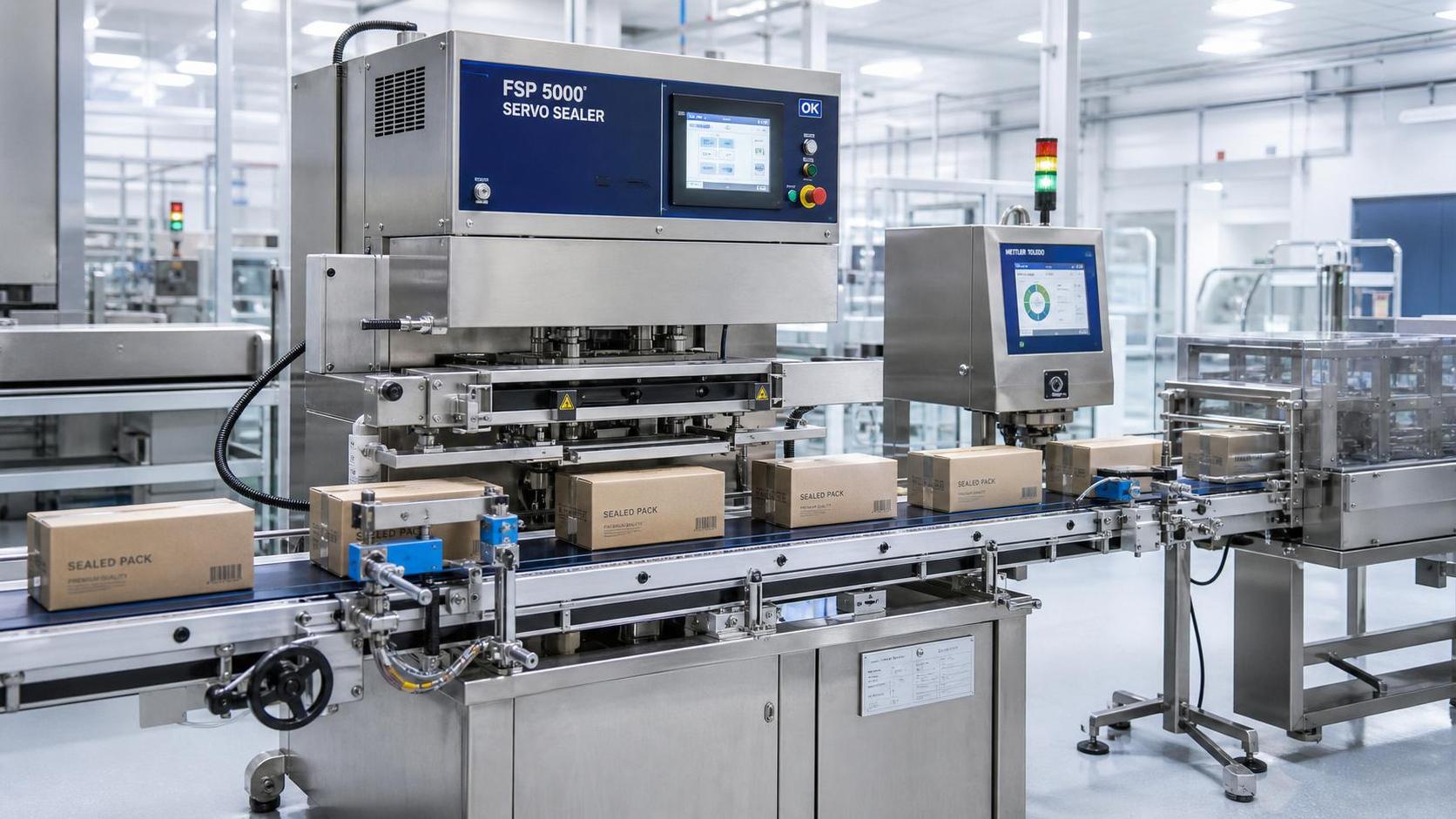
A sealing machine rarely works alone.
It must fit into conveyors, inspection stations, printers, coders, and case packing systems.
This is where many sourcing mistakes happen.
A good sealing machine supplier comparison checks integration readiness before the purchase order is released.
That means electrical standards, communication protocols, machine footprint, height alignment, and control logic compatibility.
In paper and packaging operations, line balance is critical.
One sealing bottleneck can reduce utilization across the entire line.
That also means a higher opportunity cost than the initial supplier price gap.
Integration Points to Review
- PLC and HMI compatibility with current plant standards.
- Available I/O, data capture, and alarm reporting functions.
- Changeover requirements for multiple SKUs.
- Available space for access, maintenance, and future upgrades.
- Validation support for trial integration and site acceptance testing.
Service, Spare Parts, and Downtime Risk Should Be Quantified
Another core area in any sealing machine supplier comparison is after-sales support.
Support quality becomes visible only when production is already under pressure.
This is why buyers should ask for service evidence, not general promises.
Check local technician coverage, remote diagnostics capability, spare part stocking policy, and escalation procedures.
A supplier with slower response can create expensive idle time, especially on high-throughput lines.
For plants running multiple shifts, downtime exposure should be converted into a cost estimate.
That makes supplier comparison far more objective.
Useful Questions for Supplier Evaluation
- Which critical parts are stocked locally, and in what quantities?
- What is the average lead time for non-stock components?
- Can faults be diagnosed remotely through secure access?
- Is operator and maintenance training included in commissioning?
- What uptime commitments are documented in the service agreement?
Energy Use, Material Flexibility, and Compliance Affect Real Procurement Value
More buyers now include energy and sustainability metrics in a sealing machine supplier comparison.
That is not just a reporting issue.
It directly affects operating cost, compliance exposure, and future packaging flexibility.
In paper-based and eco-focused applications, material behavior is changing quickly.
Machines must handle new substrates without excessive tuning or quality loss.
That includes recyclable films, coated papers, mono-material formats, and lighter structures.
Compliance also matters.
Relevant certifications, safety standards, and documentation should be reviewed before final approval.
Key Procurement Checks
A Practical Sealing Machine Supplier Comparison Framework
To make a sealing machine supplier comparison more defensible, use a weighted evaluation model.
This keeps the process commercial, technical, and measurable.
In real purchasing work, the best supplier is rarely the lowest bidder.
It is the supplier that lowers risk while sustaining output, quality, and service confidence.
Suggested Evaluation Criteria
- Seal quality and repeatability under actual production conditions.
- Integration fit with the current packaging or converting line.
- Service capacity, spare parts support, and response time.
- Energy performance and material flexibility.
- Total cost over three to five years, not only purchase price.
The final sourcing decision should combine trial results, reference checks, and commercial terms.
That approach is especially useful in industries where packaging quality and line continuity directly affect profit.
A disciplined sealing machine supplier comparison creates better negotiations as well.
Once performance expectations are documented, supplier claims become easier to verify.
In the end, the strongest procurement result is not the cheapest machine.
It is the machine and supplier combination that keeps production moving, quality stable, and costs predictable over time.
Industry Briefing
Get the top 5 industry headlines delivered to your inbox every morning.
Recommended News