
Industrial RF Components: Key Failure Risks in High-Frequency System Design
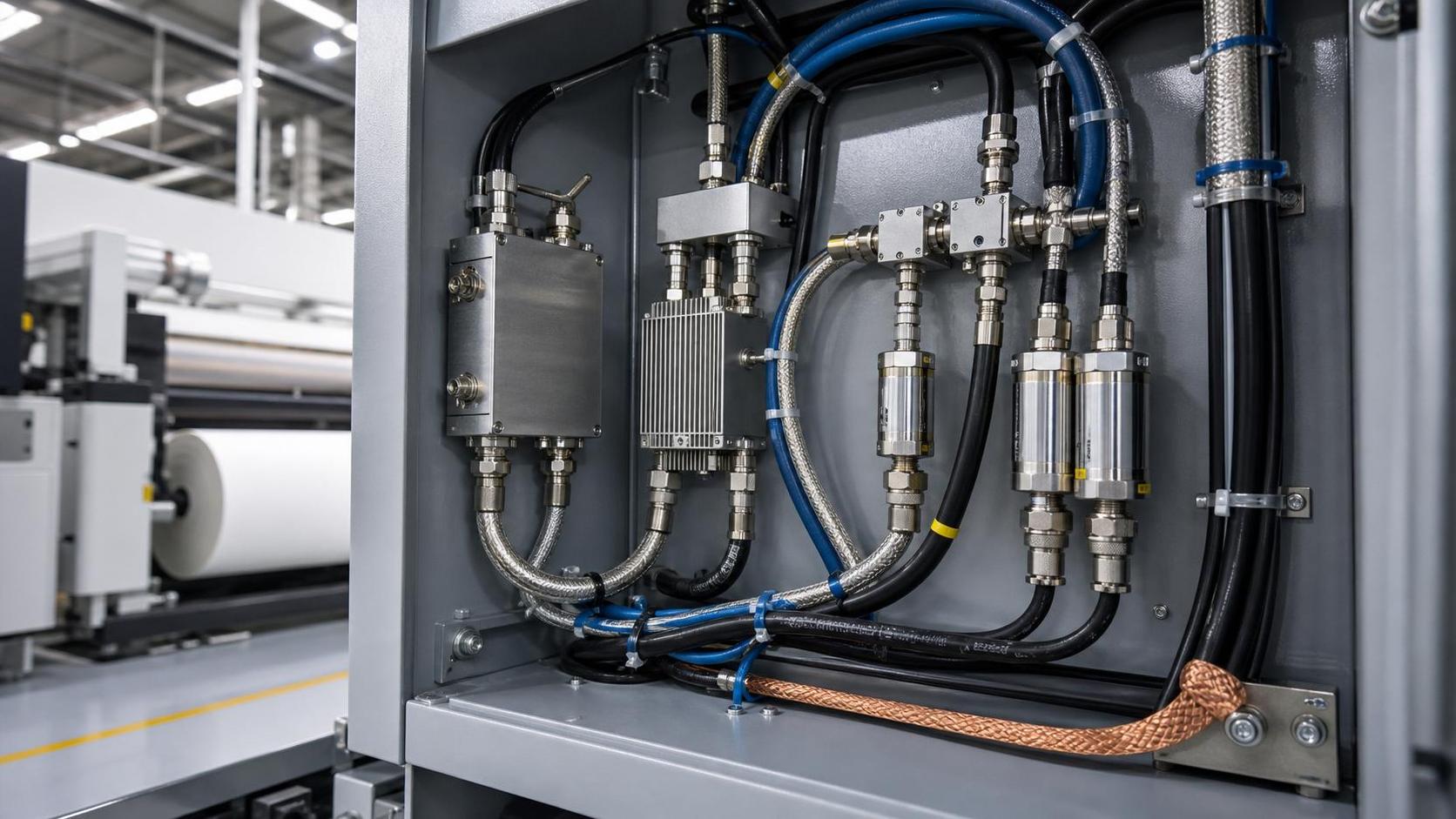
Why do Industrial RF Components become silent failure points in high-frequency systems?
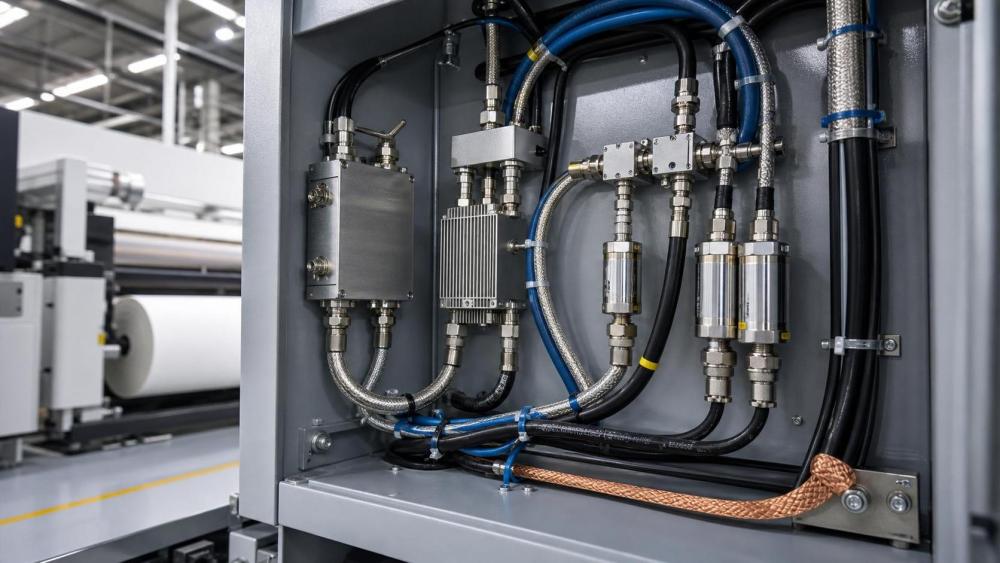
Industrial RF Components rarely fail with a dramatic warning. More often, they drift, heat up, or introduce small mismatches that quietly erode system stability.
That matters in industrial equipment where uptime, timing accuracy, and signal cleanliness are linked to production yield and maintenance cost.
In print and paper machinery, high-frequency links support sensing, control, imaging, and data transmission. A weak connector, filter, coupler, or cable assembly can affect the whole chain.
The risk becomes more visible in environments with heat, vibration, dust, steam, adhesive fumes, and continuous operation. These are not lab conditions.
IPPS follows this reality closely across digital printers, corrugated board lines, die-cutting systems, folder gluers, and tissue machinery, where precision and repeatability decide output quality.
So when people ask whether Industrial RF Components are just supporting parts, the practical answer is no. They often define the reliability ceiling of the full design.
Which failure risks show up first when frequency rises?
At low frequency, a design may appear forgiving. At high frequency, the same layout and components behave very differently.
The first problem is usually insertion loss. Small losses at each interface accumulate and reduce usable signal margin.
The second is impedance mismatch. Even minor deviation from the target impedance can create reflections, unstable readings, and degraded waveform quality.
Thermal drift is another common issue. A component may pass initial validation, then shift under sustained load or changing ambient conditions.
In actual industrial settings, contamination also matters. Dust, moisture, and process residue can change contact resistance or shielding effectiveness over time.
Mechanical fatigue should not be underestimated either. Repeated vibration on long corrugator lines or fast-moving converting equipment can loosen interfaces that looked secure on day one.
- Loss-related risk: weaker signal, lower tolerance, harder troubleshooting.
- Mismatch-related risk: reflection, noise sensitivity, false performance conclusions.
- Thermal risk: drift during long runs, not only during startup tests.
- Mechanical risk: connector wear, cracked solder joints, intermittent faults.
This is why Industrial RF Components should be judged as dynamic reliability elements, not as static catalog parts.
How can you tell whether the problem is the component, the layout, or the environment?
That question comes up often because RF failures are rarely isolated. A weak result may come from the part itself, but also from integration choices.
A useful way to judge Industrial RF Components is to separate material limits from system-induced stress.
In practice, layout and packaging errors are more common than outright component defects. That is why system context matters.
For example, in high-speed industrial digital printers, micron-level droplet control depends on stable electronics and clean timing. RF instability can show up as data integrity issues before it is recognized as an RF problem.
On corrugated or tissue lines, long machine frames and moving sections add cable stress and grounding complexity. Here, Industrial RF Components must be evaluated together with routing, shielding, and service access.
What should be compared before selecting Industrial RF Components for industrial equipment?
A datasheet alone is not enough. Selection becomes stronger when electrical, mechanical, and lifecycle factors are reviewed together.
Frequency range is the obvious starting point, but it should not dominate the decision by itself.
A better comparison usually includes the following points:
- Insertion loss across the real operating band, not only at one reference point.
- VSWR or return loss under installation conditions.
- Temperature stability over expected production shifts.
- Connector durability, mating cycles, and resistance to vibration.
- Shielding effectiveness near motors, drives, and switching power electronics.
- Maintenance practicality, including inspection and replacement time.
This is especially important in converting and packaging machinery, where downtime cost can exceed the price difference between component grades.
More careful evaluations also consider supply continuity. A high-performing RF part with unstable availability creates a different kind of risk.
For organizations tracking sustainability and lifecycle efficiency, this wider view also fits current industrial priorities. IPPS often highlights that smarter equipment decisions support both uptime and resource discipline.
Where do evaluation mistakes happen most often?
The biggest mistake is approving Industrial RF Components only through nominal electrical specifications. Real failures usually come from combined stress.
Another frequent error is validating in clean and short-duration tests, then expecting the same result beside steam, heat, dust, and constant motion.
There is also a tendency to focus on peak performance instead of performance stability. In industrial systems, repeatability matters more than isolated best-case numbers.
A less obvious mistake is separating RF review from mechanical design review. Mounting, cable movement, enclosure constraints, and service habits all influence RF reliability.
In print and paper operations, line speed and product variation add pressure. Systems must remain accurate during continuous production, not just during commissioning.
A practical checklist can reduce these blind spots:
- Test at operating temperature, not room temperature only.
- Include vibration and cable movement in validation.
- Review connector access for repeatable maintenance.
- Check grounding transitions across moving machine sections.
- Track drift over time, not just pass or fail at startup.
How do lifecycle cost and reliability fit into the final decision?
This is where the discussion becomes less theoretical. The cheapest Industrial RF Components are not always the lowest-cost choice once service interruptions are included.
A part that reduces mismatch, handles thermal cycling, and survives vibration can protect signal integrity for years with fewer field interventions.
That matters for equipment supporting custom digital print runs, corrugated packaging output, and automated finishing, where lost hours quickly become lost margin.
The stronger approach is to build a simple decision model that weighs RF performance, environmental durability, maintenance effort, and replacement risk together.
If two options look similar electrically, choose the one with better installation tolerance and long-run stability. That usually produces fewer surprises after deployment.
Industrial RF Components are often small line items, but they sit on large operational consequences. That is why careful screening pays off.
What is the most practical next step when reviewing a high-frequency design?
Start by mapping the full signal path and marking every interface where Industrial RF Components introduce loss, transition, or mechanical exposure.
Then compare field conditions against lab assumptions. If the equipment runs near heat, motion, adhesive residue, steam, or heavy EMI, adjust the evaluation criteria accordingly.
It also helps to define acceptance thresholds for drift, not only for initial performance. Long-run stability is usually where hidden risk appears.
For systems tied to smart printing, precision converting, and automated paper processing, this broader review aligns better with real production behavior.
A solid decision rarely comes from one specification line. It comes from matching Industrial RF Components to frequency demands, machine conditions, service reality, and lifecycle expectations.
If the next review focuses on those four areas, the design team is far more likely to catch the quiet failure risks before the production line does.
Industry Briefing
Get the top 5 industry headlines delivered to your inbox every morning.
Recommended News