
Extreme-Environment Seals: Key Failure Risks in Harsh Duty Cycles
Extreme-Environment Seals: Key Failure Risks in Harsh Duty Cycles
In high-load printing, corrugating, and converting lines, Extreme-Environment Seals fail quietly before they fail visibly.
That is exactly why seal risk deserves earlier attention during technical evaluation.
A leaking seal rarely stays a small issue.
It can trigger web instability, bearing contamination, vacuum loss, fluid leakage, unplanned shutdowns, and product defects.
Across digital printers, corrugated board lines, die-cutters, folder gluers, and tissue machinery, harsh duty cycles are now more demanding than many legacy seal designs assumed.
Higher speeds, hotter zones, finer tolerances, and more aggressive cleaning chemistry are changing the failure map.
In practice, the best seal decision is not just about material compatibility.
It is about matching operating reality, upset conditions, maintenance behavior, and contamination exposure.
Why Extreme-Environment Seals Fail Earlier Than Expected
Most premature failures come from combined stress, not one single factor.
Heat hardens elastomers, dust scores sealing lips, pressure spikes distort geometry, and shaft runout keeps adding micro-damage every rotation.
More importantly, these stresses rarely arrive alone in paper and packaging machinery.
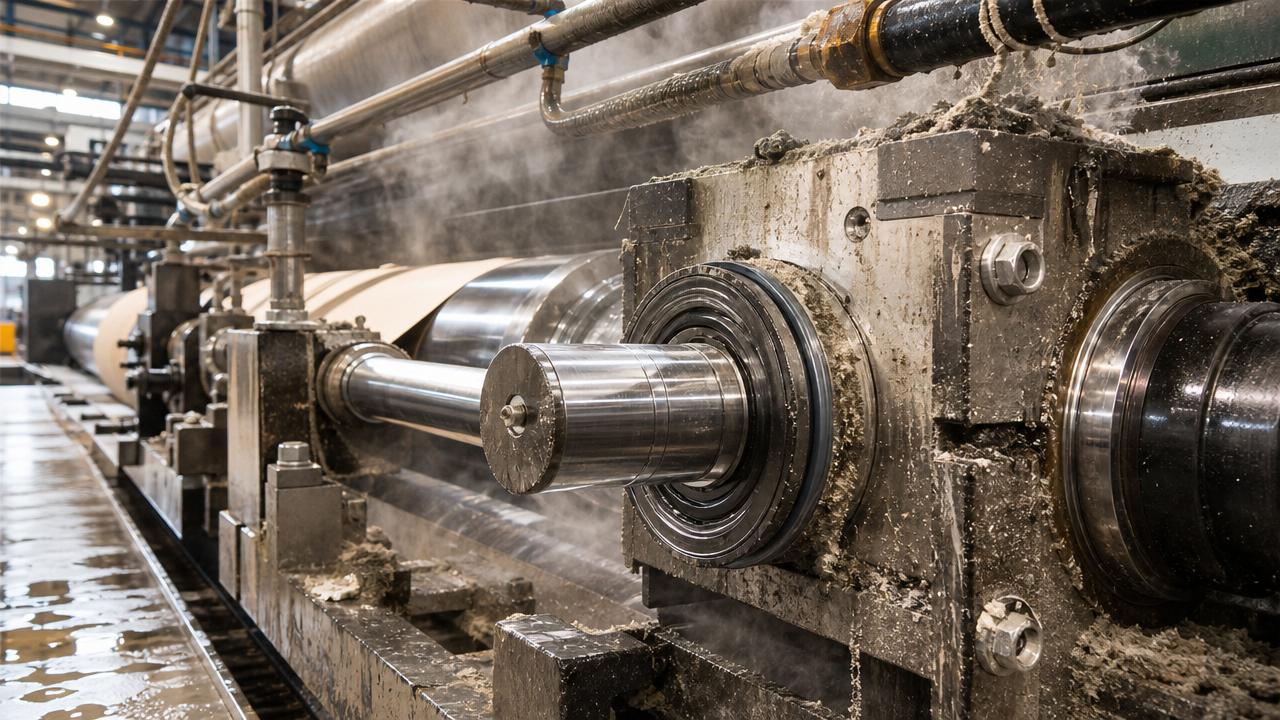
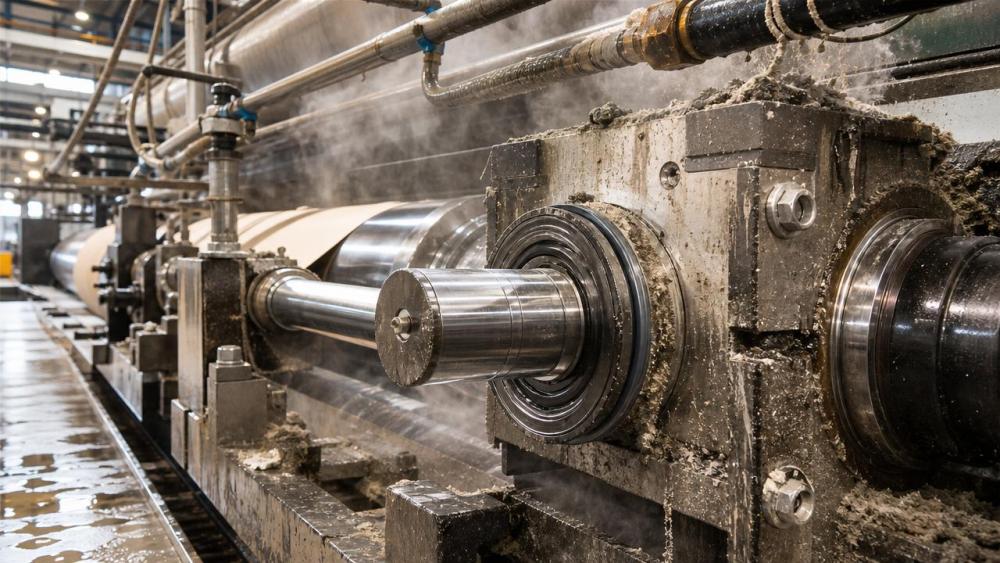
A corrugator, for example, combines steam heat, vibration, condensate, paper lint, adhesive residues, and continuous operation.
That mix pushes Extreme-Environment Seals beyond catalog assumptions very quickly.
The same pattern appears in high-speed inkjet systems.
Here, ink chemistry, wash fluids, thermal cycling, and precise pressure control create a different but equally severe stress profile.
The main accelerators
- Sustained high temperature and rapid thermal swings
- Abrasive paper dust, fiber, starch, and coating particles
- Chemical attack from inks, solvents, cleaners, glues, and steam additives
- Pressure surges, vacuum fluctuation, and dry-running events
- Misalignment, shaft wear, eccentric motion, and vibration
- Installation damage and poor storage before use
Five Failure Risks That Matter Most in Harsh Duty Cycles
When reviewing Extreme-Environment Seals, five risks usually drive the highest lifecycle impact.
1. Thermal hardening and compression set
Seals exposed to hot rollers, dryers, steam chests, or heated glue systems can lose elasticity.
Once compression set appears, contact pressure drops and leakage starts to grow.
2. Abrasive wear from dust and fiber
Paper dust behaves like a fine grinding medium.
In rotating applications, it cuts lips, damages shafts, and opens leakage paths around the contact zone.
3. Chemical swelling, cracking, or extraction
Extreme-Environment Seals may survive temperature but still fail chemically.
Washdown fluids, UV inks, cleaning agents, and adhesive compounds can swell elastomers or strip additives.
4. Pressure shock and extrusion
Fast valve action and unstable pumps create short spikes that exceed nominal ratings.
The result can be nibbling, edge tearing, or seal extrusion into clearances.
5. Dynamic instability from runout and misfit
Even premium Extreme-Environment Seals will struggle on worn hardware.
Shaft eccentricity, groove damage, poor surface finish, and tolerance stacking create repeating stress concentration.
Where These Risks Show Up Across IPPS Machinery Segments
The failure signature changes by process, which is why application context matters.
Industrial digital printers
Seal issues often affect ink circulation, vacuum stability, and cleaning loops.
Small leaks here can quickly turn into print defects and nozzle reliability problems.
Corrugated board lines
This is one of the toughest environments for Extreme-Environment Seals.
Steam, heat, starch, condensate, fiber dust, and long production runs create constant combined loading.
Die-cutting and stamping machines
High-speed reciprocating motion increases fatigue, while foil, dust, and lubricants complicate compatibility.
Automatic folder gluers
Glue systems, compressed air, and fast cycles make leakage control especially important.
A minor seal drift can disrupt fold precision and adhesive placement.
Tissue processing machinery
These systems add hygiene sensitivity and frequent cleaning exposure.
Extreme-Environment Seals must resist chemicals without shedding particles or losing dimensional stability.
How to Evaluate Extreme-Environment Seals More Accurately
A better evaluation process starts by asking tougher operating questions.
Nameplate data is useful, but upset conditions often decide real seal life.
Focus on the full duty cycle
- Record steady-state temperature and peak excursion temperature
- Check startup, shutdown, standby, and washdown conditions
- Map pressure spikes instead of average pressure only
- Review shaft speed, reversals, runout, and alignment history
- Identify all chemicals, not only the main process fluid
- Estimate dust load and contamination entry paths
Watch the early warning signals
Seal failure usually leaves clues before a visible leak appears.
Look for rising drive load, temperature drift, dirt accumulation, fluid discoloration, air loss, and repeat maintenance near one station.
Compare designs, not just materials
The right material can still underperform with the wrong lip profile or support geometry.
For Extreme-Environment Seals, design details often decide whether contaminants stay out under dynamic load.
Practical Mitigation Steps That Reduce Seal Risk
The good news is that many harsh-duty failures are preventable.
The biggest gains usually come from a few disciplined actions.
- Upgrade seal selection using real duty-cycle data, not generic catalog matching.
- Improve shaft finish, groove condition, alignment, and hardware tolerances before blaming the seal.
- Add exclusion features or secondary barriers where dust and fiber are constant.
- Control pressure transients with better valve timing, accumulators, or damping.
- Standardize installation tools and handling practices to prevent cuts and twist damage.
- Use failure analysis after removal instead of replacing parts without learning.
A quick decision table
What Better Seal Decisions Mean for Uptime and Quality
Better Extreme-Environment Seals do more than stop leaks.
They stabilize process control, protect precision components, reduce cleanup, and extend maintenance intervals.
For IPPS-related machinery, that translates into stronger print consistency, cleaner corrugation, more accurate converting, and lower scrap.
It also supports a larger industry shift.
As packaging lines move toward higher automation, lower waste, and greener output, seal reliability becomes a surprisingly strategic detail.
If the goal is resilient production, start by reviewing where Extreme-Environment Seals face hidden overload, mixed contaminants, and transient stress.
That small evaluation step often prevents the largest unplanned loss later.
Industry Briefing
Get the top 5 industry headlines delivered to your inbox every morning.
Recommended News