
Tissue Converting Machines: Output vs Waste
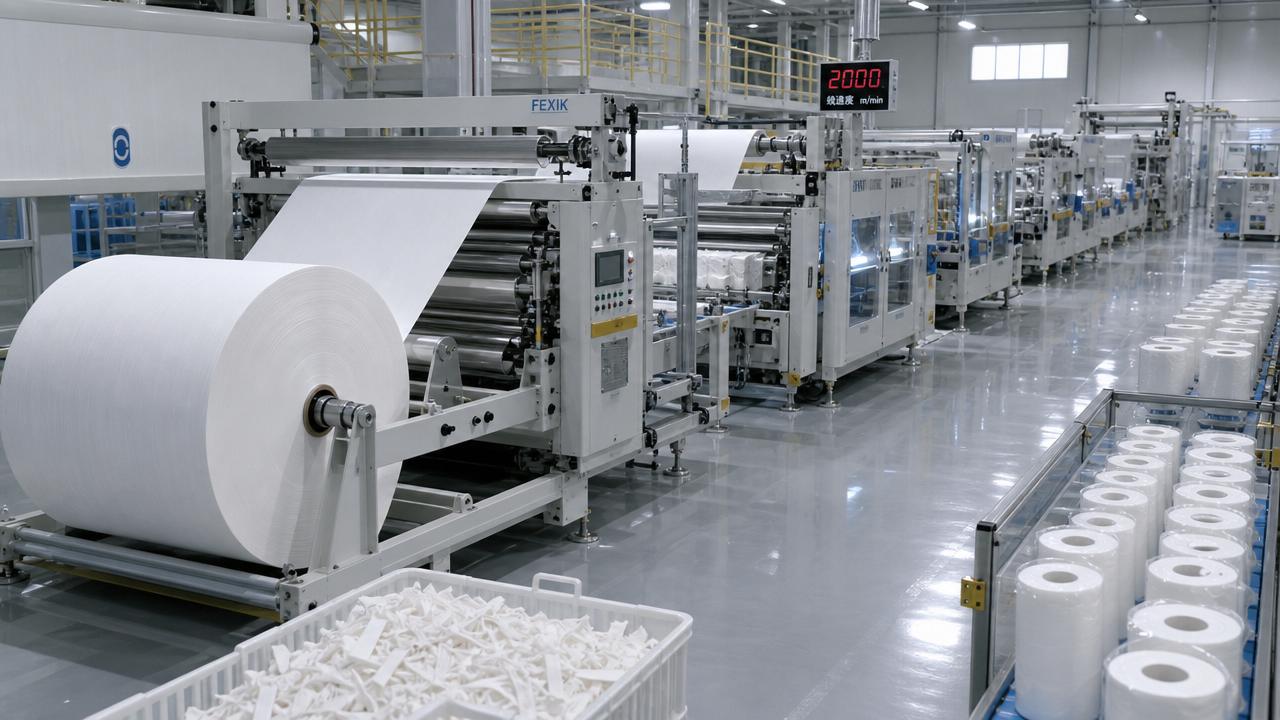
For enterprise decision-makers, tissue converting machines are no longer judged by output speed alone.
In a market shaped by raw material volatility, hygiene demand, and sustainability targets, the real benchmark is efficient conversion.
Each line must turn parent rolls into saleable products with minimal trim loss, downtime, rework, and energy waste.
This article examines output versus waste across modern tissue converting machines, from rewinding to embossing, cutting, folding, and packaging.
Tissue Converting Machines in Modern Paper Production
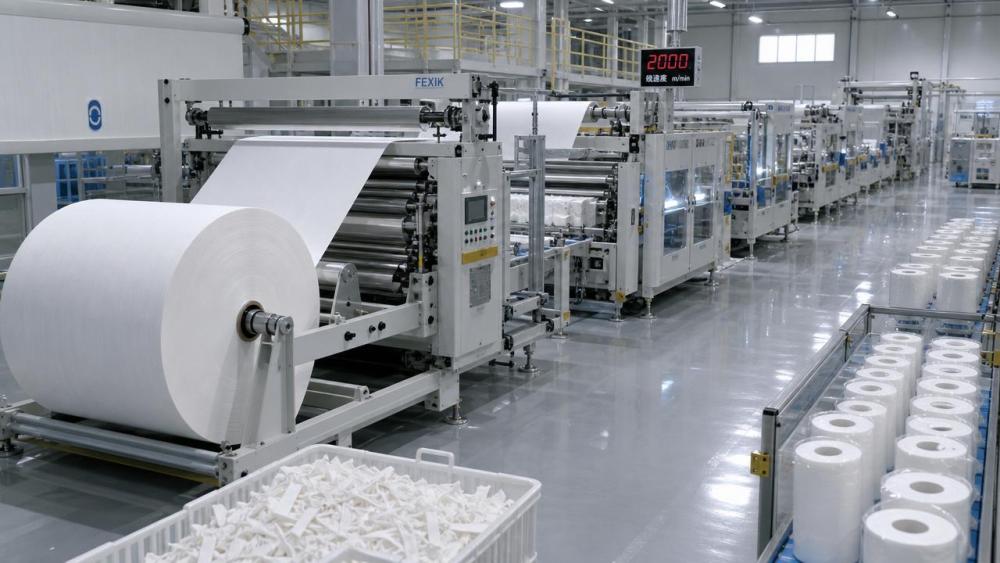
Tissue converting machines process large parent reels into finished tissue products for daily hygiene and commercial use.
Typical outputs include toilet rolls, kitchen towels, facial tissues, napkins, hand towels, and interfolded tissue packs.
A complete converting line may include unwinding, embossing, laminating, perforating, rewinding, log sawing, folding, wrapping, and case packing.
The value of tissue converting machines depends on synchronized motion, stable web handling, accurate cutting, and reliable downstream packaging.
Output is usually measured by rolls per minute, packs per minute, logs per minute, or meters per minute.
Waste is harder to summarize because it includes trim, dust, rejected rolls, crushed packs, web breaks, and startup losses.
Therefore, tissue converting machines should be evaluated through saleable output, not only mechanical speed.
The Output Metric and Its Hidden Limits
High nominal speed remains important because fixed costs are spread across more finished products.
However, extreme speed can expose weaknesses in web tension, roll hardness, blade condition, and packaging synchronization.
When tissue converting machines run beyond stable process limits, small defects multiply quickly across thousands of units.
The result may appear as higher output on the counter but lower accepted production in the warehouse.
Useful output metrics should connect machine speed with yield, quality, labor utilization, and energy consumed per saleable case.
For tissue converting machines, the strongest performance view combines speed, stability, material yield, and packaging acceptance.
Waste Sources Across the Converting Line
Waste starts before the first finished roll leaves the line.
Parent roll defects, poor caliper consistency, moisture variation, or weak sheet strength can trigger breaks and uneven winding.
Inside tissue converting machines, the largest waste sources often appear at process transitions.
- Unwinding instability creates wrinkles, slack edges, and broken webs.
- Embossing mismatch causes ply separation, crushed bulk, or weak pattern definition.
- Perforation errors affect sheet count, tear quality, and consumer acceptance.
- Rewinding defects create telescoped rolls, soft cores, or uneven diameters.
- Log sawing generates dust, ragged cuts, and end deformation.
- Packaging misfeeds produce crushed bundles, open seals, or barcode errors.
These losses rarely occur in isolation.
A small tension deviation may later become poor winding, unstable cutting, and rejected outer packaging.
That is why advanced tissue converting machines increasingly depend on integrated control rather than isolated mechanical upgrades.
Industry Signals Shaping Output and Waste Decisions
The global tissue sector faces pressure from cost, hygiene standards, labor shortages, and sustainability expectations.
These forces change how tissue converting machines are specified, operated, and upgraded.
These signals push attention from absolute output toward consistent, low-waste converting performance.
In this environment, tissue converting machines must support both high-volume standard runs and agile product variation.
Automation as a Yield Protection Tool
Automation in tissue converting machines is not only about replacing manual operations.
Its deeper value is controlling variation before waste becomes visible at the end of the line.
Servo-driven unwinding, closed-loop tension control, and automatic splice handling reduce web breaks during speed changes.
Recipe management helps preserve settings for embossing pressure, perforation length, winding density, and pack format.
Vision inspection can detect missing sheets, poor seals, wrong labels, and deformed packs before palletizing.
Predictive maintenance also matters because worn blades, unstable bearings, and clogged dust extraction reduce yield quietly.
Well-configured tissue converting machines use sensors to maintain process windows, not merely to report failures.
Tension Control, Embossing, and Product Quality
Tissue is fragile, elastic, and sensitive to moisture, basis weight, and ply structure.
For this reason, web tension is one of the most decisive variables in tissue converting machines.
Too much tension can reduce softness, stretch the sheet, and increase breakage risk.
Too little tension can cause wrinkles, wandering edges, poor perforation, and unstable winding.
Embossing adds another layer of complexity because it changes bulk, absorbency, appearance, and ply bonding.
Excessive embossing pressure may create a premium pattern but destroy caliper and generate dust.
Insufficient pressure can weaken lamination, reduce shelf appeal, and cause separation during use.
High-performing tissue converting machines balance tactile quality with mechanical stability and low reject rates.
Packaging Integration and Downstream Waste
A fast rewinder cannot protect profitability if the packaging section becomes the bottleneck.
Modern tissue converting machines increasingly connect directly with wrapping, bagging, bundling, case packing, and palletizing systems.
This integration reduces manual handling, improves hygiene, and limits damage during transfer.
It also supports traceability through batch coding, barcode verification, and automated pack counting.
Packaging waste is often underestimated because film scraps and rejected bundles may be tracked separately from tissue loss.
For a full cost view, tissue converting machines should be assessed together with packaging consumption and case quality.
When line balancing is poor, operators slow upstream equipment or create buffer piles that invite deformation.
Balanced automation keeps product flow smooth from parent roll to pallet.
Typical Machine Categories and Evaluation Focus
Different tissue products require different converting priorities.
A single output benchmark cannot fairly compare all tissue converting machines across formats and markets.
This classification helps define realistic waste targets and productivity expectations for each product family.
Practical Benchmarks for Output Versus Waste
The best benchmark is not the fastest speed recorded during a trial.
It is the highest sustainable operating point that protects quality, labor safety, and material yield.
When evaluating tissue converting machines, focus on repeatable production windows across different grades and formats.
- Track saleable cases per hour, not only machine cycles.
- Separate startup waste, steady-state waste, and changeover waste.
- Measure dust generation around embossing, slitting, and log sawing.
- Compare energy use by product format and operating speed.
- Record stoppage reasons with clear fault categories.
- Connect packaging rejects with upstream process conditions.
These benchmarks allow tissue converting machines to be improved through evidence rather than assumptions.
Procurement and Upgrade Considerations
Investment decisions should compare total lifecycle performance, not only purchase price or headline speed.
Reliable tissue converting machines reduce hidden costs through fewer rejects, faster changeovers, and lower unplanned downtime.
Important specification points include tension zones, servo architecture, dust extraction, safety access, and data connectivity.
Changeover design is especially important where private-label, regional, or promotional packaging formats change frequently.
Tooling access, automatic core loading, quick embossing roll exchange, and stored recipes can save significant production time.
Service support also affects real output because delayed spare parts can reduce annual capacity more than speed differences.
A balanced purchase review should test tissue converting machines under realistic raw materials, packaging films, and operator conditions.
Operational Practices That Reduce Waste
Daily discipline often determines whether advanced equipment reaches its design potential.
Even premium tissue converting machines can waste material if settings drift or maintenance routines are inconsistent.
- Standardize startup procedures for each grade and product format.
- Maintain blade sharpness and align cutting systems on schedule.
- Calibrate tension sensors, load cells, and diameter measurement devices.
- Clean dust extraction points before dust affects sensors or sealing.
- Review reject samples daily and link defects to process zones.
- Train operators to adjust within approved process windows.
These practices turn tissue converting machines into controlled production systems rather than isolated high-speed assets.
Data, Sustainability, and the Next Efficiency Layer
Sustainability targets make waste reduction a strategic issue, not only a cost-saving task.
Less trim, fewer rejects, and lower energy per case directly support carbon and resource efficiency goals.
Digital data gives tissue converting machines a stronger role in sustainability reporting and operational governance.
Useful data points include parent roll utilization, reject location, compressed air use, electricity load, and packaging film consumption.
When combined with enterprise systems, these signals support better planning, costing, and customer compliance documentation.
The next efficiency layer will come from connected diagnostics, adaptive control, and smarter integration with warehouse logistics.
For tissue converting machines, digital intelligence will increasingly define the gap between rated output and profitable output.
Action Path for Better Converting Economics
A practical improvement path begins with measuring the real balance between output and waste.
Start by mapping material flow from parent roll receipt to packed pallet release.
Then identify where losses occur, which defects repeat, and which settings create unstable production.
Next, compare current tissue converting machines with required product mix, quality standards, and sustainability commitments.
Where gaps are clear, prioritize upgrades that improve yield, changeover control, inspection, and packaging synchronization.
The strongest results usually come from coordinated action across machinery, materials, maintenance, and data discipline.
In the output-versus-waste equation, tissue converting machines create value when every meter of tissue becomes dependable saleable product.
For continued intelligence on paper-based smart manufacturing, IPPS tracks machinery evolution, process trends, and efficiency benchmarks across global converting operations.
Industry Briefing
Get the top 5 industry headlines delivered to your inbox every morning.
Recommended News