
Piezoelectric Positioning Systems: Accuracy Limits and Selection Tips
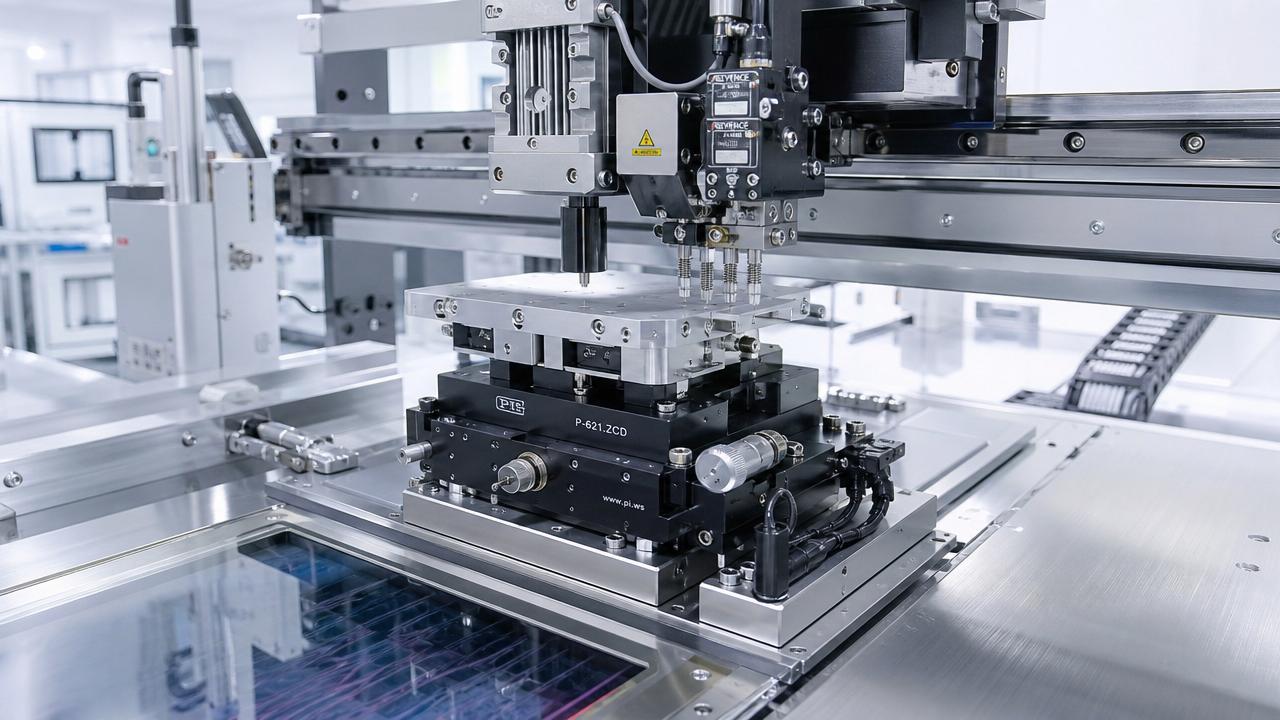
Piezoelectric Positioning Systems: Accuracy Limits and Selection Tips
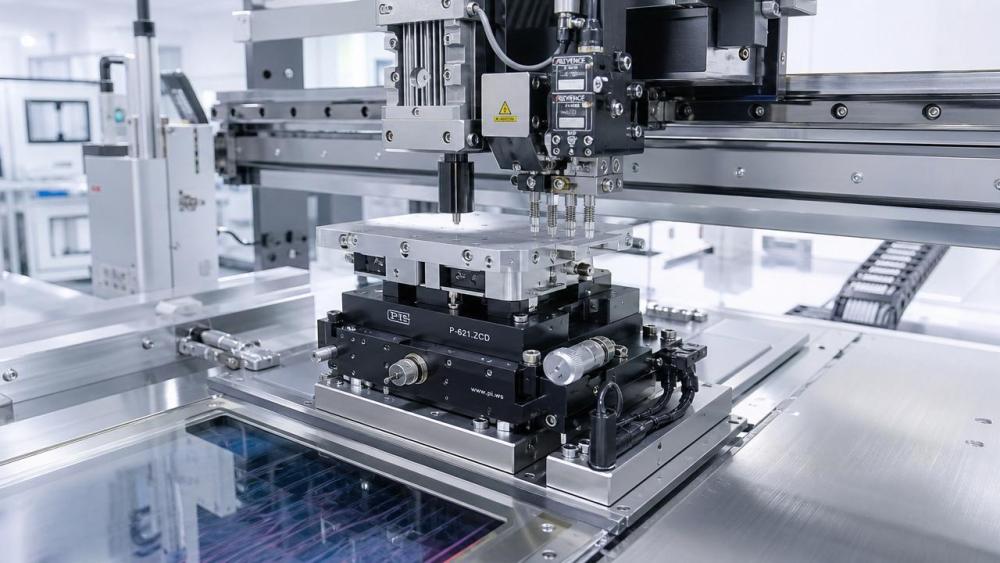
Piezoelectric Positioning Systems are known for tiny motion, fast response, and very high resolution.
That sounds simple on paper.
In practice, accuracy depends on mechanics, control loops, sensors, loading, heat, and the environment around the stage.
This matters in digital printing, paper converting, die-cut registration, nozzle alignment, and inspection systems.
For IPPS-related machinery, even micron-scale drift can change print quality, crease consistency, or web handling stability.
So the real question is not whether Piezoelectric Positioning Systems are precise.
The real question is how much useful accuracy remains inside your actual machine.
That is where technical evaluation becomes important.
What Accuracy Really Means in Piezoelectric Positioning Systems
Many buyers focus on resolution first.
That is useful, but resolution alone does not define positioning quality.
A piezo stage may advertise nanometer resolution while missing the target under changing load or temperature.
When reviewing Piezoelectric Positioning Systems, separate these performance terms carefully.
- Resolution: the smallest commanded or measured increment.
- Repeatability: how closely the stage returns to the same point.
- Accuracy: how close the final position is to the intended position.
- Linearity: how proportional motion remains across travel.
- Stability: how well the position holds over time.
- Settling time: how fast vibration and overshoot decay.
These metrics interact.
For example, a system can have impressive repeatability but poor absolute accuracy without closed-loop compensation.
This is especially relevant for printhead alignment, camera focusing, and cutting registration tasks.
The Main Accuracy Limits You Need to Check
The biggest mistake is assuming all limits come from the piezo actuator itself.
In reality, Piezoelectric Positioning Systems fail accuracy targets for several predictable reasons.
1. Limited Travel and Nonlinearity
Piezo actuators are excellent for short motion ranges.
As travel increases, maintaining linear motion becomes harder.
Open-loop designs are more exposed to hysteresis and creep across the full stroke.
If your process needs both long range and sub-micron accuracy, verify whether a hybrid stage is better.
2. Hysteresis and Creep
Hysteresis means the motion path depends on previous drive history.
Creep means position continues to shift after the command stops.
Both can distort fine registration in scanning, dispensing, and printhead trimming operations.
Closed-loop feedback reduces the problem, but does not erase all dynamic effects.
3. Load, Off-Axis Forces, and Mounting
Specifications often assume ideal loading.
Real machines rarely provide that.
Off-center mass, cable drag, vacuum tubing, and bracket stiffness all influence the final result.
In converting lines and print modules, moving assemblies often carry more parasitic force than expected.
That means Piezoelectric Positioning Systems should be evaluated inside the intended payload geometry, not only on a bench.
4. Resonance and Settling Behavior
Fast response is one of the strongest benefits of Piezoelectric Positioning Systems.
Still, high speed is not the same as fast usable accuracy.
If the stage rings after a move, your cycle time suffers.
If the controller is aggressive, overshoot may break the process window.
Look beyond bandwidth claims and inspect real settling data with the target load attached.
5. Thermal Drift and Environmental Sensitivity
Heat from motors, lamps, dryers, power electronics, or nearby web processes can shift alignment slowly.
Humidity, vibration, and airborne dust also matter in production halls.
In packaging and paper machinery, the environment is rarely laboratory clean.
That is why stable Piezoelectric Positioning Systems require environmental assumptions to be written into the evaluation process.
Open-Loop or Closed-Loop: Which One Fits Better
This decision shapes both performance and cost.
Open-loop Piezoelectric Positioning Systems are simpler and often faster in short repetitive moves.
They are attractive when travel is tiny and process variation is tightly controlled.
Closed-loop systems add sensors and feedback control.
That improves linearity, repeatability, and compensation under changing conditions.
The tradeoff is higher complexity, more tuning work, and possible sensor noise limits.
- Choose open-loop for small repetitive motion with stable thermal and load conditions.
- Choose closed-loop for variable loads, longer travel, absolute positioning, or strict traceability.
- Choose hybrid architectures when coarse travel and fine correction must work together.
For many production tools, the best answer is not one or the other.
It is a layered motion strategy.
Selection Tips That Hold Up in Real Projects
When comparing Piezoelectric Positioning Systems, a structured checklist saves time and reduces late-stage integration surprises.
Start with the process window
Define the required accuracy at the point of work, not at the actuator body.
Include takt time, move profile, hold time, and acceptable drift.
Check payload details early
List mass, center of gravity, cable forces, and any off-axis moments.
A stage that looks adequate on force may still fail stiffness requirements.
Review sensor technology
Capacitive, strain gauge, and encoder-based feedback each have different strengths.
Match sensor choice to bandwidth, noise, stroke, and calibration needs.
Ask for loaded performance data
Vendor plots without payload are only a starting point.
Request repeatability, settling time, and drift data with conditions close to your machine.
Validate the controller and software layer
Motion quality depends heavily on drive electronics, tuning tools, and communication latency.
Integration with PLC, vision, and machine synchronization is often the hidden selection factor.
Plan for the operating environment
Check vibration isolation, temperature variation, contamination risk, and maintenance access.
This is especially important in printing and paper systems with heat, dust, and continuous motion nearby.
A Practical Evaluation Matrix
A simple matrix helps compare Piezoelectric Positioning Systems without getting trapped by one impressive number.
This kind of matrix keeps technical reviews grounded in production reality.
Where Piezoelectric Positioning Systems Make the Most Sense
The best use cases share one theme.
They need tiny, fast, highly controlled motion more than long-distance travel.
- Printhead alignment in industrial digital printers.
- Fine register correction in inspection or marking systems.
- Optical focus and sensor calibration modules.
- Micro-dosing, valve trimming, and precision dispensing.
- Lab, metrology, and micro-assembly stations.
They are less ideal when the application needs large travel, rough environments, and minimal tuning effort.
In those cases, combining conventional motion with piezo fine correction is often more robust.
Final Takeaway
Piezoelectric Positioning Systems can deliver exceptional precision, but only when the full motion chain is evaluated honestly.
Resolution is easy to market.
Usable accuracy is harder to achieve.
The strongest evaluations focus on load conditions, control strategy, settling behavior, sensor choice, and environmental drift.
If you compare Piezoelectric Positioning Systems through that lens, selection decisions become clearer and integration risks drop early.
Start with the process window, test under realistic conditions, and choose the architecture that protects real production accuracy, not just catalog performance.
Industry Briefing
Get the top 5 industry headlines delivered to your inbox every morning.
Recommended News