
Industrial Printing Systems: Hidden Costs in Multi-Line Integration
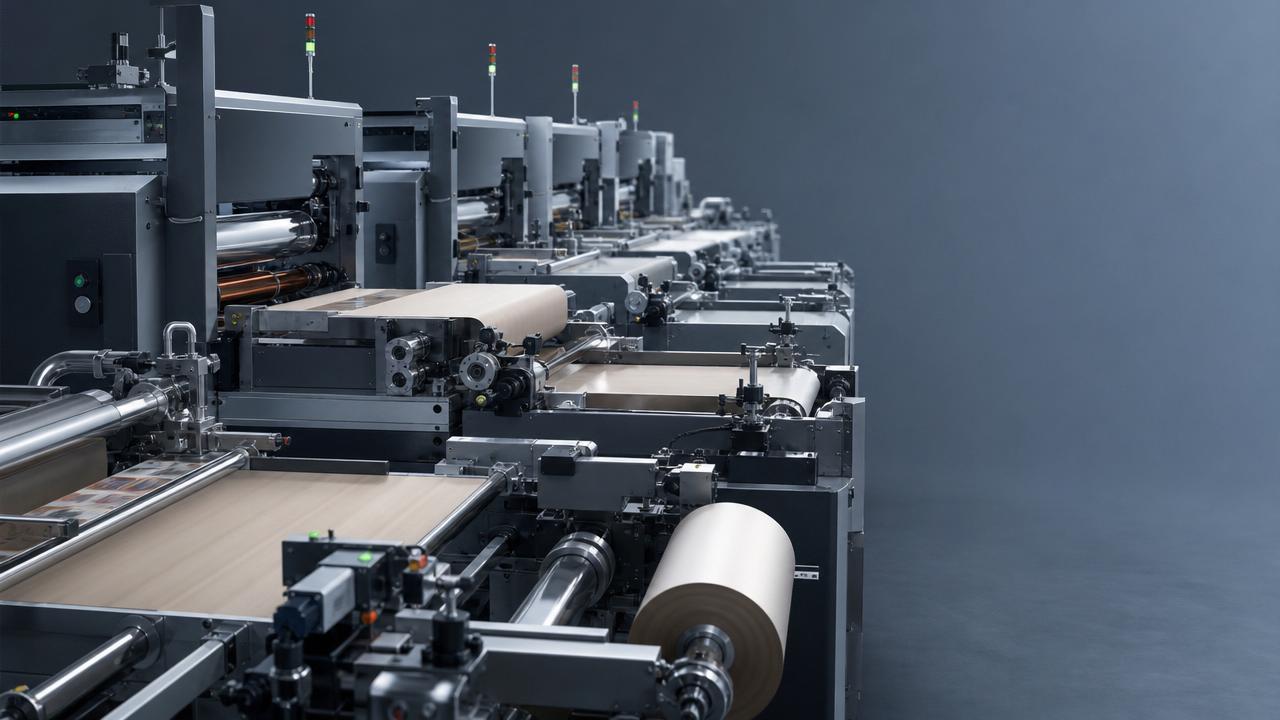
Integrating industrial printing systems across multiple production lines often looks efficient on paper—but hidden costs can quietly erode ROI, uptime, and project timelines. In real factory environments, the challenge is rarely the printer alone. It is the synchronization of print engines, material handling, line speed, inspection, data architecture, finishing equipment, and maintenance logic. When one subsystem is under-scoped, the entire investment can become slower, more expensive, and harder to scale. This article examines where multi-line integration costs usually expand and how to evaluate industrial printing systems more accurately before implementation begins.
Why Multi-Line Integration Needs a Structured Review
A single digital press or print module may perform well in a controlled demo, yet multi-line deployment introduces variables that are easy to underestimate. In packaging, paper converting, corrugated production, label applications, and tissue-related print workflows, different lines often run different substrates, speeds, job lengths, and changeover frequencies. That means industrial printing systems must do far more than print consistently. They must communicate, buffer, recover, align, and adapt under production pressure.
A structured review helps expose costs that do not appear in the initial capital quote: software connectors, conveyor redesign, curing energy, operator cross-training, spare part stocking, line balancing, reject handling, and quality verification. Without that review, companies often pay twice—once for installation and again for post-installation correction.
Core Areas to Check Before Expanding Industrial Printing Systems
The following points help identify the hidden cost drivers in industrial printing systems used across multiple lines. Each item should be verified against real production conditions, not only supplier specifications.
- Confirm whether print speed remains stable when upstream feeders and downstream converting stations accelerate, pause, or run mixed job patterns across separate lines.
- Check substrate range in live conditions, including board caliper, tissue softness, coated paper behavior, curl, moisture variation, and surface energy shifts.
- Validate data connectivity between industrial printing systems, ERP, MES, RIP, inspection software, and production reporting tools before final layout approval.
- Measure actual ink, coating, adhesive, and consumable usage at target throughput instead of relying on nominal coverage estimates from vendor samples.
- Review web tension or sheet transport compatibility where print modules connect with corrugators, die-cutters, folder gluers, rewinders, or stackers.
- Audit electrical load, compressed air demand, steam interaction, exhaust, and curing heat impact on the broader plant utility infrastructure.
- Verify color management repeatability across lines so the same artwork prints consistently on different machines, shifts, and substrate lots.
- Check whether line changeovers require manual intervention that increases labor cost, waste, and restart time during short-run production.
- Estimate spare parts strategy, printhead replacement cycles, service response windows, and the cost of holding critical components on site.
- Map fault recovery procedures to determine whether one print failure stops only one line or cascades into downstream production loss.
- Test inspection and traceability logic to ensure defective prints are detected, isolated, and reported without slowing all connected lines.
- Review floor space, operator access, cleaning clearance, and safety guarding because compact layouts often create expensive maintenance bottlenecks later.
Where Hidden Costs Usually Appear
1. Line Balancing and Throughput Mismatch
One of the most common issues in industrial printing systems integration is assuming that rated printer speed equals effective line speed. In practice, print quality targets, drying or curing windows, barcode verification, and registration checks reduce actual throughput. If a printer runs slower than a die-cutter, folder gluer, or packing section, additional buffering or stop-start control is required. Those modifications increase both capital cost and downtime risk.
Even when nominal speeds align, acceleration profiles may not. A line that starts smoothly in a paper test may surge unpredictably during production, especially with mixed substrates. That leads to skew, misregistration, or reject accumulation.
2. Software and Data Integration
Many industrial printing systems projects underestimate the cost of software interfaces. Variable data, version control, job queue management, color libraries, maintenance alerts, and production analytics often sit in different platforms. Custom middleware, API development, cybersecurity review, and database synchronization can consume a significant share of the integration budget.
The hidden expense is not only installation. Ongoing support, software updates, compatibility with future equipment, and troubleshooting between multiple vendors can become a recurring operational burden.
3. Material Behavior Across Lines
Paper, corrugated board, folding carton stock, and tissue substrates do not behave the same way under identical print settings. Moisture content, flute profile, coating chemistry, dust, and storage conditions all affect ink laydown and transport reliability. In multi-line environments, these differences multiply. A print mode optimized for one line can create waste on another.
This is especially relevant when industrial printing systems are integrated with corrugated board lines or high-speed post-press machinery. Material variability can force lower speeds, extra priming, more cleaning cycles, and tighter quality inspection.
4. Utility Upgrades and Environmental Control
A new print engine may require more than floor space and power. It may need temperature stability, humidity control, ventilation, exhaust treatment, ink storage conditions, and wastewater handling. If those plant-level requirements were not included early, facility upgrades can become a major hidden cost.
For high-speed industrial printing systems, utility instability can also reduce performance. Voltage fluctuation, insufficient compressed air, or poor HVAC consistency often causes quality drift that looks like a print problem but is actually an infrastructure problem.
5. Maintenance Complexity
When multiple lines share similar but not identical print modules, maintenance planning becomes more complex than expected. Different firmware versions, printhead generations, cleaning routines, and spare part numbers can increase confusion. If one line uses a unique component, stockholding costs rise. If no critical spares are held locally, downtime extends.
The true cost of industrial printing systems should therefore include preventive maintenance hours, technician access time, remote support limitations, and the cost of restarting calibrated production after service events.
How These Issues Change by Application
Corrugated Packaging Lines
In corrugated environments, hidden costs often come from board warp, flute crush sensitivity, dust control, and synchronization with die-cutting or slotting. If industrial printing systems are added without accounting for corrugator output variability, print consistency can suffer and waste rises quickly.
Key checks include board flatness windows, feeder tolerances, ink penetration on kraft surfaces, and the effect of print drying on downstream stacking and bonding.
Folding Carton and Post-Press Workflows
In carton production, registration accuracy and surface finish are often the cost drivers. Industrial printing systems must align with creasing, die-cutting, varnishing, hot stamping, and folder gluer requirements. Slight instability in sheet transport or color can become premium-product rejection.
Critical checks include sheet skew control, barcode readability after finishing, and whether inks or coatings interfere with glue performance in high-speed folding.
Tissue and High-Volume Consumer Paper Products
For tissue-related applications, line speed and hygiene constraints dominate. Here, industrial printing systems must fit tightly controlled web handling conditions without increasing contamination risk or web breaks. Small print defects can trigger large volume losses because output is continuous and fast.
Checks should focus on tension stability, dust management, cleanability, and how print modules affect rewinding, embossing, and automatic packaging performance.
Frequently Overlooked Risks
Color Approval Is Not the Same as Production Stability
A successful sample run does not prove repeatability across shifts, substrates, and connected lines. Production trials must be long enough to reveal drift, cleaning frequency, and reject patterns.
Training Often Covers Operation, Not Recovery
Many teams are trained to run industrial printing systems in ideal conditions but not to recover from faults, data interruptions, or mixed-job transitions. Recovery skill affects uptime as much as nominal machine design.
Waste Handling Can Become a Secondary Bottleneck
Rejected sheets, misprinted corrugated blanks, startup waste, and cleaning residues need a disposal path. If waste handling is ignored, floor congestion and hidden labor cost increase quickly.
Practical Steps to Control Integration Cost
- Build a line-by-line process map that includes speed, substrate, changeover, inspection, and failure recovery points before equipment selection.
- Request extended production trials using actual materials, target graphics, and downstream finishing steps instead of relying on showroom demonstrations.
- Separate the budget into machine cost, facility upgrades, software integration, training, spares, validation, and first-year support.
- Define acceptance metrics for uptime, color repeatability, registration, waste rate, and restart time across all connected lines.
- Standardize components and service procedures wherever possible to reduce maintenance complexity across industrial printing systems.
Final Takeaway and Next Actions
The biggest risk in multi-line projects is not usually the headline price of industrial printing systems. It is the accumulation of small integration gaps—speed mismatch, software friction, substrate variability, utility constraints, and maintenance complexity—that turns a promising investment into a long payback cycle. A disciplined review process helps reveal those costs before they become operational problems.
The most effective next step is to assess every line as part of one connected system: printing, converting, utilities, data, inspection, and support. When industrial printing systems are planned with that full-system view, integration becomes more predictable, expansion becomes more scalable, and the return on investment becomes easier to protect over the long term.
Industry Briefing
Get the top 5 industry headlines delivered to your inbox every morning.
Recommended News